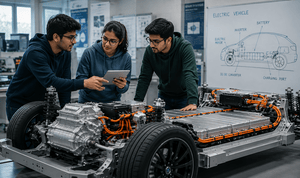
As we cross the halfway mark of the 2020’s decade, the global electric vehicle (EV) landscape is undergoing a transformative shift. Once considered a niche segment, electric vehicles have evolved into a cornerstone of the clean transportation movement. Driven by groundbreaking innovation, robust policy frameworks, and widespread consumer adoption, the EV revolution is not just imminent—it is here.
From next-gen battery technology breakthroughs to green charging infrastructure, this blog explores the most impactful EV technology trends shaping the e-mobility landscape in 2025.
EVs are becoming mainstream across continents. In 2024, global EV sales hit approximately 17 million, a 25% increase over the previous year, and accounted for over 20% of all new car sales globally. While China continues to lead the charge, with nearly 11 million EVs sold, Europe and North America are rapidly scaling their transitions as well.
Emerging economies are not far behind. India, for instance, recorded a 22.5% jump in electric car production last year and is aiming for 30% EV adoption by 2030. Notably, global electric bus and truck sales are rising, contributing to reduced oil dependence—By 2024, EVs were already displacing 1 million barrels of oil demand per day.
Technological advancements in EV batteries are drastically improving range, affordability, and performance. In 2024, the average cost of lithium-ion battery packs fell to $115 per kWh, a near 20% drop from the previous year. This brings EVs significantly closer to cost parity with internal combustion vehicles.
Solid-state batteries are entering the scene with revolutionary improvements. Companies like Stellantis and Factorial Energy have achieved energy densities of 375 Wh/kg, enabling ultra-fast charging (15–90% in 18 minutes) and better cold-weather operations. These breakthroughs pave the way for lighter vehicles, extended ranges, and enhanced driving experiences.
A reliable charging network is the backbone of EV adoption. 2024 saw over 1.3 million new public chargers installed globally—a 30% increase over the previous year. Countries like China, Germany, and the Netherlands are leading this buildout. The European Union’s new regulation mandates fast chargers every 60 kilometers on major highways by 2025.
In the U.S., federal programs are supporting a nationwide buildout of 500,000 fast chargers, while India has launched a $240 million urban charging infrastructure plan. From urban hubs to highways, charging stations are becoming more accessible, making long-distance and everyday EV use increasingly feasible.
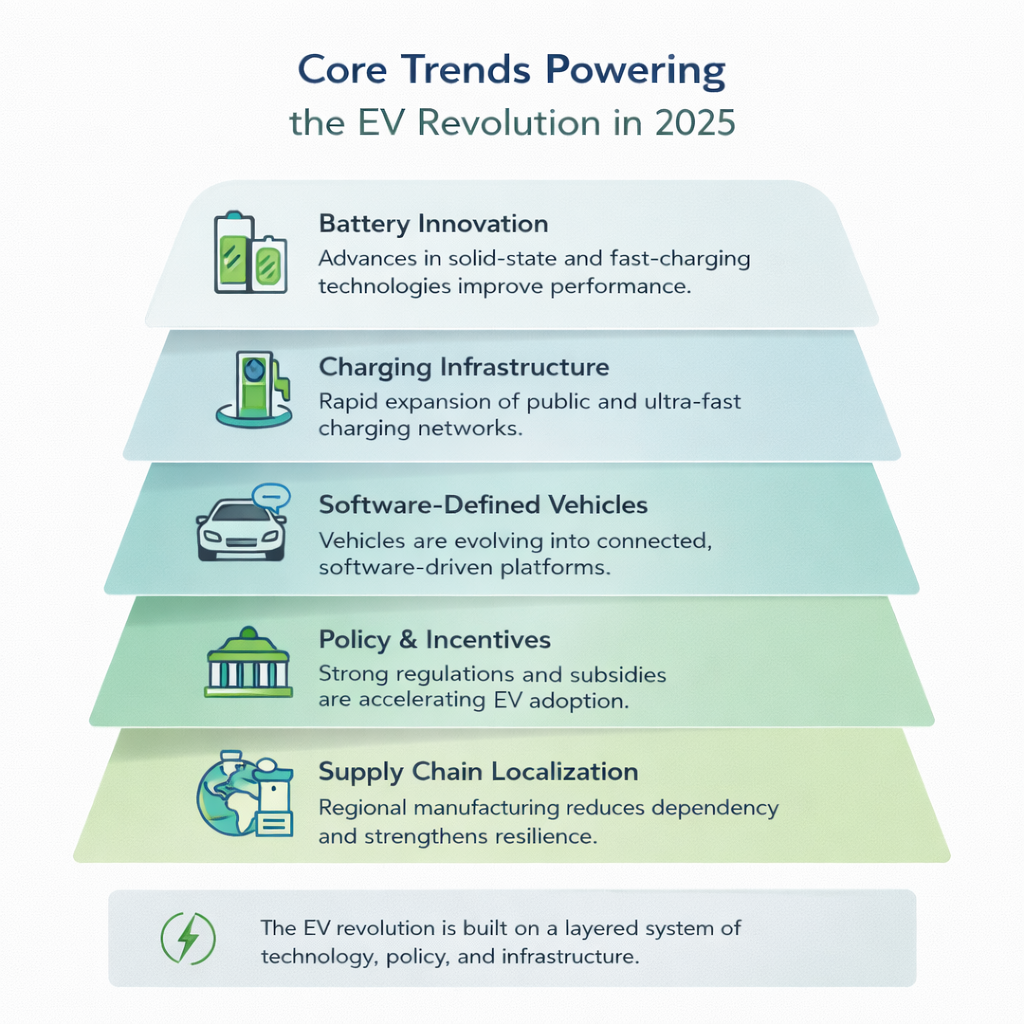
Governments worldwide are backing the EV transition with ambitious policies and incentives. China’s trade-in subsidies, the U.S. Inflation Reduction Act, and the EU’s Battery Regulation (effective 2025) are setting the tone for cleaner and more circular EV production.
Emerging markets like India are establishing battery passport frameworks and mandating sustainable automotive design practices, ensuring long-term e-mobility growth.
Sustainability is more than just low emissions. EVs are increasingly powered by renewable energy sources, such as solar and wind, and integrate into low-carbon grid systems. Moreover, governments and companies are investing in battery recycling, aiming to recover critical materials like lithium and cobalt.
The EU’s Battery Directive mandates minimum recycled content, and companies like Redwood Materials are pioneering closed-loop recycling systems. This not only reduces environmental impact but also strengthens supply chain resilience.
As technology matures and awareness grows, consumer interest in EVs is at an all-time high. Surveys show that nearly 1 in 4 prospective buyers in Europe and 45% in China plan to buy an EV as their next vehicle. Key decision factors include affordability, range, and charging convenience.
Consumers now have broader choices—from compact city EVs to long-range SUVs and electric trucks. Automakers are offering diverse models with high-tech features like autonomous driving, connected infotainment systems, and energy-efficient designs, making EVs more desirable than ever.
At the heart of the EV transition lies an urgent need for skilled professionals. Whether you're a student, engineer, energy expert, or educator, evACAD helps you bridge the gap between today’s skillsets and tomorrow’s demands.
From cutting-edge courses in electric powertrains and battery technologies to hands-on training in sustainable transport systems, evACAD offers tailored programs designed to prepare the next generation of EV innovators. With access to expert mentors, real-world projects, and the latest industry tools, our platform empowers you to become part of the e-mobility revolution.
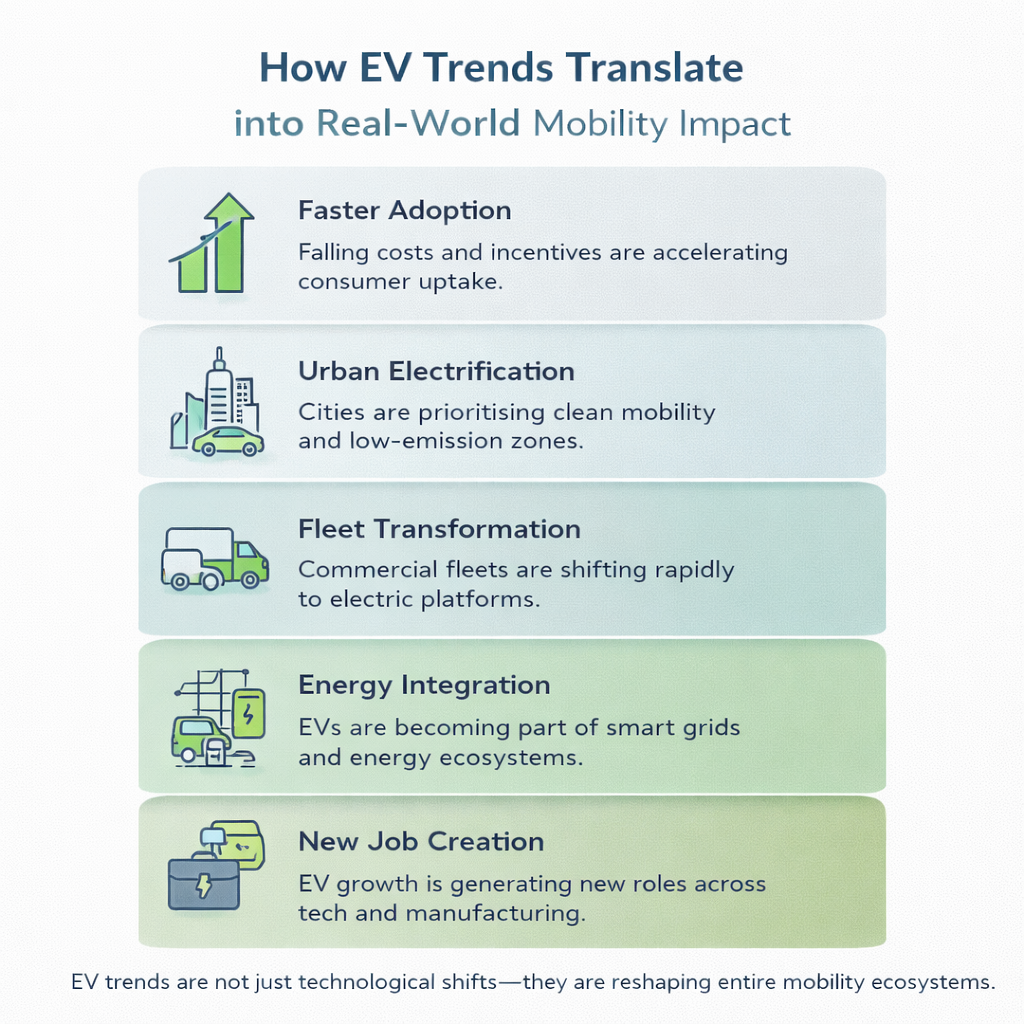
The trends shaping EVs in 2025 highlight a larger global narrative—one of technological acceleration, environmental stewardship, and a shift toward cleaner, smarter mobility. As adoption broadens and innovation deepens, electric vehicles are poised to redefine the way we move, live, and think about energy.
To stay ahead in this rapidly changing industry, follow evACAD and explore the latest insights, skill-building opportunities, and expert guidance on your path to a career in e-mobility.
https://www.iea.org/reports/global-ev-outlook-2025/executive-summary
https://www.spglobal.com/automotive-insights/en/blogs/2025/03/india-ev-market-trends-future
https://www.iea.org/reports/global-ev-outlook-2025/electric-vehicle-charging
https://www.iea.org/reports/global-ev-outlook-2024/trends-in-electric-cars
https://www.bbc.com/future/article/20250404-where-ev-batteries-go-to-die-and-be-reborn