
When most businesses talk about sustainability, the usual suspects come to mind: carbon footprints, energy efficiency, waste reduction. But a powerful and often overlooked force is quietly influencing global economies, investor decisions, and long-term corporate survival—biodiversity.
Biodiversity, the rich variety of life forms on Earth, from genes to ecosystems, is more than just a conservationist concern. It underpins everything from the food we eat to the water we drink and the raw materials that power industry. Its loss is not just an environmental tragedy—it’s an economic and strategic risk hiding in plain sight.
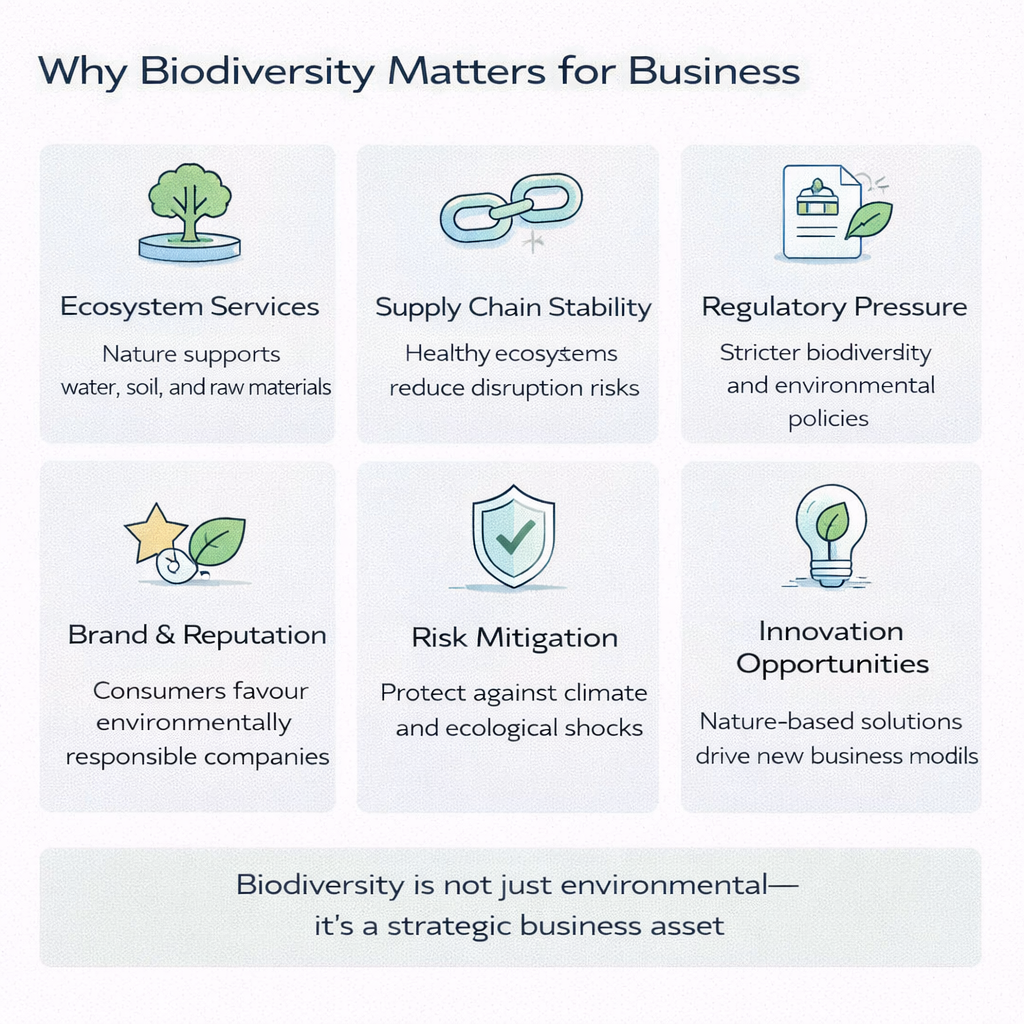
Today, over half of global GDP—roughly $44 trillion—is moderately or highly dependent on nature,according to the World Economic Forum. A PwC report puts that figure closer to$58 trillion. Yet many businesses still operate as if the ecosystems they relyon will always be stable and free. This mindset is risky.
Biodiversity loss is accelerating due toland-use changes, pollution, climate change, and unsustainable resourceexploitation. The consequences are becoming uncomfortably tangible: decliningcrop yields, factory shutdowns from water shortages, and volatile raw materialprices. Industries from agriculture to technology are already feeling thestrain.
More than just physical risks, the regulatory and reputational landscape is shifting too. With regulations like the EU’s Corporate Sustainability Reporting Directive (CSRD)mandating biodiversity impact disclosures, and frameworks like TNFD (Task force on Nature-related Financial Disclosures) gaining traction, companies failing to act face increasing compliance burdens, investor scrutiny, and reputational damage.
Forward-thinking businesses aren’t just mitigating risks—they’re seeing biodiversity as a leverfor innovation, value creation, and competitive edge.
Nature-positive strategies can unlock new revenue streams, attract ESG-conscious investors, and build stronger customer loyalty. According to estimates, adopting nature-positive business models could generate up to $10trillion in new value and create nearly 400 million jobs by 2030 .
From plant-based proteins to green infrastructure, companies that align their products and services with ecological resilience are tapping into massive emerging markets.Patagonia, Tesla, and Beyond Meat aren’t just mission-driven outliers—they’re trailblazers in a rapidly expanding value frontier.
So how can businesses actually measure their biodiversity impact and dependencies?
Tools like ENCORE,IBAT, and biodiversity footprinting models help companies visualize how their operations affect nature and identify priority areas for action. Metricslike Mean Species Abundance (MSA) and Potentially Disappeared Fraction of Species (PDF) offer quantifiable indicators to guide reporting and investment decisions.
Yet challenges remain. Unlike carbon, biodiversity has no single unit of measurement. Its complexity—encompassing species, ecosystems, and genetic diversity—means that data is often fragmented or hard to interpret. Still, businesses are finding ways forward, using materiality assessments, supplier audits, and geospatial mapping to bring biodiversity risks into financial terms.
The key isn’t over simplifying nature’s value. It’s aligning operational insights with material risks and opportunities. The result? Better resilience, more accurate valuations, and smarter capital allocation.
Investors are increasingly factoring biodiversity into risk assessments and portfolio decisions. Firms with strong nature-positive credentials may access capital at better rates, while biodiversity laggards face higher borrowing costs or divestment.
Initiatives like NatureAction 100 are pushing institutional investors to engage with companies on biodiversity issues. At the same time, ESG rating agencies are integrating nature metrics into evaluations, meaning biodiversity performance now impacts credit ratings, investor sentiment, and even stock price volatility.
In this new paradigm, talent capable of navigating sustainable development goals and nature-positive strategy is in high demand.
That’s where evACAD plays a pivotal role:
Jointly offered with IIM Kashipur, this 11-month program prepares leaders to integrate biodiversity, circular economy, and renewable power sources into business strategies. Professionals learn how to respond to emerging mandates like TNFD and align with frameworks like the UNSustainable Development Goals (SDGs).
Both programs are tailored to bridge industry needs with sustainability education, fostering professionals ready to lead the green energy transition.
The Corporate Sustainability Reporting Directive (CSRD) is a game-changer, mandating biodiversity reporting for thousands of companies. It incorporates the concept of"double materiality" — requiring firms to disclose not only how nature impacts them, but also how they impact nature.
Voluntary frameworks like TNFD and SBTN (Science-Based Targets for Nature) are rapidly becoming gold standards. TNFD’s LEAP approach (Locate, Evaluate, Assess, Prepare) and SBTN’sAR3T model (Avoid, Reduce, Regenerate, Restore, Transform) provide step-by-step roadmaps for integrating biodiversity into corporate strategy.
The convergence of voluntary and mandatory frameworks suggests a future where biodiversity reporting is not just expected, but essential.
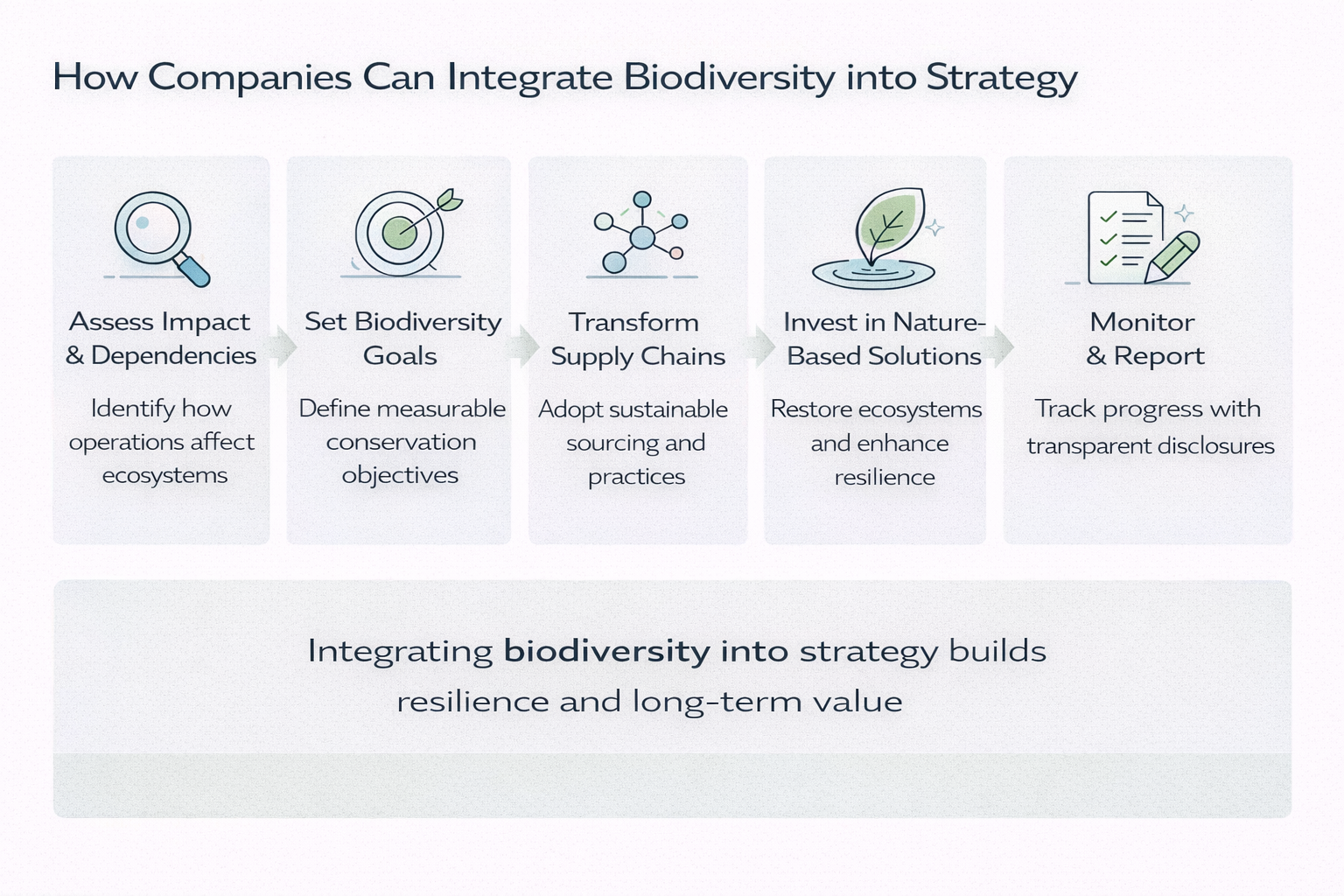
Emerging technologies are transforming biodiversity monitoring. Satellites, AI, drones, and eDNA allow for real-time tracking of ecosystem health, species populations, and land-use changes. IoT sensors and bioacoustics offer continuous environmental data streams, making it easier to quantify and communicate nature-related risks and progress.
Companies leveraging these tools are gaining deeper operational insights, ensuring regulatory compliance, and strengthening stakeholder trust.
The message is clear: biodiversity is not a box to tick in a sustainability report. It’s a foundational business issue tied to long-term profitability, reputation, and survival.
Businesses that move now to embed nature into governance, strategy, and operations will not only mitigate risk—they’ll lead the transition to a resilient, regenerative economy. Those that don’t may find themselves outpaced by regulation, rejected by capital markets, and irrelevant to the values of tomorrow’s customers.
In the new economy, value flows where nature is protected, restored, and respected. The future of business is not just net-zero. It’s nature-positive.


.webp)
.jpg)
.jpg)