Opportunities in the EV Industry: Unlocking a Future-Ready Career Path
last updated
July 7, 2026
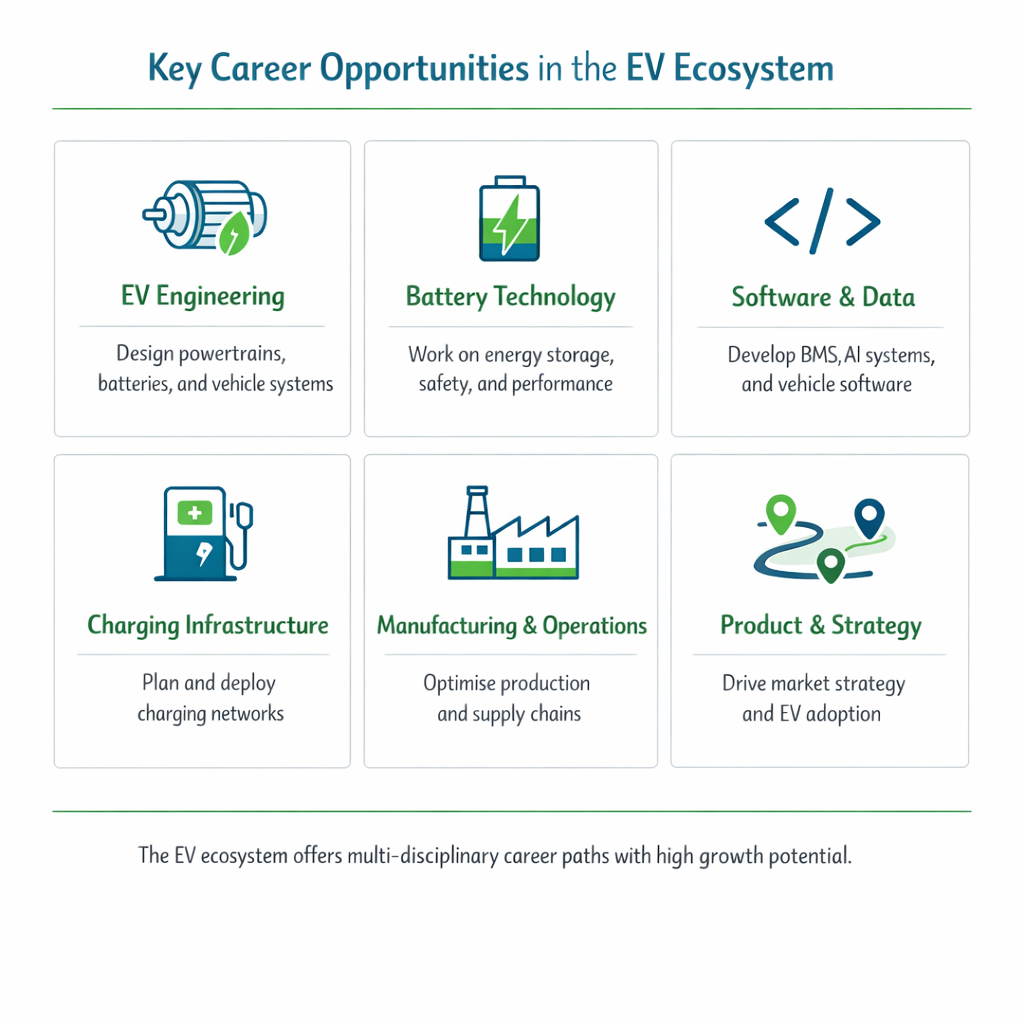
The electric vehicle (EV) industry is booming globally, with significant investments and innovations driving its rapid expansion. Governments and businesses are pushing for sustainable, eco-friendly solutions to transportation, making the EV sector a hotbed of career opportunities. Whether you're just starting or a seasoned professional, the EV industry offers diverse roles across different levels and the potential for lucrative salary hikes. In this blog, we'll explore the opportunities in the e-mobility industry and how evACAD can equip you with the skills to secure these roles.
The Evolving EV Market
The global electric vehicle market is projected to grow at a CAGR of 32.5%, reaching a market size of over USD 1,328.08 billion by 2030. In India, EV sales are expected to rise by 66% in 2024, after nearly doubling in 2023, due to favorable policies and increasing consumer interest. This growth is translating into a surge in demand for qualified professionals to design, build, and manage the next generation of electric vehicles. EVs are not only transforming how we move but also creating new, specialized job roles at every level of expertise.
Entry-Level Opportunities in the EV Industry
The EV sector is not limited to engineers; it welcomes individuals from various disciplines, including mechanical, electrical, electronics, computer science, and even marketing. Fresh graduates and diploma holders can find roles that match their skill sets and interests.
Technical Roles
EV Technician: Involves assembling, testing, and maintaining electric vehicles.
Junior Design Engineer: Assists in designing EV components, such as electric drivetrains or battery systems.
Battery Systems Analyst: Monitors and analyzes battery performance to ensure efficiency and safety.
R&D Assistant: Supports lab testing, data collection, and literature surveys to assist ongoing research in EV systems and technologies.
Charging Infrastructure Engineer (Entry Level): Assists in planning, installation, and troubleshooting of EV chargers while understanding protocols like CCS, CHAdeMO, and OCPP.
Non-Technical Roles
Sales and Marketing Associate: Promotes EV products and services, requiring strong communication skills and market knowledge.
Customer Support Executive: Handles customer queries and provides assistance related to EV products.
Operations Coordinator: Manages logistics, supply chain, and day-to-day operations of EV businesses.
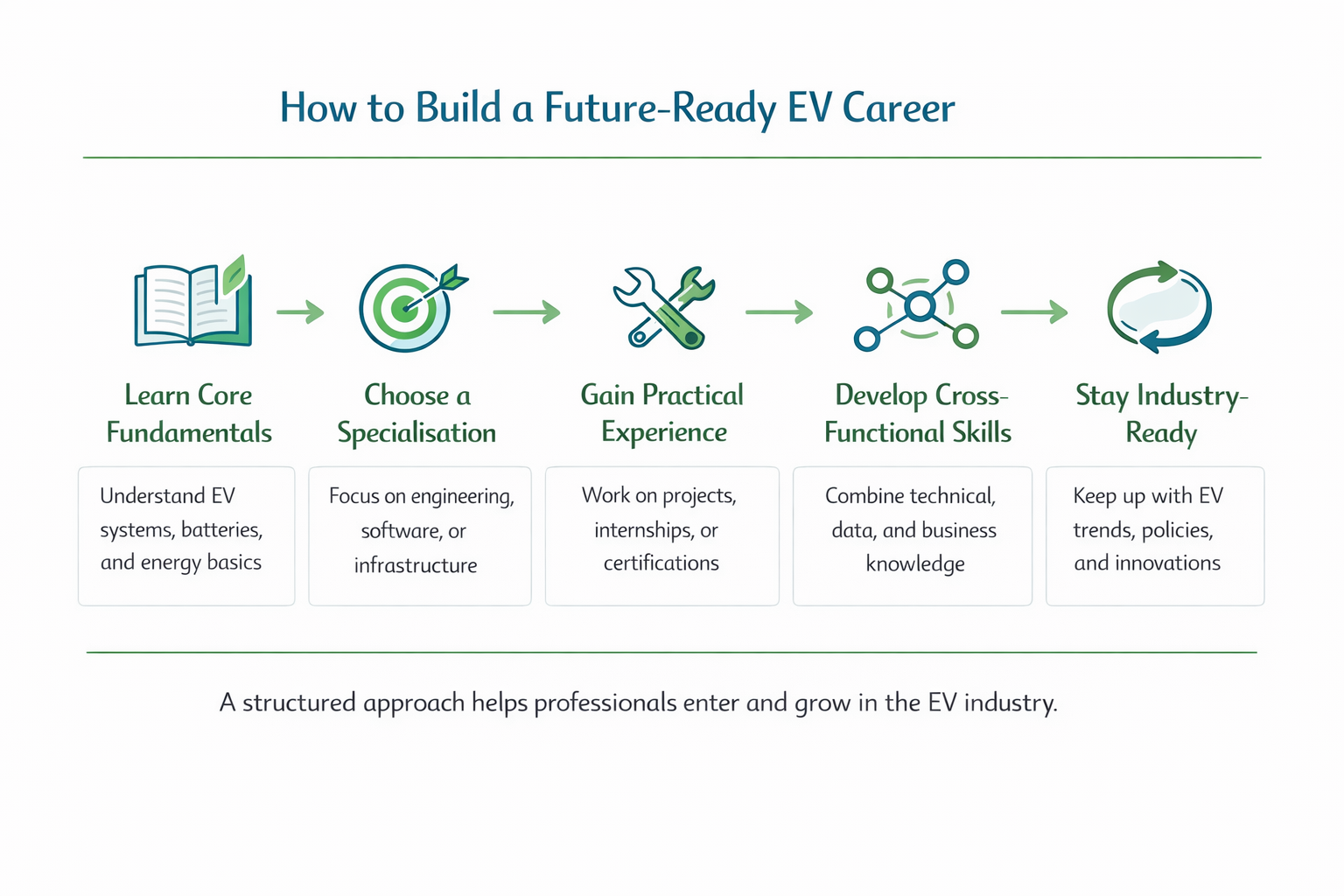
Educational Pathways and Skill Development
Individuals from various educational backgrounds can enter the EV industry:
Engineering Graduates: Mechanical, Electrical, Electronics, and Computer Science engineers can directly apply for technical roles.
Diploma Holders: Diplomas in relevant fields can lead to technician and assistant roles.
Graduates in Other Disciplines: Individuals with degrees in business, marketing, or other fields can pursue non-technical roles.
To enhance employability, consider pursuing specialized courses:
Certificate program in Model-Based Engineering: Comprehensive 4-month beginner course tailored for those entering the EV field. This program is highly recommended for engineering students who are interested in taking their final year projects into a new horizon with an advanced level of model-based learning experience.
Executive MTech in Electric Vehicle Technology: A 2-Year program focusing on EV technology. Such a curriculum is designed to provide the learners with an in-depth understanding of EV components, with hands-on Experience provided to candidates to enhance their overall learning experience
PGC in eDrive & Battery Systems: Provides training in EV technology, battery systems, and powertrain engineering. This program provides our learners with industry industry-relevant 7 days of campus immersion experience at IIT Bhubaneswar REP.
Career Progression and Advanced Roles
With experience and additional qualifications, professionals can advance to mid-level and senior roles:
Mid-Level Roles (2-5 years of experience)
Product Development Engineer: Focuses on improving the efficiency, cost, and performance of electric vehicles.
Battery Management System (BMS) Engineer: Responsible for designing, testing, and managing battery systems.
EV Integration Specialist: Ensures that all components work seamlessly within the EV, coordinating efforts across design, software, and hardware teams.
Charging Infrastructure Specialist: Manages design, installation, and compliance of EV charging systems with grid and vehicle standards.
R&D Engineer – New Energy Systems: Explores and prototypes advanced battery, motor, or energy management technologies for future EVs.
Senior-Level Roles (7+ years of experience)
Chief EV Engineer: Oversees the entire lifecycle of EV development, from concept to market.
Technical Lead: Manages teams of engineers working on different aspects of EV design and manufacturing.
Senior Controls Architect – VCU/MCU: Designs and validates high-level control architecture for vehicle and motor controllers. Technical Head / Leads – EV Systems: Oversees the end-to-end development, integration, and compliance of core EV systems, including battery packs, power electronics, charging infrastructure, and regulatory certification.
Head – EV Quality & Reliability: Develops and enforces quality systems to ensure long-term durability and performance of EV components.
Director – EV R&D and Innovation: Leads advanced R&D projects to explore emerging EV technologies and future mobility solutions.
Salary Expectations
Salaries in the EV industry vary based on role, experience, and specialization:
Entry-Level: EV Technicians can expect an average salary of ₹25,214 per month
Mid-Level: Professionals with 2-5 years of experience can earn between ₹8.0-9.0 LPA, with specialized roles like BMS or EV software development commanding higher pay.
Senior-Level: Senior professionals can command salaries upwards of ₹20-30 LPA, with many companies offering performance-based bonuses.
Stay tuned for more detailed information about mid and senior-level opportunities!
How evACAD Can Propel Your EV Career
evACAD is more than just a training institute—it's your partner in building a successful career in the EV industry. With cutting-edge programs, hands-on training, and collaborations with industry leaders, evACAD ensures you have the tools you need to excel.
evACAD Advantages:
Specialized courses tailored to industry needs.
Access to industry experts and real-world projects.
Flexible learning options, including online and offline courses.
Career support services to help you land top roles*
The EV industry offers plenty of opportunities for individuals at all stages of their careers. By acquiring the right skills and certifications, you can embark on a rewarding journey in this future-ready sector. Explore evACAD's range of programs today and take the first step towards becoming an EV expert.
What entry-level EV job roles are available for fresh graduates in the electric vehicle industry?
Fresh graduates can pursue EV job roles such as EV Technician, Junior Design Engineer, Battery Systems Analyst, R&D Assistant, and charging infrastructure engineer. Non-technical graduates can enter through sales, customer support, or operations roles. The electric vehicle industry welcomes professionals from mechanical, electrical, electronics, computer science, and business backgrounds equally.
What is the typical EV salary in India across entry, mid, and senior levels?
EV salary in India varies significantly by experience level. Entry-level EV Technicians earn around Rs. 25,214 per month, mid-level professionals with 2 to 5 years of experience earn Rs. 8 to 9 LPA, and senior professionals in the electric vehicle industry can command Rs. 20 to 30 LPA, with performance bonuses available for specialised EV job roles.
What does a Battery Management System engineer do, and what experience is typically required?
A Battery Management System engineer is a mid-level EV job role requiring 2 to 5 years of experience, responsible for designing, testing, and managing battery systems within electric vehicles. This is one of the most specialised and well-compensated roles in the electric vehicle industry, making relevant EV courses in battery and powertrain engineering highly valuable for career advancement.
What EV courses best prepare professionals for EV industry career opportunities?
evACAD offers several EV courses suited to different career stages. The Certificate Program in Model-Based Engineering is ideal for entry-level aspirants, the PGC in eDrive and Battery Systems targets mid-level technical roles, and the Executive MTech in Electric Vehicle Technology provides advanced preparation for senior EV industry career opportunities requiring deep electric vehicle industry expertise.
How is the electric vehicle industry expected to grow, and what does this mean for EV industry career opportunities?
The global electric vehicle industry is projected to reach over USD 1,328 billion by 2030, growing at a CAGR of 32.5%. In India, EV sales are forecast to rise 66% in 2024 alone. This rapid expansion is directly creating a surge in demand for skilled professionals across all EV job roles, making EV industry career opportunities among the most future-ready in the automotive and clean energy sectors.