
7 Best-Looking Electric Cars In India (2026): Top EV Designs Compared

last updated
July 14, 2026

India's EV showrooms look nothing like they did two years ago. Back then, "electric car design" mostly meant a closed-off grille bolted onto an existing petrol body. That's over. Tata's Active platform and Mahindra's INGLO architecture were both built from scratch for electric power, and it shows in their coupe rooflines, flush door handles, and light bars that look intentional rather than retrofitted. Here are seven EVs on sale in India right now that are winning the design conversation, from an affordable hatchback-height SUV to a ₹55 lakh design benchmark.

Mahindra BE 6

Nothing else in this list draws a crowd at a signal quite like the BE 6. It's Mahindra's first "born electric" SUV, built on the INGLO platform, and the styling leans all the way into it – sharp creases, a closed, illuminated grille, and a silhouette that genuinely looks like nothing Mahindra has sold before. It's also quick: the 79 kWh version does 0-100 km/h in 6.7 seconds.
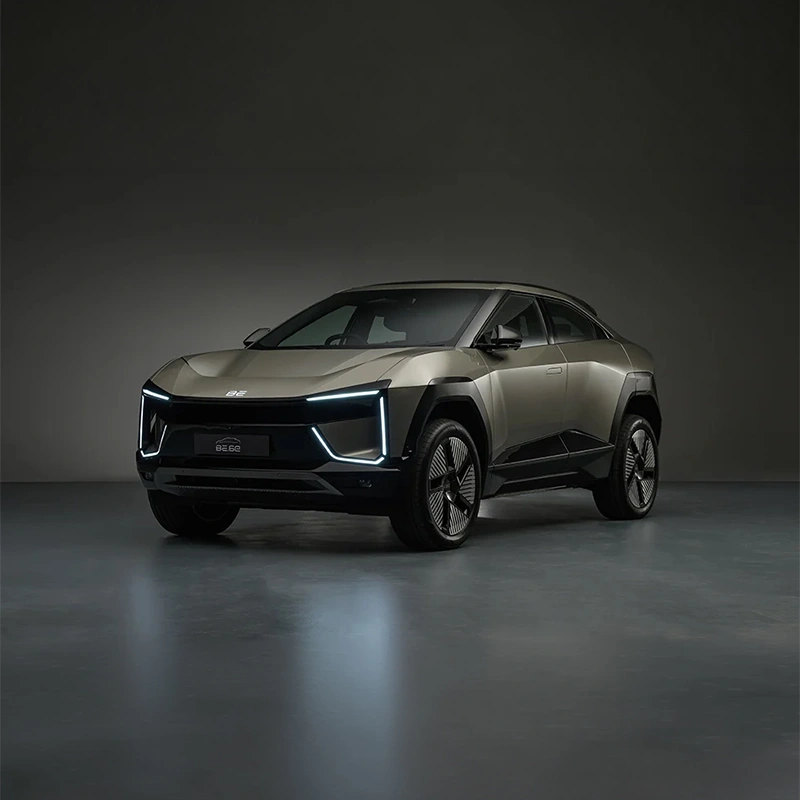
  • Battery capacity: 59 kWh or 79 kWh
  • Claimed range: Up to 682 km (ARAI, 79 kWh variant)
  • Charging speed: 20 minutes, 20–80% via 175 kW DC fast charger
  • Peak output: Up to 282 bhp and 380 Nm torque
  • Starting price: ₹18.90 lakh (ex-showroom, approximate)
Mahindra-BE6

Tata Curvv EV

The Curvv EV was Tata's answer to a simple complaint: why do EVs in this price band all look like practical boxes? Its sloping fastback roofline and flush handles give it a genuinely sporty stance, and it does so while staying under ₹20 lakh, a rare for a coupe-shaped SUV in India.
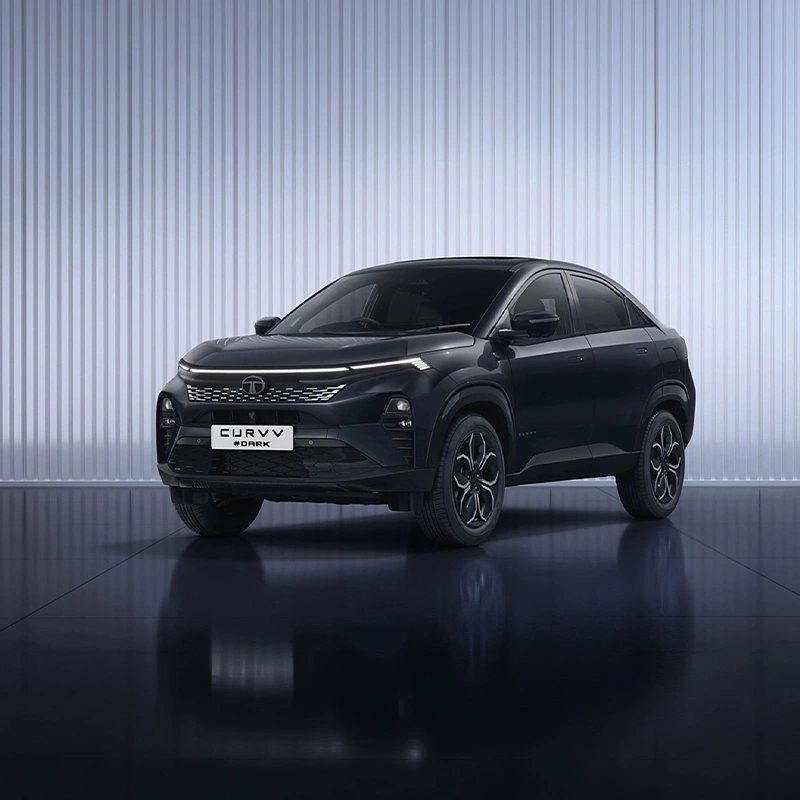
  • Battery capacity: 55 kWh
  • Claimed range: 502 km (ARAI)
  • Charging speed: 40 minutes, 10–80% via 70 kW DC fast charger
  • Peak output: 165 bhp and 215 Nm torque
  • Starting price: ₹16.99 lakh (ex-showroom, approximate)
TATA-curve-EV

Tata Harrier EV

Tata kept the Harrier nameplate for its electric flagship instead of inventing a new one, and the design leans into that decision. A wide, closed grille, full-width LED lighting, and 19-inch wheels that fill out the arches properly. It's also the only EV on this list with a genuine all-wheel-drive option.
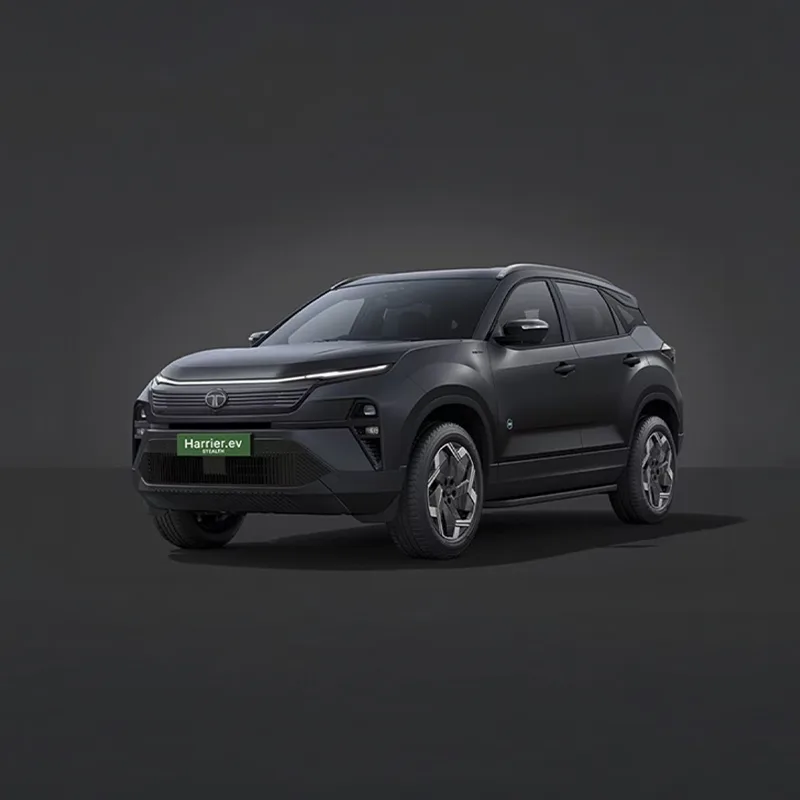
  • Battery capacity: 65 kWh (RWD only) or 75 kWh (RWD or AWD)
  • Claimed range: Up to 627 km (ARAI, 75 kWh RWD); 622 km (75 kWh AWD)
  • Charging speed: 25 minutes, 20–80% via 120 kW DC fast charger
  • Peak output: Up to 390 bhp and 504 Nm torque (AWD dual-motor)
  • Starting price: ₹21.49 lakh (ex-showroom, approximate; AWD variants from ~₹26.49 lakh)
TATA-Harrier-EV

Mahindra XEV 9e

If the BE 6 is Mahindra's sports coupe, the XEV 9e is its grand tourer. Same INGLO platform, same battery options, but a rounder, more family-friendly silhouette with a full-width LED strip up front and a genuinely plush triple-screen cabin. It's the best choice if you want the BE 6's presence but with a bit more restraint.
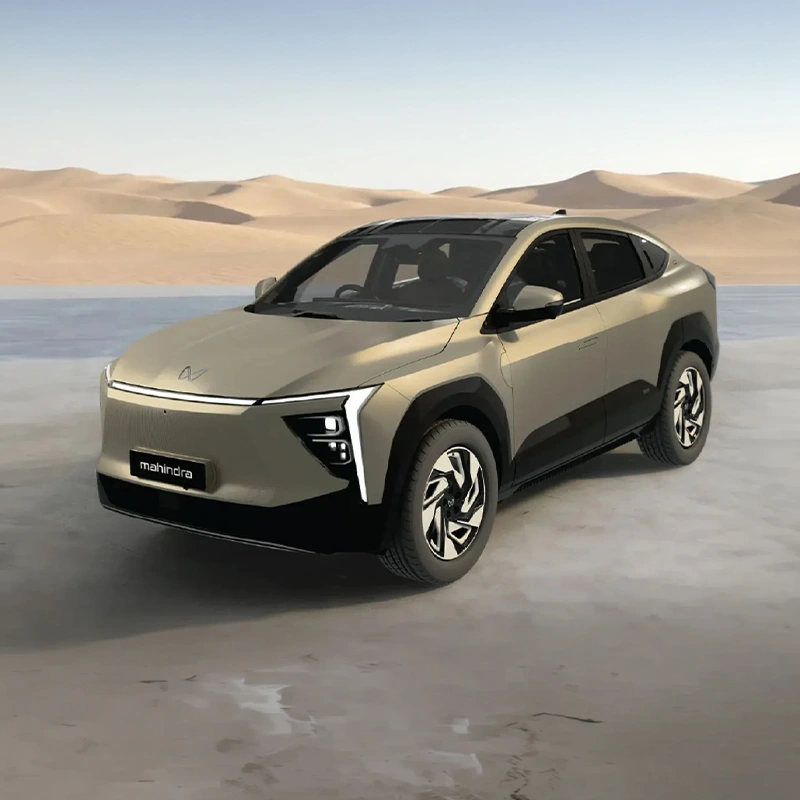
  • Battery capacity: 59 kWh or 79 kWh
  • Claimed range: Up to 656 km (ARAI, 79 kWh variant)
  • Charging speed: 20 minutes, 20–80% via 175 kW DC fast charger
  • Peak output: Up to 282 bhp and 380 Nm torque
  • Starting price: ₹21.90 lakh (ex-showroom, approximate)
Mahindra-XEV-9E

Hyundai IONIQ 5

Every list like this needs a car other manufacturers are quietly benchmarking against, and it's still the IONIQ 5. Its Parametric Pixel lighting and retro-futuristic proportions, styled under Hyundai Motor Group's Chief Creative Officer Luc Donckerwolke, haven't dated at all. Hyundai gave the India-spec car a significant update in April 2026, and the current model is meaningfully different from what you'll find in older reviews.
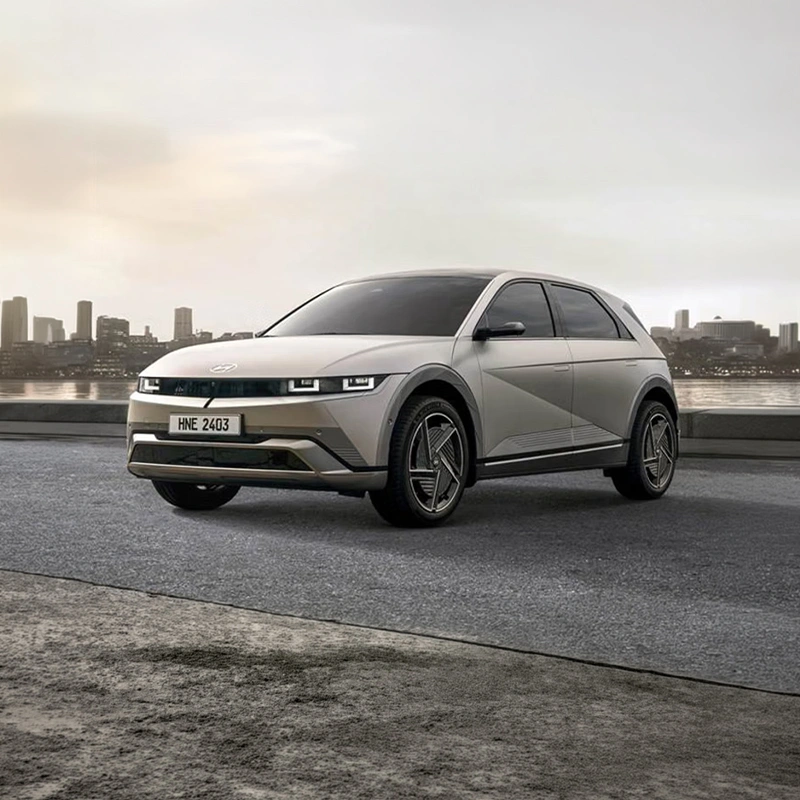
  • Battery capacity: 84 kWh (updated April 2026, up from the earlier 72.6 kWh)
  • Claimed range: 690 km (ARAI)
  • Starting price: ₹55.70 lakh (ex-showroom)
Hyundai-IONIQ-5

MG Windsor EV

MG calls the Windsor a "CUV" rather than an SUV, and the shape backs that up. A soft, MPV-like profile with vertically stacked headlamps and a floating roofline that reads more premium than its price suggests. The 135-degree reclining rear seats are the interior party trick.
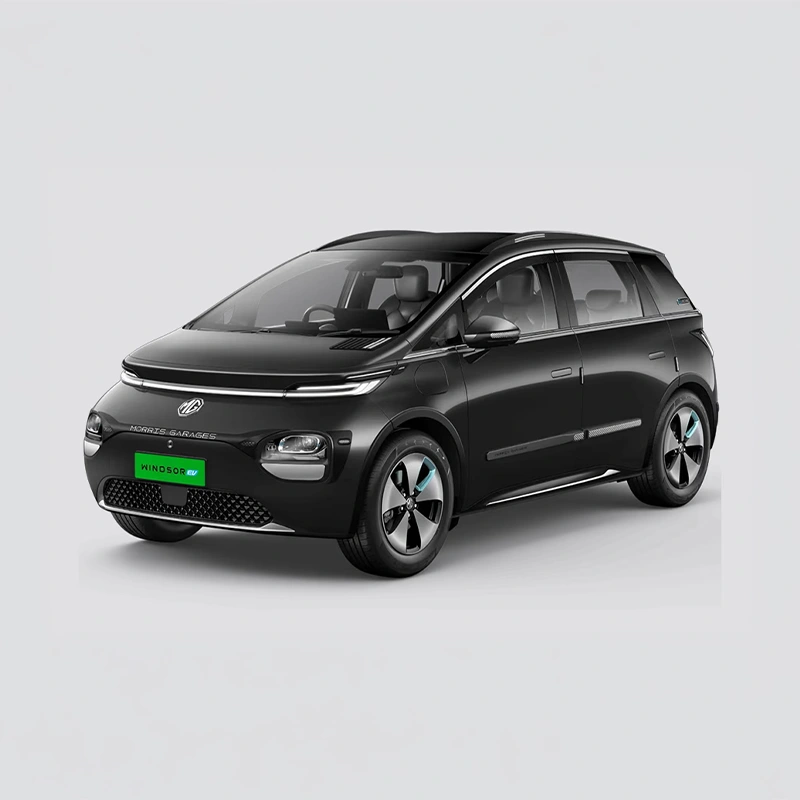
  • Battery capacity: 38 kWh or 52.9 kWh (Pro)
  • Claimed range: Up to 449 km (ARAI, 52.9 kWh Pro variant)
  • Charging speed: Around 50 minutes, 20–80% via DC fast charger
  • Peak output: 134–136 bhp and 200 Nm torque
  • Starting price: ₹14.10 lakh (ex-showroom, Pro variant, approximate)
MG-Windsor-EV

Tata Nexon EV

The Nexon EV remains the most-bought EV design in the country, and it's easy to see why, the coupe-like roofline and aerodynamic grille, shaped by Tata's design team during Pratap Bose's tenure as VP of Global Design, still look current years later. It's proof that good EV design doesn't have to start at ₹20 lakh.

  • Battery capacity: 45 kWh
  • Claimed range: 489 km (ARAI)
  • Charging speed: 40 minutes, 10–80% via DC fast charger
  • Peak output: 142 bhp and 215 Nm torque
  • Starting price: ₹12.49 lakh (ex-showroom, approximate)

TATA-Nexon-EV

Turn This Interest Into a Career Move

Liking how these cars look is one thing. Understanding the battery packs, motor architecture, and charging systems that make them possible is another thing, and that's where the real career opportunity in India's EV shift sits.

  • Want the formal credential? evACAD's M.Tech in EV Technology is built for working engineers who want a recognised postgraduate degree in EV powertrain design, battery systems, and vehicle engineering without stepping away from their jobs.
  • Want deep technical specialisation? The Professional Diploma in e-Drives and Battery Systems goes straight into the components that define every car on this list: motor design, battery pack engineering, and drive systems for engineers who want to go deep on the hardware.
  • Want to start smaller? evACAD's Self-Paced Programs cover EV fundamentals, smart mobility, and range engineering at your own pace. A low-commitment way to test your interest before committing to a longer program.

Explore all such programs at evacad.com and find the path that matches where you are today.

Graphic showing four diverse male portraits connected by orbiting colored dots around a central figure.
Take the Next Step with evACAD
Get Started

Frequently Asked Questions

Which one is the best-looking electric car in India in 2026?
There's no single objective answer, since design preference is subjective. The Mahindra BE 6, Tata Curvv EV, and Hyundai IONIQ 5 are the three most consistently praised in reviews, each representing a different design direction: a futuristic coupé-SUV, a sporty crossover, and a retrofuturistic benchmark.
What is the best-looking EV in India for under ₹20 lakh?
The Tata Curvv EV (from ₹16.99 lakh) and Mahindra BE 6 (from ₹18.90 lakh) lead this price band, both using coupe-style rooflines to stand apart from conventional boxy SUV shapes at this price point.
Which electric SUV has the longest range in India in 2026?
Among design-led EVs, the Mahindra BE 6 leads with up to 682 km ARAI-certified range on its 79 kWh battery, just ahead of its sibling, the Mahindra XEV 9e, at 656 km on the same-size battery. Real-world range for both typically runs 450–500 km.
Does a good-looking EV design mean paying more?
Not necessarily. The Tata Nexon EV (from ₹12.49 lakh) and the Tata Curvv EV (from ₹16.99 lakh) show that distinctive styling is available well under ₹20 lakh. The bigger price differences usually come from battery size and charging speed, not design alone.
Is the Tata Curvv EV or the Mahindra BE 6 better looking?
It depends on your taste. The Curvv EV is a slick coupe-SUV silhouette built for daily practicality, but the BE 6 takes a sharper, more futuristic stance on Mahindra’s INGLO platform. Both have good reviews, depending on whether you want something subtle or bold.
Talk to Advisor over call
Blue upward arrow inside a white circle with a blue border.