
As the world evolves toward climate deadlines and energy disruptions, one element is definitely stealing the spotlight in the whole crowd: hydrogen. Not just any hydrogen, but green hydrogen—made from nothing but water and renewable electricity.
With governments and corporates pledging Net Zero targets and clean energy investments soaring, green hydrogen is being considered as the fuel of the future. But how exactly does this clean fuel work? Why is cleanfuel suddenly gaining all the attention when Net zero is being discussed? And what does it mean for yourcareer and the future of energy in India? Let’s break it down today!
Hydrogen is the lightest and most abundant element in the universe. But we don’t find it naturally in its pure form. It is always bonded to other elements (like oxygen in water). To use hydrogen as a fuel, we need to extract it and the way we do this extraction defines how much purified version of this element we can actually use.
Grey hydrogen is produced from fossil fuels like natural gas, releasing CO₂in the process.
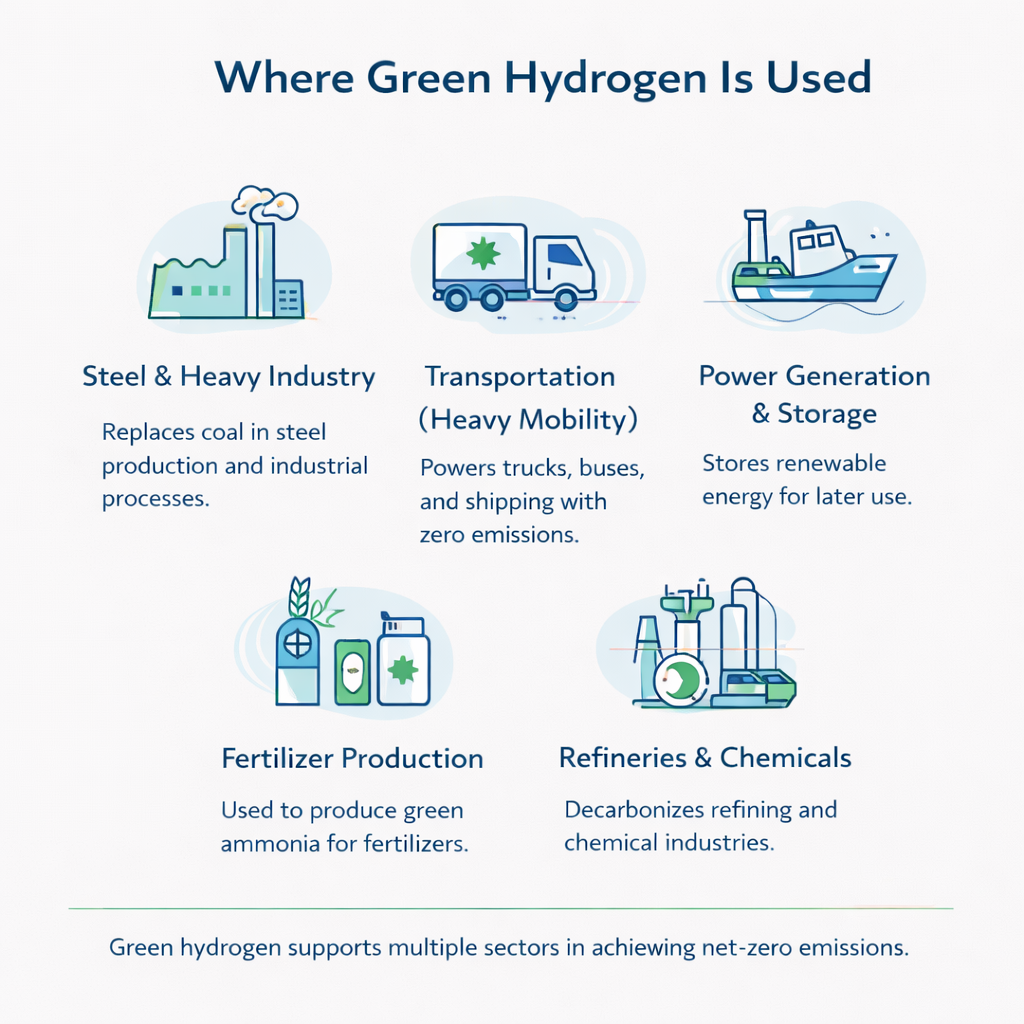
This makes green hydrogen a game-changer. Unlike solar and wind, that produce electricity, hydrogen is an energy carrier — it can be stored, transported, and used across sectors that are difficult to electrify directly.
Because green hydrogen could be the game-changer we need for a truly clean future. While solar power, wind energy, and other renewable sources have helped us make bigstrides, they simply can’t tackle every challenge, especially in heavy industries like steel, cement, aviation, and shipping, where cutting emissions is tough.
That’s where green hydrogen comes in. It can replace fossil fuels in places where other sustainable solutions fall short, helping us move closer to net zero emissions and real sustainable development. When produced using solar or wind energy,green hydrogen becomes a powerful ally in fighting climate change and reducing environmental pollution from sources like thermal power plants and natural gas.
As the world races to meet its Sustainable Development Goals (SDGs), green hydrogen offers more than just clean energy. It gives us a chance to rethink how we power our future. It's about building an energy system that works for the planet, forpeople, and for generations to come.
Let’s take a closer look at how green hydrogen fits into the Net Zero puzzle:
India is not watching from the sidelines; in fact, it is stepping up in a big way. With abundant renewable energy resources and a clear target to reach NetZero by 2070, green hydrogen has taken center stage in the country’s clean energy roadmap.
In 2023, the Government rolled out the National Green Hydrogen Mission, a bold initiative designed to reshape India’s energy and industrial landscape. The mission aims to:
This isn’t just about cutting emissions. It’s about building an entirely new industrial ecosystem. From NTPC to Reliance, Adani, Indian Oil,and JSW, some of India’s biggest players are already investing in electrolyser manufacturing, setting up hydrogen production plants, and planning hydrogen corridors across the country.
Green hydrogen,for India, is more than a climate solution-it’s a gateway to energy independence, economic growth, and industrial innovation.
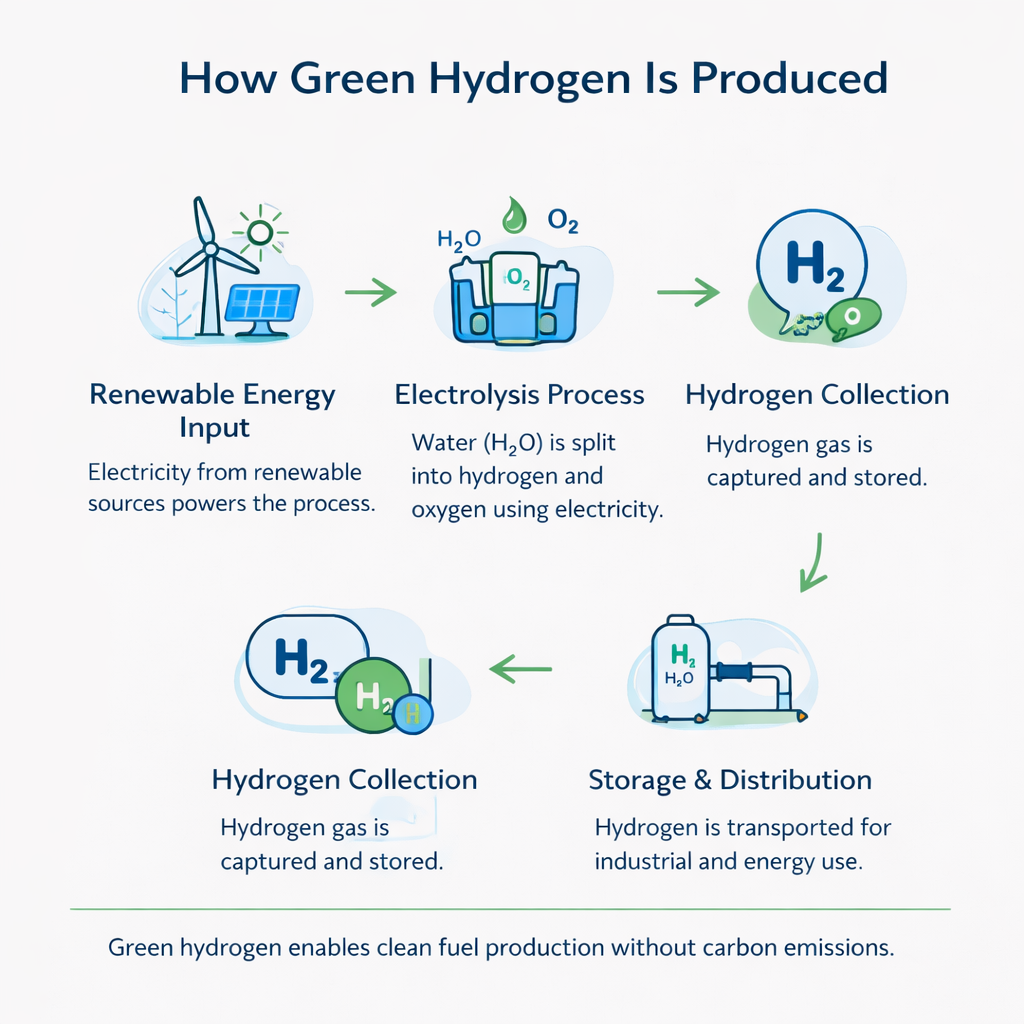
So how is green hydrogen actually made?
The process is called electrolysis, passing electricity through water to split it into hydrogen and oxygen.
But not all electrolysis is equal. Technologies vary:
Alkaline Electrolysers---->Oldest tech, low cost, slower response
PEM (Proton Exchange Membrane)---->Faster, higher purity, but costlier
SOEC (Solid Oxide)---->High efficiency, still emerging
Each has its pros and cons, and the success of green hydrogen will depend on cost reduction,scalability, and efficiency gains.
Here’s the truth: green hydrogen won’t just need scientists or engineers. It will need strategists, policymakers, ESG analysts, energyconsultants, supply chain experts, safety professionals, and sustainabilityleaders.
Let’s look at some emerging job roles:
Hydrogen Program Manager--->Infra, energy, project management pros
ESG & Net Zero Strategist--->CSR, ESG, policy, sustainability leads
Renewable Supply Chain Analyst--->Operations, procurement professionals
Electrolyser Systems Engineer--->Mechanical, electrical, chemical engineers
Regulatory Affairs & Green Finance Specialist--->Lawyers, finance and policy professionals
Even sectors like banking, insurance, and consulting are hiring hydrogen-literate professionals to assess climate risk and green investments.
To meet the demand for cross-functional climate leaders, IIM Kashipur, in collaboration with evACAD, offers the PG Executive Program in Net Zero Strategy & Sustainable Leadership
💡 Deep understanding of green hydrogen, renewables, and energy transition strategies
📊 Fluency in ESG reporting, carbon accounting, and sustainability frameworks
🧭 Strategic tools to design Net Zero roadmaps
🌍 Exposure to global best practices in policy, clean tech, and corporate governance
This program is designed for working professionals from energy, manufacturing, finance, policy,and consulting sectors. It helps you stay ahead of climate regulation and lead decarbonisation in your industry.
Green Hydrogen Is More Than a Fuel. It’s a Movement. It represents promise, innovation, and urgency. As the world shifts away from carbon-heavy models, hydrogen is carving out its space as the next big disruptor.
The real question is: Are you ready to lead with it?


.webp)
.jpg)
.jpg)