
In the race to reach net-zero, carbon offsets have become both a widely used tool and a lightning rod for criticism. As governments, corporations, and individuals strive to reduce their climate impact, carbon offset marketplaces have emerged as platforms that promise to balance out emissions by funding equivalent carbon savings elsewhere. These markets have grown rapidly, with the voluntary carbon market alone projected to exceed $50 billion by 2030 (McKinsey, 2021 report). But with that growth has come a complex web of challenges ranging from price volatility and low-quality credits to concerns about transparency and greenwashing.
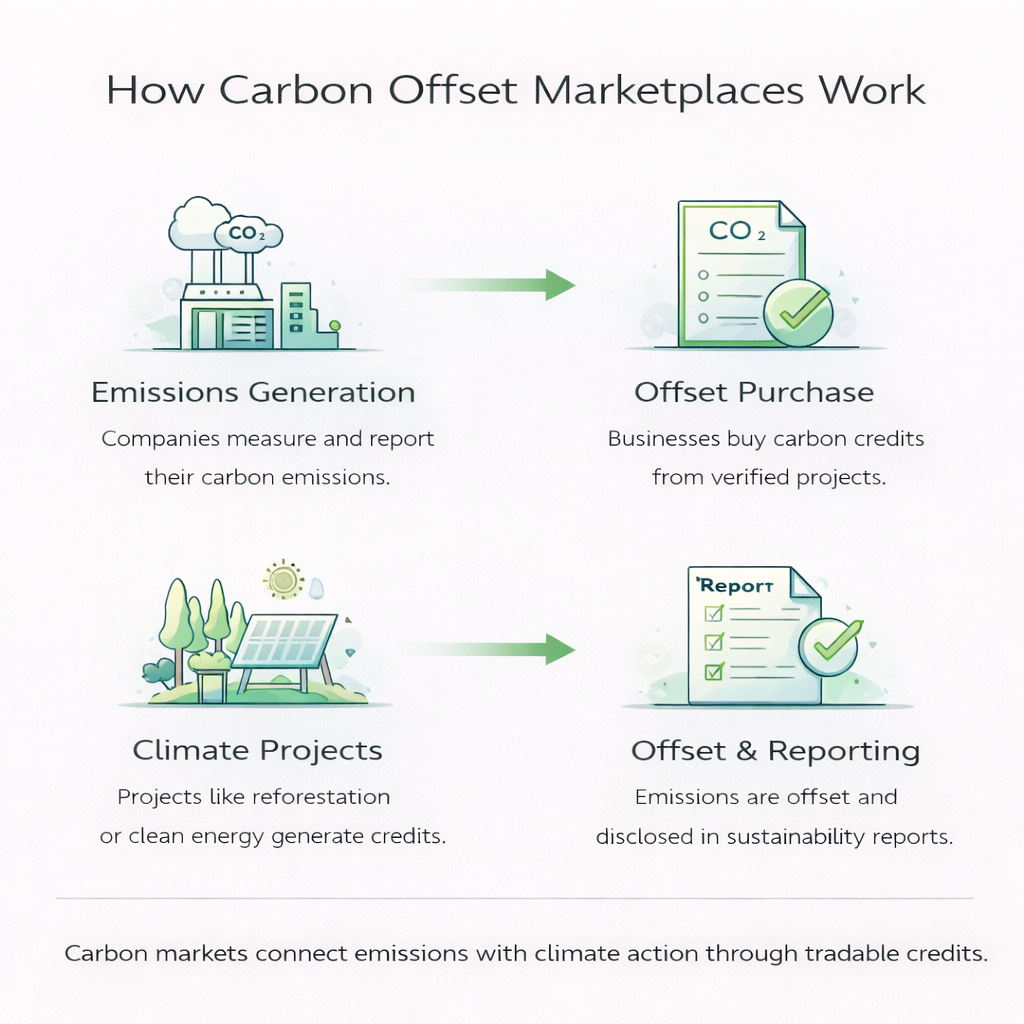
Carbon offset marketplaces operate on a simple premise: if a company or individual cannot eliminate all their emissions, they can pay to support projects like reforestation, clean cookstoves, or renewable energy in developing regions that reduce or avoid emissions elsewhere. In theory, it’s a win-win: emissions are reduced globally, and entities can credibly claim progress toward their climate goals. In practice, the system is far from perfect.
Carbon offset pricing is not standardized and varies widely depending on the type of project, location, certification, and perceived credibility. For instance, a reforestation project in Uganda may sell credits for $8 per tonne of CO₂, while a renewable energy project in India might be priced closer to $3. Premium credits, such as those with verified co-benefits like biodiversity conservation or community development, can command prices above $20 per tonne.
Unlike regulated carbon markets, where prices are determined by government-imposed caps and trading rules, voluntary carbon markets operate through decentralized platforms like Gold Standard, Verra, or marketplaces such as Patch, South Pole, and CarbonX. These platforms list various offset projects and allow buyers to select based on price, geography, certification, and project type. Because these marketplaces lack unified governance, prices often reflect market sentiment, branding, and buyer preference rather than pure climate impact.
One of the key challenges is that offset prices have remained relatively low for many years, often too low to incentivize large-scale, permanent carbon removal. While corporate demand is rising, supply has surged as well, keeping prices subdued. This raises concerns about whether offset markets are delivering meaningful climate benefits or merely offering cheap indulgences.
The quality of an offset determines its real-world effectiveness, and this is where things become complicated. A high-quality carbon credit must meet several key criteria: additionality, permanence, verifiability, leakage prevention, and co-benefits.
Additionality means the carbon savings from the project would not have occurred without the funding from offset buyers. If a wind farm in a country was going to be built anyway due to government subsidies or market trends, then selling offsets from it is questionable. Permanence refers to how long the carbon will remain sequestered or avoided—particularly crucial for forestry projects that can be reversed by wildfires or illegal logging.
Verification ensures that the claimed emission reductions are real and measured according to internationally accepted methodologies. Leakage addresses whether the project inadvertently shifts emissions elsewhere—for instance, by protecting one forest area while deforestation accelerates in another nearby.
Unfortunately, many carbon offset projects struggle to meet all these benchmarks. Investigations by media and academic institutions have shown that a significant percentage of issued credits do not deliver the promised carbon benefits. As a result, some companies—especially in the tech and finance sectors—have faced backlash for relying too heavily on low-quality offsets to support net-zero claims.
Carbon offsets have become a focal point in the broader conversation around greenwashing. Critics argue that they can allow companies to delay direct emissions cuts, while still claiming climate leadership. This has led to growing skepticism among consumers, investors, and regulators.
In response, several international initiatives have emerged to strengthen oversight. The Integrity Council for the Voluntary Carbon Market (ICVCM) and the Voluntary Carbon Markets Integrity Initiative (VCMI) are working to define what constitutes a credible offset and how claims should be communicated. These initiatives aim to introduce global core carbon principles, harmonize certification schemes, and improve data transparency.
Even corporations are taking notice. Microsoft, for instance, has committed to phasing out avoided-emission offsets and investing only in carbon removal credits, which include technologies like direct air capture and biochar. These offsets are more expensive often exceeding $100 per tonne, but are viewed as more credible because they remove carbon rather than just avoid it.
For countries like India, carbon offset markets represent both an opportunity and a challenge. On one hand, India has vast potential for generating offsets through nature-based solutions, clean energy deployment, and waste management projects. Offset revenues can fund climate action in underserved communities and stimulate local green jobs.
On the other hand, if these markets are poorly regulated, they risk becoming extractive where companies in the Global North pay to offset their emissions using projects in the Global South, without ensuring long-term impact or fair revenue sharing. India’s recent announcement of a domestic carbon credit trading scheme and its inclusion in the global carbon dialogue reflect a growing awareness of these concerns.
To maximize value, India must develop its own quality standards, support local project developers in achieving verification, and ensure offsets contribute to the country's own net-zero pathway—not just those of foreign buyers.
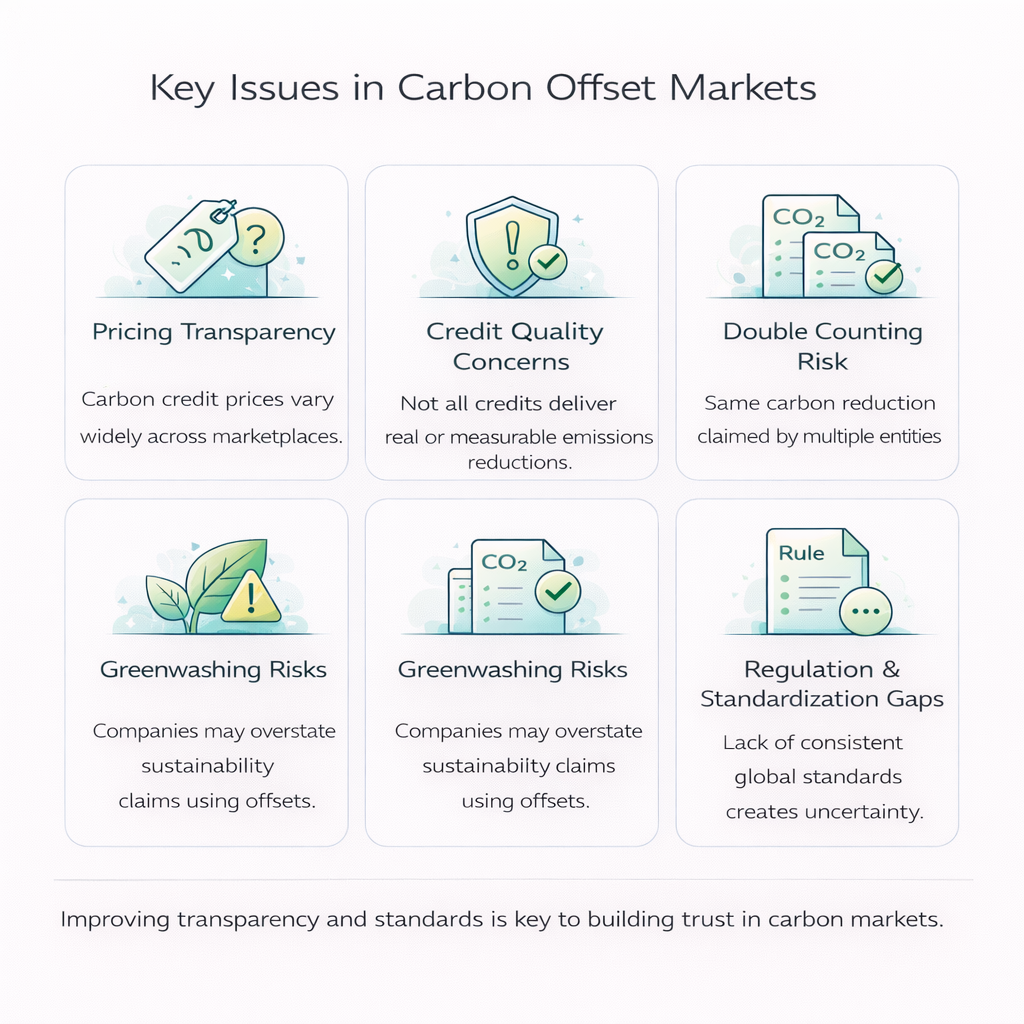
Carbon markets, whether voluntary or compliance-driven, are here to stay. But their success depends on credible pricing, rigorous verification, and ethical governance.
This is also why building capabilities in climate strategy, carbon finance, and sustainability leadership is urgent. Programs like the PG Executive Program in Net Zero Strategy & Sustainability Leadership by IIM Kashipur in collaboration with evACAD are equipping professionals with the tools to engage with these challenges, covering carbon markets, green finance, and climate policy with global case studies and practical frameworks.
The true power of carbon markets lies not in cheap absolution, but in enabling collective climate progress. For that, pricing must reflect real impact, quality must be independently verified, and offsets must complement, not replace, deep emissions cuts.
Carbon offsets are no silver bullet, but when designed responsibly, they can channel billions into the green transition and accelerate positive systemic change. Their evolution will help determine whether we merely trade carbon or truly transform economies for a sustainable future.


.webp)
.jpg)
.jpg)