
Learn advanced energy storage and battery systems for electric mobility, covering battery chemistry, battery pack design, BMS, charging, thermal management, ultracapacitors, fuel cells, and next-generation energy storage technologies.
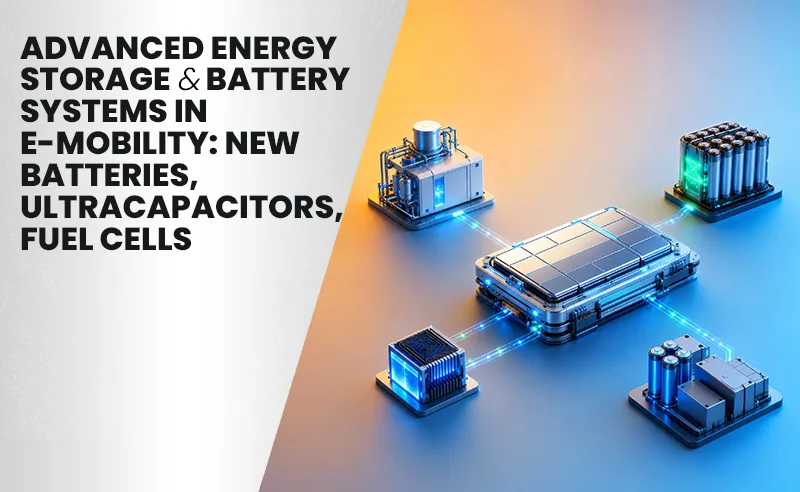
The Advanced Energy Storage & Battery Systems in e-Mobility programme provides practical knowledge of the technologies that power modern electric vehicles and emerging mobility systems. Learners build a foundation in electrochemistry, battery cell behaviour, battery pack architecture, energy storage sizing, and the engineering principles used to evaluate battery performance and efficiency. The programme also covers Battery Management Systems (BMS), including state-of-charge (SoC) and state-of-health (SoH) estimation, cell balancing, diagnostics, charging control, thermal management, and battery protection.
Participants explore advanced and alternative energy storage technologies, including lithium-ion, solid-state, graphene-based, sodium-ion, aluminium-air, redox-flow batteries, ultracapacitors, hybrid energy storage systems, hydrogen technologies, and fuel cells. The curriculum also addresses EV charging and energy infrastructure, battery lifecycle, repurposing, second-life applications, recycling, and sustainability. Through these topics, learners develop the knowledge required to evaluate, design, size, manage, and integrate energy storage solutions for electric mobility and next-generation transportation applications.

Build a strong foundation in battery technology and electrochemistry, including cell behaviour, electrochemical principles, Nernst equation, cell potentials, charging and discharging, battery performance characteristics, and energy-power relationships used in electric vehicle battery development.
Learn how EV battery packs are designed and sized based on vehicle energy consumption, power requirements, battery chemistry, operating conditions, charging needs, thermal behaviour, and packaging considerations. Understand how battery specifications influence vehicle range, performance, safety, and lifecycle.
Develop practical knowledge of Battery Management Systems, including SoC and SoH estimation, cell balancing, diagnostics, charging control, communication, thermal management, protection strategies, and voltage and current thresholds required for safe and reliable EV battery operation.
Explore next-generation energy storage technologies including solid-state, graphene-based, sodium-ion, aluminium-air, redox-flow batteries, and other emerging chemistries. Understand their characteristics, potential applications, advantages, limitations, and relevance to future electric mobility and energy storage systems.
Understand hydrogen-based mobility and fuel cell technologies alongside conventional battery systems. Explore how fuel cells, hydrogen energy systems, and alternative power sources can support electric mobility, hybrid energy architectures, and applications where range, refuelling, or energy density are important considerations.
Learn how charging systems, energy infrastructure, battery swapping, power quality, lifecycle management, repurposing, second-life applications, recycling, and sustainability considerations influence electric mobility. Develop an integrated understanding of energy storage from deployment through end-of-life management.
Advanced energy storage and battery systems are fundamental to the performance, safety, range, and efficiency of modern electric vehicles. As EV adoption grows, engineers need to understand how battery chemistry, pack architecture, energy density, power capability, thermal behaviour, charging, and lifecycle performance influence vehicle design. Battery Management Systems (BMS) play an equally important role by monitoring cell conditions, estimating state of charge and state of health, managing balancing, controlling charging, and protecting the battery under different operating conditions.
The development of next-generation batteries is also expanding the energy-storage landscape beyond conventional lithium-ion technologies. Solid-state, sodium-ion, graphene-based, aluminium-air, and redox-flow batteries, along with ultracapacitors, hybrid energy storage, hydrogen systems, and fuel cells, offer different combinations of energy density, power delivery, durability, cost, and application suitability. Understanding these technologies helps engineers evaluate the right solution for a specific mobility application. Energy storage knowledge also supports better thermal management, charging strategies, second-life applications, recycling, and sustainable battery lifecycle management, making it essential for the future of electric mobility.

Mr. Vikrant Vaidya
24+ years’ experience in global automotive design and product development on multiple EVs and Hybrid vehicle platforms, specialising in model-based design, calibration, testing, and system integration; a Six-Sigma Green Belt with 3 inventions in battery & hybrid electric vehicles. He earned his Master's degree in Energy Systems Engineering from the University of Michigan and his Bachelor's in Mechanical Engineering from Nagpur University.
Advanced energy storage technologies are used across a wide range of electric mobility and energy applications. Battery systems support electric cars, buses, commercial vehicles, two-wheelers, and other electrified platforms where energy density, power delivery, charging performance, safety, and lifecycle cost must be carefully balanced. Battery pack sizing and Battery Management Systems help engineers match storage capacity and power capability to vehicle requirements while maintaining safe operating conditions.
Beyond conventional EV batteries, ultracapacitors and hybrid energy storage systems can support high-power applications and transient energy demands. Hydrogen and fuel cell systems provide alternative pathways for electric mobility applications where range, refuelling time, or energy-storage requirements differ from conventional battery-electric platforms. Advanced battery chemistries such as solid-state and sodium-ion technologies may also influence future vehicle and stationary energy-storage solutions. The programme's focus on charging infrastructure, thermal management, battery lifecycle, repurposing, second-life use, and recycling also supports sustainable energy-storage deployment and circular lifecycle management.
Suggested Content - This Advanced Energy Storage & Battery Systems course is suitable for EV engineers, battery engineers, BMS professionals, automotive engineers, electrical and electronics engineers, energy-storage professionals, powertrain engineers, fuel-cell and hydrogen professionals, sustainability professionals, engineering students, and professionals transitioning into electric mobility. It is also relevant for learners seeking practical knowledge of battery technologies, battery pack sizing, BMS, charging, thermal management, alternative energy storage, and battery lifecycle management.


