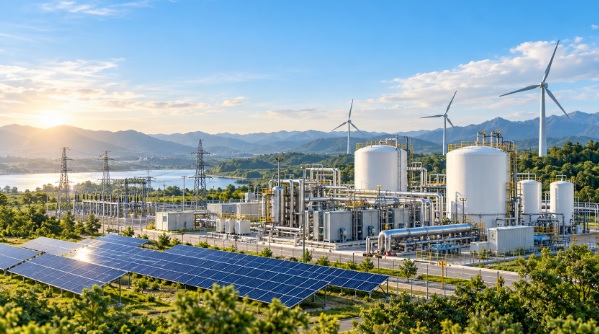
Take a petroleum engineer from 2015, a financial analyst from 2018, and an automotive designer from 2020. Put all three in today’s world, and they would probably find themselves learning some of the same things. Each of them would need to understand at least two areas that may not have mattered much in their earlier careers: green hydrogen, EV systems, and carbon credit mechanisms. That is how much the professional landscape has changed. Climate technology is no longer confined to one sector. It is pulling people from very different fields toward a common set of skills and ideas.
Climate tech is not a single discipline. It spans electrochemistry, power electronics, financial engineering, and regulatory strategy, often within the same project. The engineer who understands both electrolyser efficiency and battery degradation models has career options that simply did not exist three years ago.
What the market calls climate tech professional skills is really a layered stack, moving from green hydrogen and EV fundamentals through to carbon market fluency. Understanding how these layers interact is arguably the most important career investment a technically inclined professional can make right now.
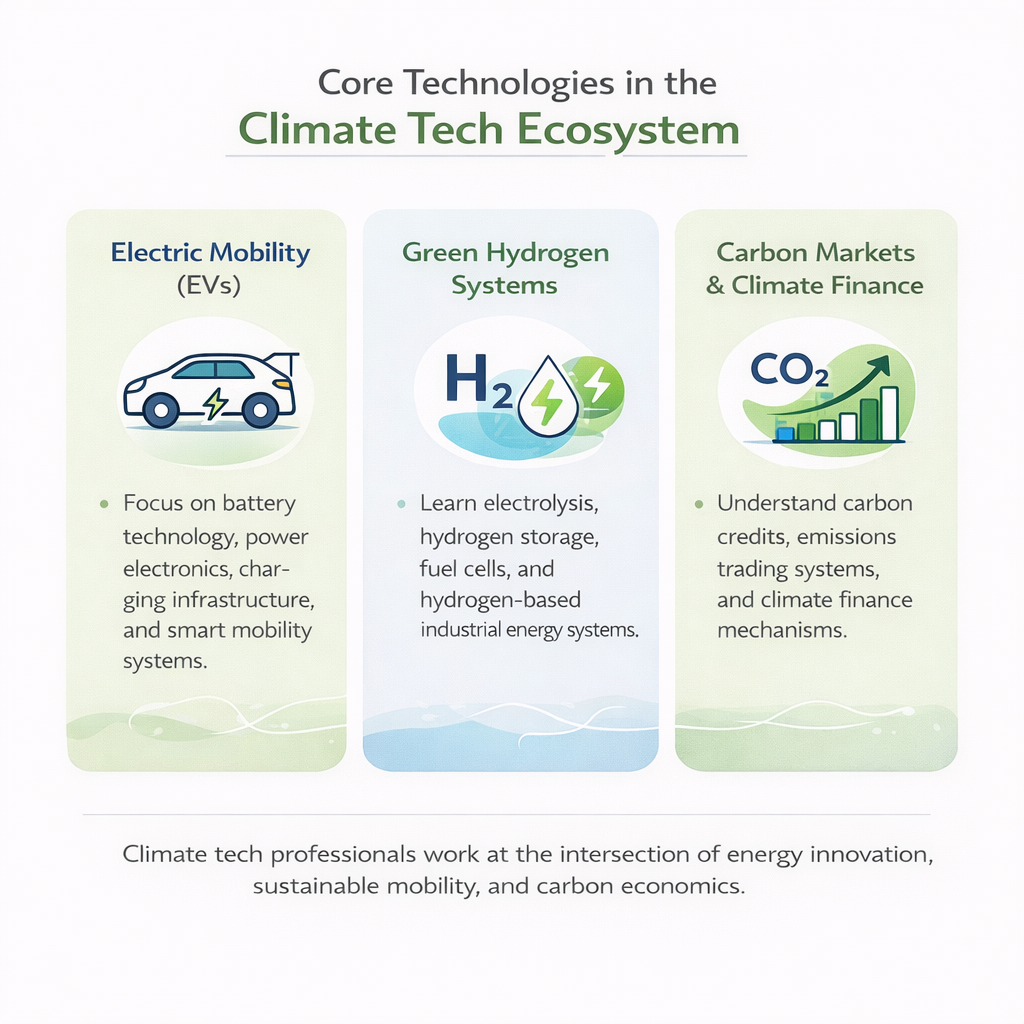
India’s National Green Hydrogen Mission targets 5 million metric tonnes of green hydrogen production by 2030. The mission is expected to generate over 600,000 jobs and mobilise investments exceeding Rs 8 lakh crore (PIB, 2024).
Demand for specialists in green hydrogen skills covering electrolyser design, hydrogen storage logistics, and safety engineering is growing rapidly across power, industry, and transport sectors.
The less visible demand is for professionals who connect production to downstream applications: ammonia synthesis for fertilisers, direct reduced iron for steelmaking, and fuel cell integration for heavy transport. Those who combine production science with application economics are already commanding premium roles in this ecosystem.
EV competencies have moved well beyond motors and lithium-ion basics. The frontier now includes vehicle-to-grid systems, battery second-life economics, and thermal management for high-speed charging infrastructure. As India’s EV market matures, the problems becoming urgent are precisely those requiring deeper, cross-domain expertise.
The transferability of EV skills is one of their underappreciated strengths. Battery management principles apply directly to grid-scale storage. Power electronics training crosses over into solar inverter design. An EV-qualified engineer is not limited to the automotive sector; the same competencies travel across the entire clean energy value chain.
Market research estimates put the global carbon credit market at approximately USD 114.3 billion in 2025, with projected growth of around 15.9 per cent CAGR through 2035 (Global Market Insights, 2025). India’s Carbon Credit Trading Scheme introduces sector-specific intensity benchmarks, making carbon market training essential for professionals in energy, manufacturing, and finance.
Carbon market fluency requires understanding measurement, reporting, and verification (MRV) systems, EU Carbon Border Adjustment Mechanism regulations, and the economics of removal versus avoidance credits. For Indian professionals, BRSR compliance creates an additional imperative: linking operational emissions data to financial disclosures and carbon credit strategy in a single coherent framework.
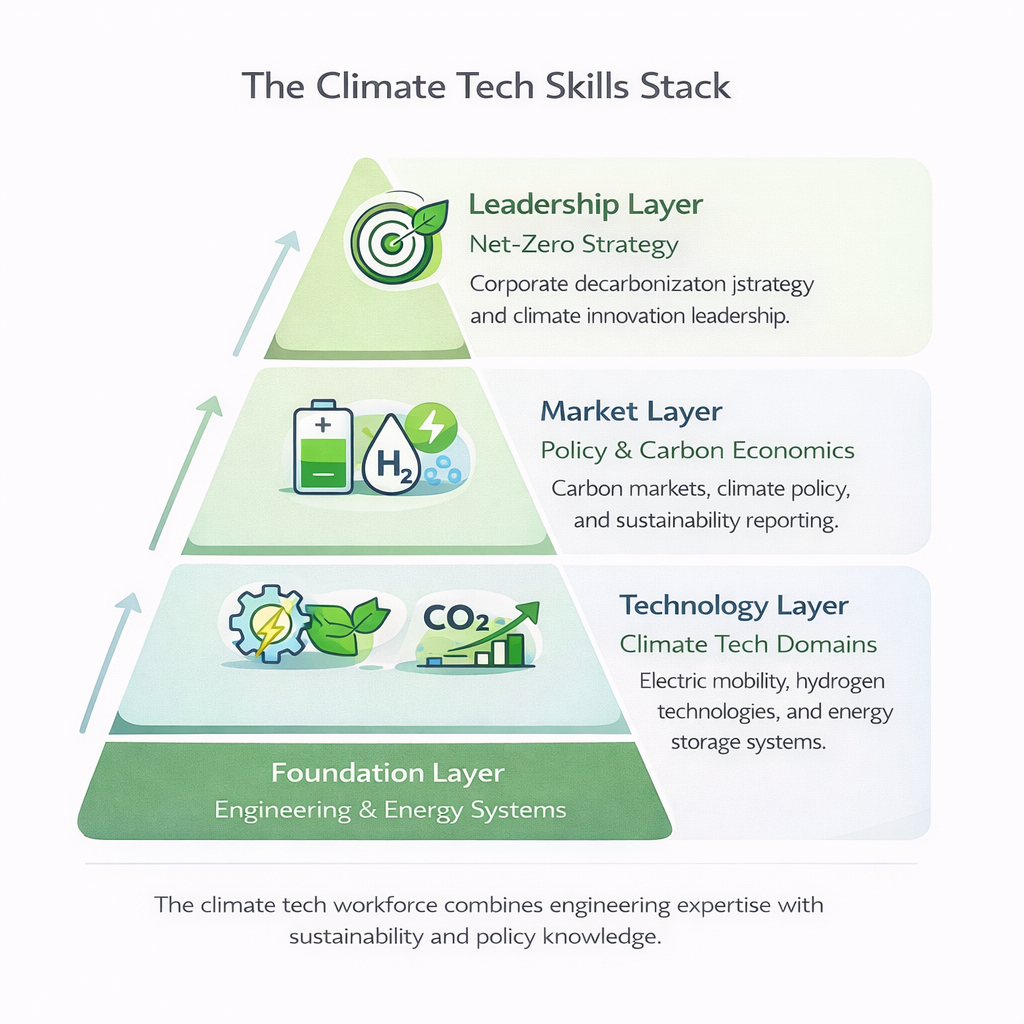
The power of the climate tech skills stack lies in how the layers interact. A professional who completes green hydrogen and EV courses and follows up with carbon market training develops an integrated understanding of how clean energy production, electrified transport, and carbon finance operate within one economic system.
The learning architecture platforms, like evACAD, have structured their learning architecture around this logic. Where the programmes are developed for the industry and by the industry and therefore are sequenced in a manner that each domain builds on the last. Graduates leave with an integrated professional capability, not a disconnected set of certificates.
The following indicators, drawn from policy announcements, regulatory filings, and hiring activity, confirm that demand for climate tech skills is not speculative. These are observable signals in the market today.
The convergence is already visible in hiring patterns. Indian steel producers are piloting hydrogen-based direct reduced iron processes as part of sector decarbonisation plans. Major conglomerates in energy and petrochemicals are committing capital to integrated renewable energy complexes spanning solar, wind, electrolysers, and storage. Oil and gas companies are simultaneously bringing on carbon market analysts and electrolyser engineers. The organisational structures across the Indian industry already reflect this skills convergence, and the trend will only accelerate.
What distinguishes this moment is that climate technology is no longer peripheral to corporate strategy; it is core infrastructure. The skills stack described here is not a one-time credential exercise. It is a dynamic capability that evolves with technology readiness, policy signals, and new market structures.
Professionals who build this stack now are positioning themselves for a career that holds value regardless of which specific technology prevails or which policy framework shifts. The competitive advantage is not depth in one domain; it is the integration across all three that creates genuine resilience.
The climate economy does not need more observers with opinions. It needs practitioners with skills. The question is whether you will build yours deliberately or scramble to catch up later.