
Heavy industry is one of the toughest parts of the climate problem to solve. Industry is among the hardest areas to decarbonize. These sectors cannot simply electrify their processes like households or light vehicles. They require molecules, not electrons, for example, feedstocks for ammonia or high-heat processes in steel. This is where green hydrogen comes into the picture.
Hydrogen matters here for one reason: it can replace fossil-based fuels and feedstocks in places where electricity can’t easily reach. You and I are about to examine the larger picture.
Hydrogen itself is not a new substance. It has been employed in oil refining processes and chemical and fertilizer production for several decades. The novelty lies in the process of producing the hydrogen. The conventional process for producing hydrogen involves fossil fuels. The latter results in CO₂ emissions. Green hydrogen avoids those emissions by using renewable electricity to split water.
When these resources, such as solar, wind, and hydro energy, are applied in the electrolysis process, hydrogen and oxygen are produced from water, leaving no emissions in the process. This provides a singular benefit in the context of green hydrogen, enabling it to provide industries with a clean fuel and chemical feedstock when direct electrification isn’t practical.
According to the International Energy Agency (IEA), the current production of hydrogen, primarily grey hydrogen, emits roughly 830 million tonnes of CO2 annually, which is equivalent to the combined annual emissions of Indonesia and the United Kingdom. Green hydrogen is a clean energy source because it uses renewable energy to produce it, which removes these emissions. (Source)
Let’s pause for a second. Electrification ranks among the most potent tools for decarbonization worldwide. Electrified transport, pumped storage hydro, and large-scale batteries are driving this trend. However, for example, steel production needs temperatures above 1000°C. Aviation sector fuels must have high energy density. This is where electrons alone fail to deliver.
Green hydrogen provides high combustion energy and can be used as a raw material for the production of chemicals. It can further be used to produce green ammonia and green methanol, which are already being considered for applications in maritime transport.
The adaptability offered by hydrogen is the key to its being used as an instrument for the climate transition.
Now, let's connect green hydrogen to the renewable energy buildout. Renewable generation is expanding faster than grids can sometimes absorb. Curtailing solar and wind energy is a wasted climate opportunity. Electrolyzers use surplus power during peak generation periods, transforming green hydrogen into a scalable, transportable form of chemical energy storage.
The result is a cleaner industrial ecosystem and a nimbler renewable grid. This is one of the cleaner ‘system’ links: surplus renewables can become an industrial input.
Nevertheless, it would be naive to assume the existence of a perfect, ready-for-use solution in the form of green hydrogen. The costs, despite their reduction, are a significant impediment. The IEA estimates that the current cost of green hydrogen, depending on the location and the costs of renewables, would be in the range of 3-8 USD/kg. (Source)
There are infrastructure issues. Some gas pipelines can carry hydrogen blends or be repurposed, but material compatibility and safety constraints are real. Infrastructure related to its safety is still developing.
Lastly, the production capacity of electrolyzers is starting to scale, but the growth of demand projections is increasing faster. Nations have initiated a rush to ensure that their position in the chain is the best.
Still, the pace is quickening. The European Union has very ambitious plans for the use of renewable hydrogen. The United States has large investments via the Inflation Reduction Act and the Regional Hydrogen Hubs. Japan and South Korea are developing a blueprint for the importation of hydrogen related to sea transport fuels. Other countries that are vying to be the exporters of hydrogen are India, Chile, and Saudi Arabia because of the significant amount of sunlight. (Source) (Source)
You may have already picked up on a theme here, which is that hydrogen is more than a decarbonization story. Hydrogen is also becoming a geopolitical topic, because future supply chains may cross borders.
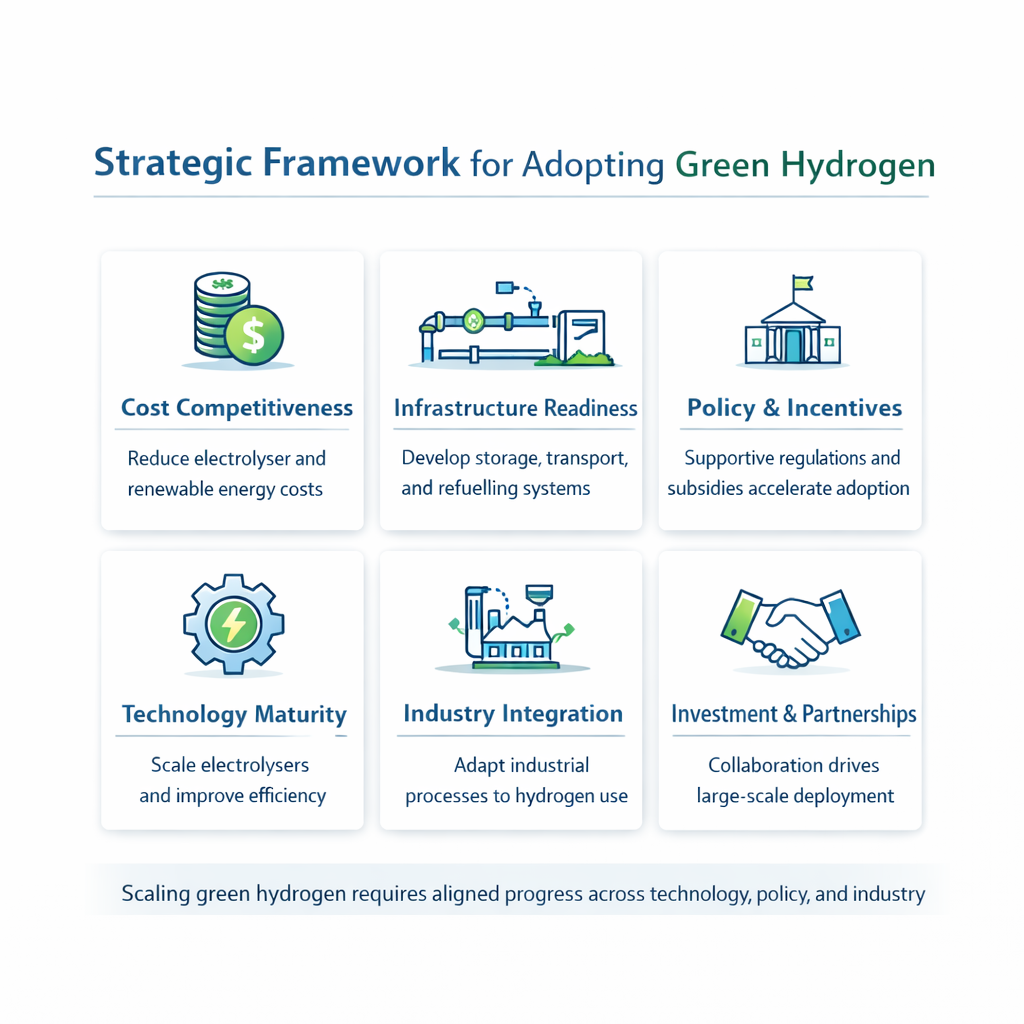
Green hydrogen offers strategic alignment with corporate net-zero ambitions. Industries are increasingly aware that Scope 1 and Scope 2 emissions reduction alone is insufficient. Long-term decarbonization means rethinking fuel choices, feedstocks, value chains, and carbon markets.
This is where climate leadership becomes critical. Engineers, sustainability managers, policymakers, financiers, and project developers must share a common language. The emerging net-zero economy is multidisciplinary. If you are pursuing sustainable development or looking at sustainable development courses to build future-proof skills, green hydrogen sits at the center of the transition narrative.
First, we analyzed why the decarbonization of heavy industry presents a challenge. Then, we examined the role of green hydrogen in offering a decarbonization solution in areas where electricity decarbonization cannot go further.
You and I can understand why so many people call hydrogen the key to industrial decarbonization. It is not a panacea. It is a sound strategic choice that has long-term potential.
If you are interested in learning more about the new climate technologies and the policies and knowledge that are being developed concerning green hydrogen, the Green Hydrogen Master Program by evACAD was made for you. This program enables the learners to get hands-on knowledge on the topic of decarbonization, the energy transition process, and climate finance, as well as carbon markets and green innovation, such as hydrogen.
Become a Net Zero Leader.
Learn More About evACAD’s Net Zero Leadership Program and Be a Part of the Next Wave of Climate Innovators.


.jpg)
