
Understand how green hydrogen is made, stored, moved and handled safely. Covers electrolysis, other production routes, storage at scale, pipelines and carriers, and safety by design, in a self-paced online format for engineers and project professionals.
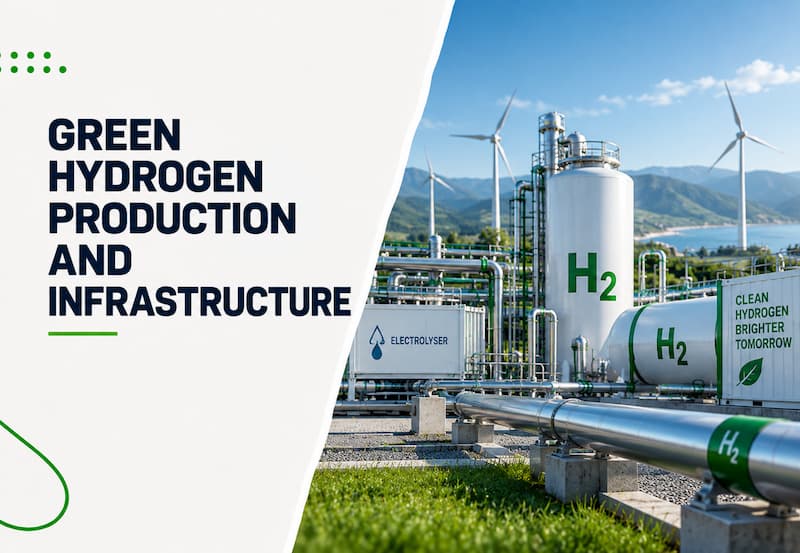
Green Hydrogen Production & Infrastructure is a self-paced online programme from evACAD (pManifold EV Academy). It explains the physical side of the hydrogen value chain: how green hydrogen is produced, how it is stored, how it reaches users, and how to keep every step safe.
Engineers and project teams often know one part of the chain well but not the rest. A production engineer may not know storage limits. A logistics planner may not know how an electrolyser behaves. This programme connects those pieces so you can take part in whole-system decisions.
The programme consists of five modules. It starts with electrolysis, the main route to green hydrogen, and then covers other production pathways, storage, transport, and safety.

Under the Strategic Interventions for Green Hydrogen Transition (SIGHT) scheme, 15 firms have been awarded 3,000 megawatts (MW) of annual electrolyser manufacturing capacity. Plants using this equipment need engineers who understand how electrolysers work.
The National Green Hydrogen Mission links its target of at least 5 million metric tonnes (MMT) a year by 2030 to about 125 gigawatts (GW) of new renewable energy capacity. Matching variable solar and wind power to electrolyser is a core engineering task.
Hydrogen is light and hard to hold, so storage and transport choices affect the final price paid by users. The mission states that it will support supply chains that can move and distribute hydrogen efficiently.
The Mission's pilot project component, with an outlay of ₹1,466 crore, covers areas such as hydrogen storage, hydrogen from biomass and decentralised energy applications.
NITI Aayog (National Institution for Transforming India) and RMI (formerly Rocky Mountain Institute) estimate that India's total hydrogen demand could rise from about 6 million tonnes in 2020 to around 29 million tonnes by 2050. Moving that volume safely needs new infrastructure and trained people.
Engineers who understand production, storage, transport and safety together can work on electrolyser plants, hydrogen hubs, pipeline projects and engineering, procurement and construction (EPC) contracts.

Mr. Santosh K Gurunath
Founder H2 Carbon Zero & Umagine
Green Hydrogen, Hydrogen Supply-Trade, Fuel Cell
Upon successful completion of the programme, learners will be able to:
After completing this programme, learners can pursue roles such as:
The topics covered in this programme are used across:


