
Master automotive fundamentals, IC engine systems, transmission technologies, vehicle dynamics, powertrain integration, electrification, and automotive electrical architecture through an industry-focused online certification.
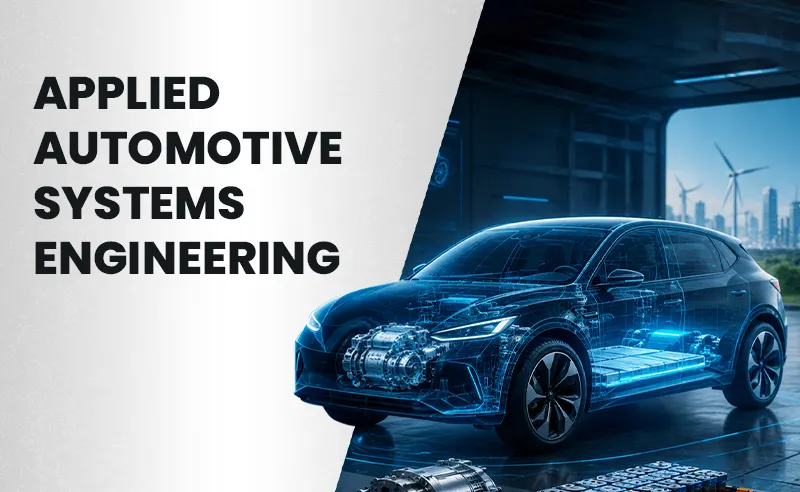
The Applied Automotive Systems Engineering course is designed to build a strong foundation in the principles and technologies that drive modern automobiles. Participants will gain an in-depth knowledge of automotive systems, vehicle architecture, IC engine fundamentals, transmission systems, vehicle dynamics, and powertrain integration, enabling them to understand how various vehicle subsystems work together to deliver performance, safety, and efficiency. The course also introduces key concepts in automotive electrical and electronic architecture, diagnostics, braking, steering, suspension, and thermal management, providing learners with practical knowledge of real-world automotive engineering.
As the automotive industry rapidly transitions towards electric vehicles (EVs), hybrid vehicles, and connected mobility solutions, a solid understanding of conventional automotive systems is essential for the design and integration of next-generation vehicle technologies. This programme bridges the gap between traditional automotive engineering and EV engineering, helping learners develop industry-relevant skills in vehicle integration, automotive electrification, system engineering, and powertrain development. Whether you are an engineering student, automotive professional, or aspiring EV engineer, this course prepares you for the evolving demands of the global automotive and electric mobility industry.

Understand the complete automotive product development process, from concept design and vehicle architecture to manufacturing and validation. Learn how automotive companies structure engineering workflows, product lifecycle management, and cross-functional collaboration to deliver safe, reliable, and high-performance vehicles.
Learn how to evaluate automotive powertrain technologies, including internal combustion engines (ICE), hybrid systems, and electric powertrains. Understand performance analysis, efficiency optimization, emissions, and system integration techniques used in modern passenger and commercial vehicles.
Gain practical knowledge of driveline engineering and gear ratio optimisation to enhance vehicle performance, acceleration, fuel efficiency, and drivability. Learn how transmission design and gear selection influence power delivery across conventional, hybrid, and electric vehicle platforms.
Develop expertise in powertrain integration by understanding how engines, transmissions, electric motors, batteries, and control systems function together. Learn system-level integration techniques that improve vehicle performance, energy efficiency, reliability, and overall driving experience.
Explore the fundamentals of chassis control systems, including steering, suspension, braking, and vehicle stability. Learn how chassis optimisation enhances ride comfort, handling, safety, and overall vehicle dynamics for both conventional and electric vehicles.
Understand automotive electrical and electronic architecture, including ECUs, sensors, actuators, communication networks, and vehicle control systems. Learn how modern electrical architectures support diagnostics, vehicle integration, advanced driver assistance systems (ADAS), and automotive electrification.
The automotive industry is rapidly evolving with the adoption of electric vehicles (EVs), connected technologies, and intelligent mobility solutions. A strong understanding of automotive systems engineering is essential for designing, integrating, and optimising modern vehicles. Before mastering advanced EV technologies, engineers must build a solid foundation in IC engine systems, transmission technologies, vehicle dynamics, powertrain integration, and automotive electrical architecture. These core concepts help professionals understand how different vehicle subsystems interact to deliver performance, safety, efficiency, and reliability.
As the industry transitions toward vehicle electrification, ADAS (Advanced Driver Assistance Systems), connected vehicles, and autonomous mobility, engineers with comprehensive automotive knowledge are increasingly in demand. Learning automotive fundamentals enables professionals to troubleshoot complex systems, improve vehicle performance, and adapt to emerging technologies across conventional, hybrid, and electric vehicles. This course equips learners with practical, industry-relevant skills in automotive engineering, preparing them for careers in vehicle development, powertrain engineering, system integration, and the rapidly growing electric mobility sector.

Bhushan Bissa
14+ years of expertise in Electric Vehicle Technology, Automotive Systems, Vehicle Dynamics, Technical Education, and Curriculum Development. Leads EV skilling initiatives at pManifold, delivering M.Tech and executive programmes with premier institutions while supporting EV consulting projects. Mentor to award-winning SAE BAJA & Formula Student teams for over a decade. Holds 10 patents (5 granted), 9 research publications, and has delivered numerous expert lectures.

Ganesh Saswarkar
16+ Years of Expertise, specialized in Power Electronics (B.E. Electronics & telecommunication) Global EV Infrastructure, and Next-Gen Mobility. Power Electronics & EV Infra: Expert in SMPS/Linear R&D (EMI/EMC validation) and global charger deployment (100+ sites for Nissan & Renault under EN 50160). Advanced Systems: Deep hands-on experience with ADAS (ISO-26262), TPMS manufacturing, and HILS validation. Programme Leadership: Led 100+ member teams to deliver 4+ major vehicle programmes for global Tier-1 and defense clients.


