
Master the fundamentals of EV control systems and develop the skills needed to design, integrate, and optimize intelligent vehicle control architectures for modern electric vehicles (EVs). This industry-focused course provides hands-on knowledge of Vehicle Control Units (VCUs), CAN communication protocols, embedded systems, motor control, battery management system (BMS) integration, diagnostics, and real-time vehicle control strategies. Learn how hardware and software work together to manage vehicle performance, energy efficiency, safety, and system reliability across passenger and commercial EVs.
Through practical case studies and real-world engineering applications, you'll explore EV system integration, embedded controllers, communication networks, calibration, and diagnostic techniques used by leading automotive manufacturers. Whether you're an engineering student, embedded systems professional, or automotive engineer transitioning into electric mobility, this programme equips you with job-ready skills for careers in EV control systems, vehicle integration, automotive electronics, and the rapidly growing electric vehicle industry.
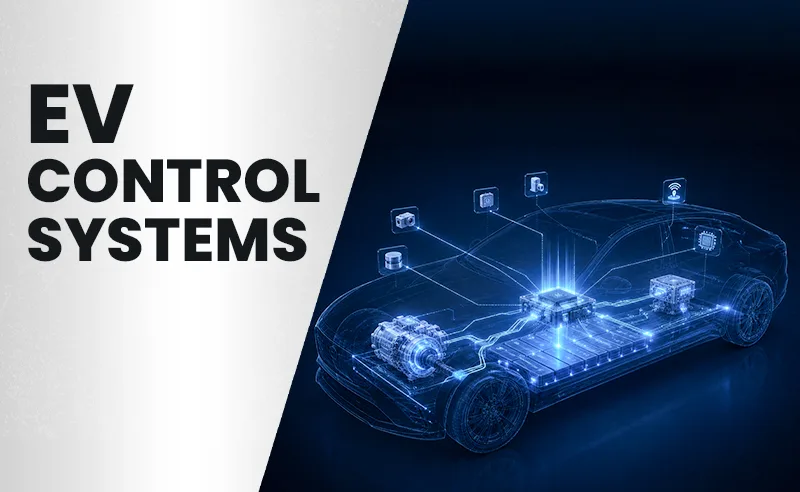
The EV Control Systems programme is designed to provide a comprehensive understanding of the intelligent control technologies that power modern electric vehicles (EVs). Learners will explore the architecture, operation, and integration of key EV control systems, including Vehicle Control Units (VCUs), Motor Control Units (MCUs), and Battery Management Systems (BMS). The course covers essential topics such as controller development, CAN (Controller Area Network) communication protocols, embedded controllers, vehicle diagnostics, functional safety, system calibration, and validation, enabling participants to understand how software and hardware interact to deliver efficient, reliable, and safe vehicle operation.
Through practical examples and industry-relevant case studies, learners will gain hands-on knowledge of sensor integration, actuator control, real-time embedded systems, diagnostic strategies, and EV system integration. The programme also explores communication between electronic control units (ECUs), intelligent energy management, and the coordination of vehicle subsystems to optimize performance, efficiency, and safety. Whether you are an engineering student, automotive professional, embedded systems engineer, or EV enthusiast, this course equips you with the technical skills required to design, develop, test, and integrate advanced electric vehicle control systems for the next generation of intelligent mobility solutions.

Learn the complete EV controller development lifecycle, from system requirements and controller architecture to embedded software implementation, validation, and calibration. Understand how controllers process sensor data, manage vehicle functions, and enable efficient communication between critical electric vehicle subsystems for safe and reliable operation.
Develop expertise in Battery Management Systems (BMS) and learn how they monitor battery voltage, current, temperature, State of Charge (SOC), and State of Health (SOH). Explore battery protection strategies, cell balancing, thermal management, and intelligent energy management techniques that improve battery performance, safety, and lifespan.
Understand the fundamentals of electric motor control systems, including motor operating principles, inverter communication, torque and speed control, regenerative braking, and drive efficiency optimization. Learn how advanced motor control algorithms enhance vehicle performance, energy efficiency, and driving dynamics in modern electric vehicles.
Explore the role of Vehicle Control Units (VCUs) as the central control system that coordinates communication between the Battery Management System (BMS), Motor Control Unit (MCU), charging systems, sensors, and other electronic control units. Learn how VCUs optimize vehicle performance, energy flow, safety, and intelligent vehicle operation.
Gain practical knowledge of CAN (Controller Area Network) communication and understand how electronic control units (ECUs) exchange real-time data across electric vehicle systems. Learn CAN message architecture, bus communication, network diagnostics, error detection, and communication protocols that enable reliable vehicle system integration.
Learn the principles of functional safety, fault detection, vehicle diagnostics, and embedded monitoring systems used in electric vehicles. Explore industry-standard diagnostic techniques, controller validation, safety compliance, and troubleshooting methods that improve system reliability, performance, and operational safety throughout the vehicle lifecycle.
As electric vehicles (EVs) become more advanced, EV control systems play a critical role in ensuring vehicle performance, safety, energy efficiency, and intelligent system integration. Modern EVs rely on Vehicle Control Units (VCUs), embedded software, and CAN (Controller Area Network) communication to coordinate the operation of key vehicle systems, including the battery management system (BMS), electric motor, inverter, regenerative braking, thermal management, and charging systems. These interconnected control systems enable seamless communication between hardware and software, ensuring reliable vehicle operation under varying driving conditions.
With the rapid adoption of connected, autonomous, and software-defined vehicles, expertise in embedded control systems, vehicle diagnostics, functional safety, and real-time communication protocols has become essential for automotive engineers. Understanding how control algorithms, electronic control units (ECUs), and intelligent vehicle networks work together helps engineers develop safer, more efficient, and more reliable electric vehicles. This course provides practical knowledge of EV control architecture, system integration, calibration, diagnostics, and embedded vehicle technologies, preparing learners for careers in EV control systems engineering, automotive electronics, and the next generation of intelligent mobility solutions.

24+ years’ experience in global automotive design and product development on multiple EVs and Hybrid vehicle platforms, specialising in model-based design, calibration, testing, and system integration; a Six-Sigma Green Belt with 3 inventions in battery & hybrid electric vehicles. He earned his Master's degree in Energy Systems Engineering from the University of Michigan and his Bachelor's in Mechanical Engineering from Nagpur University.
EV control systems are the backbone of modern electric vehicles (EVs), enabling intelligent communication, real-time decision-making, and efficient coordination between multiple vehicle subsystems. They play a critical role in managing Battery Management Systems (BMS), Motor Control Units (MCUs), Vehicle Control Units (VCUs), charging systems, thermal management, regenerative braking, and energy optimization to ensure safe and reliable vehicle operation.
In passenger EVs and commercial electric vehicles, advanced control systems improve vehicle performance, driving efficiency, battery life, and overall system reliability. They also support CAN communication networks, embedded controllers, vehicle diagnostics, and functional safety to enable seamless integration between electronic control units (ECUs). Beyond conventional vehicle operation, EV control systems are widely used in ADAS (Advanced Driver Assistance Systems), connected vehicle platforms, fleet management, predictive maintenance, and smart charging infrastructure. As electric mobility continues to evolve, engineers with expertise in EV control architecture, embedded software, and intelligent vehicle integration are becoming essential for developing the next generation of connected, autonomous, and software-defined vehicles.
The rapid growth of the electric vehicle (EV) industry has created significant demand for professionals with expertise in EV control systems, embedded software, and automotive electronics. As modern vehicles become increasingly software-defined and connected, engineers with knowledge of Vehicle Control Units (VCUs), Battery Management Systems (BMS), CAN communication, diagnostics, and system integration are highly sought after across the automotive sector.
After completing this programme, learners can pursue rewarding careers as EV Control Systems Engineers, designing and integrating intelligent vehicle control architectures, or as Embedded Software Engineers, developing real-time software for electronic control units (ECUs). Opportunities are also available as Calibration Engineers, optimizing vehicle performance through controller tuning and validation, and as Functional Safety Engineers, ensuring compliance with automotive safety standards. Additional career paths include VCU Engineers, Automotive Electronics Engineers, and Vehicle Integration Engineers, responsible for integrating hardware, software, and communication networks across modern electric vehicles. These roles are in high demand across automotive OEMs, Tier-1 suppliers, EV startups, engineering service providers, and research and development organizations driving innovation in electric mobility.


