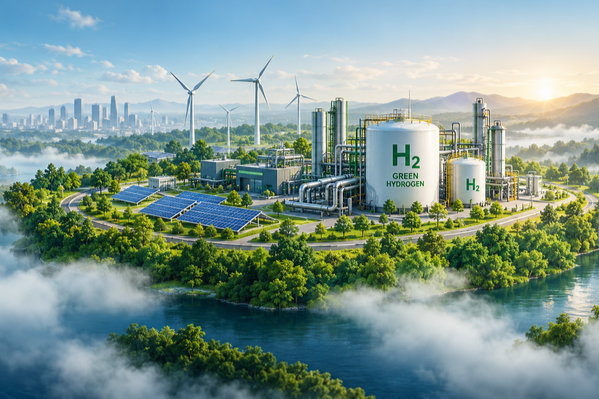
Green Hydrogen: The Strategic Shift for Senior Professionals

last updated
April 6, 2026

When you hear “green hydrogen”, you’re looking at one of the few energy technologies that bridges the worlds of clean energy, industrial decarbonisation, and global trade. For mid- to senior-level professionals steering strategy, operations, or sustainability in sectors such as energy, heavy industry, mobility, or infrastructure, this topic is no longer “nice to know”; it’s becoming a business imperative.

The 2025 reality check

Although the promise of green hydrogen remains compelling, the hard numbers say this is still early days. The International Energy Agency (IEA) reports that global hydrogen demand rose to almost 100 million tonnes in 2024, yet “low-emissions hydrogen” (which covers green hydrogen) still accounts for less than 1% of that. (IEA). Many announced projects across Europe, Asia, and the Middle East are facing delays or cancellations due to rising costs and unclear demand pipelines. 

Yet, this slow progress doesn’t spell failure. It signals a critical inflection point. The technology exists, policies are taking shape, and pilot projects are proving viability. What remains is commercial maturity at large-scale financing, standardisation, and integration into industrial processes.

In India, the National Green Hydrogen Mission reflects this global momentum. With an ambition to make India a global hub for hydrogen production and exports, it aims for 5 million tonnes of annual production capacity by 2030, creating direct linkages between renewables, manufacturing, and mobility sectors.

Why senior professionals must care
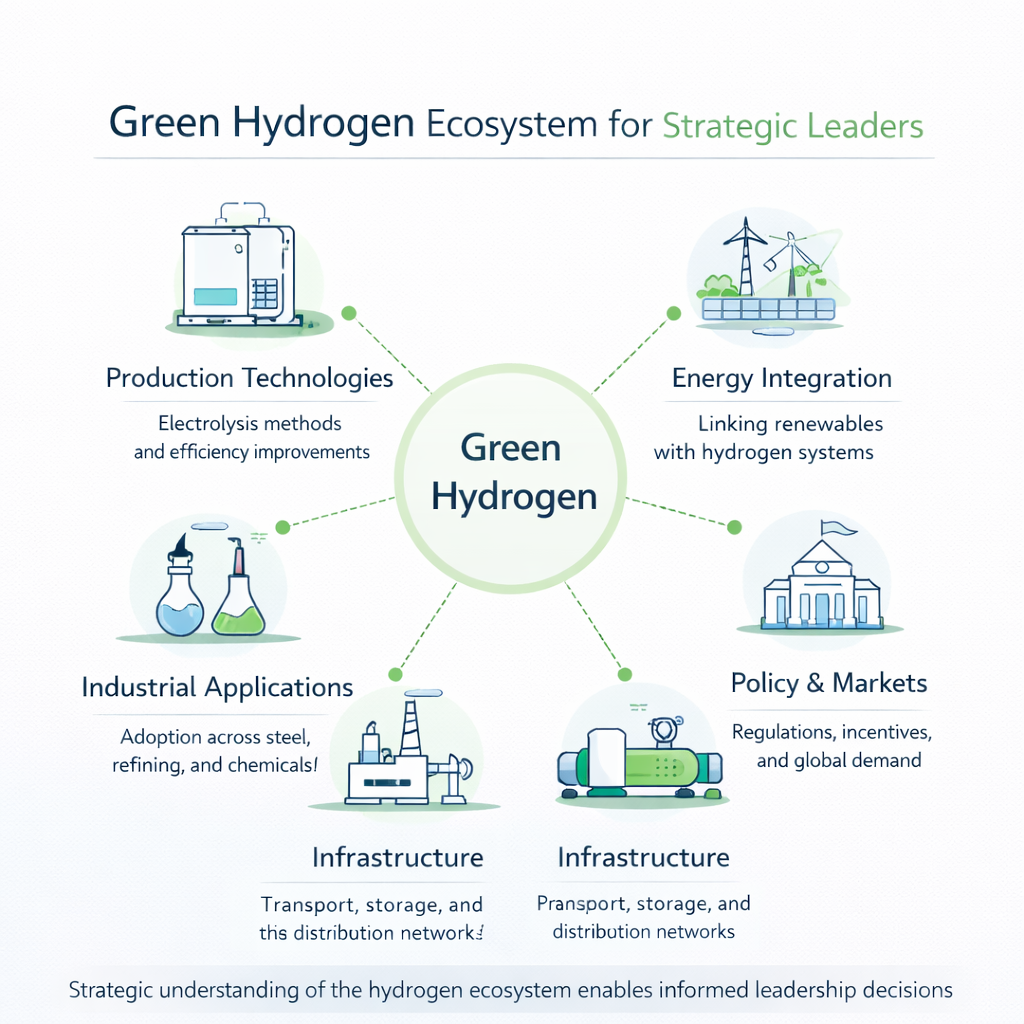
  • Decarbonisation of hard-to-abate sectors: Industries like steel, cement, refining, and shipping are responsible for a large share of global CO₂ emissions and have few viable decarbonisation routes. Green hydrogen enables the production of green steel and clean fuels and can replace natural gas or grey hydrogen in chemical processes. Leaders who understand these technological shifts can guide their organisations through compliance, innovation, and sustainability transitions.
  • Navigating Cost and Commercial Complexity: Hydrogen’s cost competitiveness hinges on renewable electricity prices, equipment efficiency, and reliable infrastructure. For business leaders, this translates to complex decisions around long-term power purchase agreements (PPAs), project financing, and offtake contracts.
    In a market where cost structures are still evolving, financial and strategic literacy around hydrogen will determine whether companies lead or lag.
  • Managing Cross-Functional Transitions: A hydrogen project touches multiple verticals, from energy procurement and industrial design to logistics and trade. For instance, exporting green ammonia or hydrogen derivatives requires coordination across policy, technology, and market domains. Senior managers who can integrate these silos into coherent transition strategies will be the ones driving real value.
  • Capturing First-Mover Advantage: The hydrogen economy is spawning new business models, from energy-as-a-service and green shipping corridors to domestic fuel supply chains. Early movers are already shaping standards, partnerships, and certification systems. For professionals aiming to future-proof their careers, understanding how to position themselves within this evolving value chain is a crucial skill.

India’s Emerging Hydrogen Landscape: Opportunity with Caution

India’s policy direction is clear: hydrogen is the next sunrise sector after renewables.
The National Green Hydrogen Mission is building the ecosystem through capital incentives, state partnerships, and domestic manufacturing plans. Initiatives like SIGHT (Strategic Interventions for Green Hydrogen Transition) encourage both production and technology development.

Several states are positioning themselves as hydrogen hubs, Gujarat and Rajasthan with their solar resources, Odisha with industrial offtake potential, and Tamil Nadu with port infrastructure for exports.

However, senior professionals evaluating these opportunities should weigh key strategic questions:

  • Which clusters will offer the best mix of renewable availability, logistics, and industrial demand?
  • How can companies mitigate supply chain risks given India’s current reliance on imported technology?
  • What business models, such as export-oriented derivatives like green ammonia or e-methanol, will dominate early revenue streams?

The opportunity is massive, but so are the risks of premature investments and unclear regulation. That’s why leadership agility and policy awareness are critical assets.

Where evACAD Fits Into This Landscape

evACAD has been deeply engaged in India’s clean energy and mobility transformation through industry-led programs, research-driven content, expert faculty, and live projects across the EV and sustainability ecosystem.

As the industry moves from renewables to deeper decarbonisation technologies like green hydrogen, evACAD continues to expand its focus on:

  • Clean energy systems
  • Net Zero strategy
  • Circular economy
  • Energy transition leadership

With strong academic and industry networks, evACAD is building learning pathways that help mid- and senior-level professionals bridge the gap between technology, business strategy, and policy- the very intersections where the hydrogen economy will accelerate.
Final Word

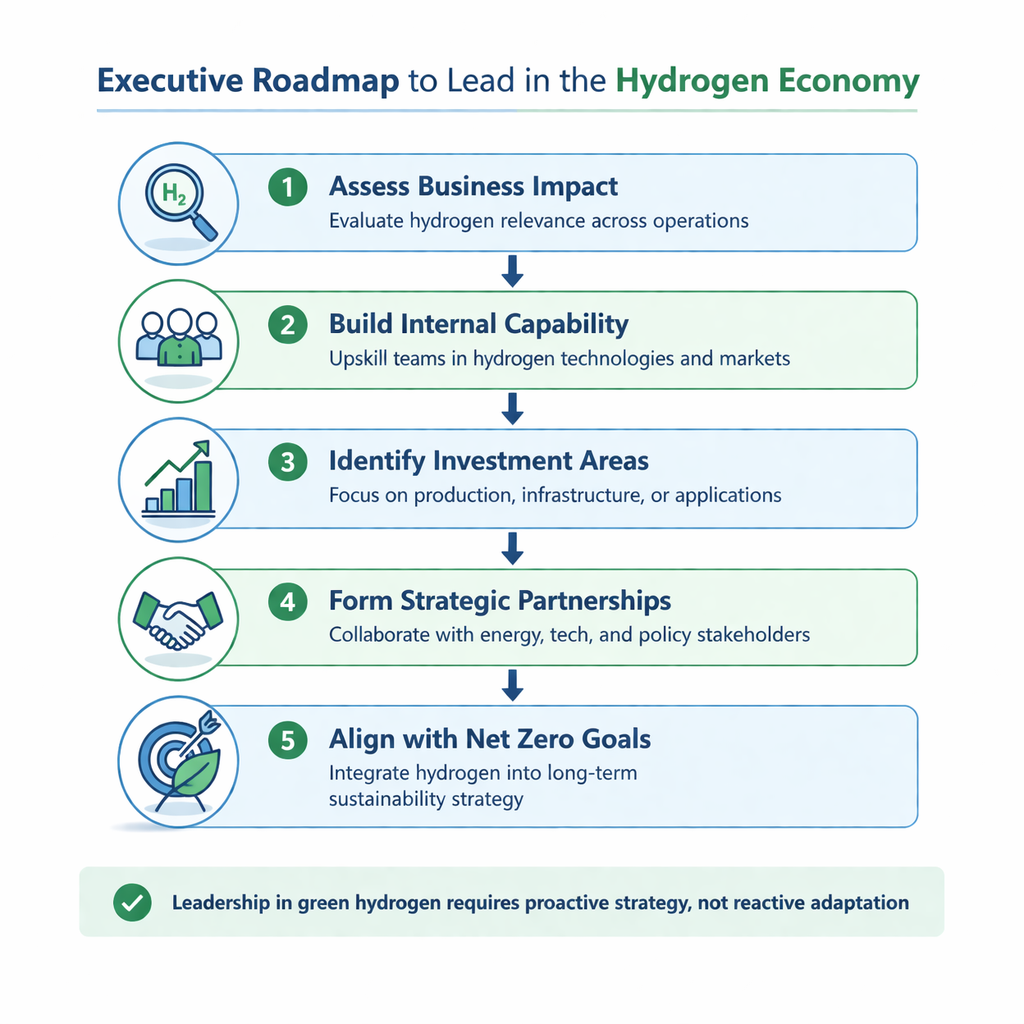
Green hydrogen will not replace fossil-derived hydrogen overnight. Its market share remains tiny, and growth will be gradual. But for organisations seeking to lead in decarbonisation, build new zero-carbon value chains, and position themselves for global opportunities in clean fuels-hydrogen literacy is no longer optional.

If you’re a senior professional in energy, manufacturing, infrastructure, sustainability, or strategy, developing fluency in hydrogen technologies, economics, and global markets can future-proof your career.

evACAD logo with stylized orange checkmark integrated between letters.
Shape the businesses, policies, and technologies driving Net Zero & Sustainability. Get Started!
Know More
Talk to our advisor today and know more about our Sustainability and Net Zero Program
Four customer service agents wearing headsets working on laptops at a desk in a dimly lit office.
+91 8031404841
Graphic showing four diverse male portraits connected by orbiting colored dots around a central figure.
Take the Next Step with evACAD
Get Started!

FAQ

Why should senior professionals treat green hydrogen as a strategic priority today?

Green hydrogen intersects hard-to-abate sector decarbonisation, global trade, and policy, making it a core business issue. Leaders who understand hydrogen economy dynamics can guide compliance, innovation, and transition strategies before competitors establish first-mover advantages in this rapidly evolving space.

What makes hard-to-abate sector decarbonisation uniquely dependent on green hydrogen?

Steel, cement, shipping, and refining cannot be easily electrified due to high-temperature requirements and energy-density needs. Green hydrogen provides a clean molecular fuel and feedstock alternative, making it indispensable for hard-to-abate sector decarbonisation where electricity-based solutions remain technically or economically impractical.

What is India's National Green Hydrogen Mission, and what opportunities does it create?

The National Green Hydrogen Mission targets 5 million tonnes of annual production by 2030, linking renewables, manufacturing, and mobility. It creates opportunities in green ammonia exports, domestic fuel supply, and hydrogen project financing across states like Gujarat, Rajasthan, Odisha, and Tamil Nadu.

What financial and strategic decisions does hydrogen project financing require from business leaders?

Hydrogen project financing involves evaluating long-term power purchase agreements, offtake contracts, and equipment costs within a still-evolving cost structure. Leaders must balance renewable electricity pricing, infrastructure investment, and risk management to make commercially sound hydrogen economy decisions that deliver durable returns.

How can energy transition leadership training prepare professionals for green hydrogen opportunities?

Energy transition leadership programs build fluency in hydrogen techno-economics, carbon markets, policy navigation, and cross-functional project integration. This equips senior professionals to evaluate green ammonia value chains, lead hydrogen project financing decisions, and capture strategic positioning within India's National Green Hydrogen Mission ecosystem.

Talk to Advisor over call
Blue upward arrow inside a white circle with a blue border.