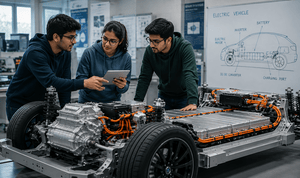
With a 94% forecasted growth rate and 10 million jobs for the taking, electric vehicle careers are in demand now just like IT and data science in the previous decade. Our learner data also shows the same thing, with maximum enquiries falling into the fresh graduate or career change (10+ years of experience) brackets.
Both sets are looking at EV as an exciting career choice, and that is what makes our EV training courses so appealing to these rungs on the career ladder.
The question is this - How to get started with an electric vehicle career? We have for you a video from EV industry experts offering their insights on EV careers, and here are some steps to help you get started in an EV-related career:
1. Educational Background: Evaluate your current educational background and consider whether you need additional education or training to enter the EV industry. Our eligibility criteria is simple - you can be an engineer from any stream. Other employers and EV training providers may have additional requirements such as BE/BTech in automotive, electrical, electronics, mechanical, mechatronics, etc. based on the job requirements.
2. Research the EV Industry: Stay informed about the latest trends, developments, and technologies in the EV sector. Subscribe to industry newsletters, read books, and follow relevant blogs or websites. Also follow the thought leaders in e-Mobility on social media, read what they are sharing, and engage with them where possible.
3. Meet the EV industry experts: Attend EV-related conferences, seminars, and workshops to meet professionals in the field. Attend webinars and Masterclass sessions. Networking can help you make valuable connections and gain insights into potential job opportunities. Get to know the experts, and find out what they have to say about EV careers.
4. Internships: Consider applying for internships or entry-level positions at EV manufacturers, charging infrastructure companies, automotive suppliers, training centres, and research institutions. These positions can provide valuable hands-on experience that makes you job-ready, along with certification that can help you build your resume. Even if you’re a working professional, investing this time in internships at entry level does help to change career paths.
5. Develop technical skills: Depending on your chosen career path within the EV industry, develop relevant technical skills. For example, if you're interested in EV design, learn to use virtual model-based development and tools such as MATLAB / SIMULINK, CATIA, etc. for automotive design. You can learn to use MATLAB, but learning to use MATLAB for EV design is much more valuable in terms of getting a job as an EV engineer.
6. Learn the regulations and standards: A big part of EV design, development, testing and validation planning is knowing and staying updated about the regulatory compliance requirements for automotive emissions and battery safety standards issued by regulatory bodies such as Automotive Research Association of India (ARAI). Staying up-to-date on the relevant policy measures is also essential, especially if you're involved in manufacturing or compliance roles.
7. Learn about automotive systems and EV specifications: Gain knowledge about the key components and systems of automotives, such as powertrains, transmission, engine and motors, chassis, steering and wheel balancing, braking systems, electrical systems, energy sources, etc. Familiarity with these components systems (in internal combustion engines as well as hybrid models and electric vehicles) is crucial for various roles in the EV industry.
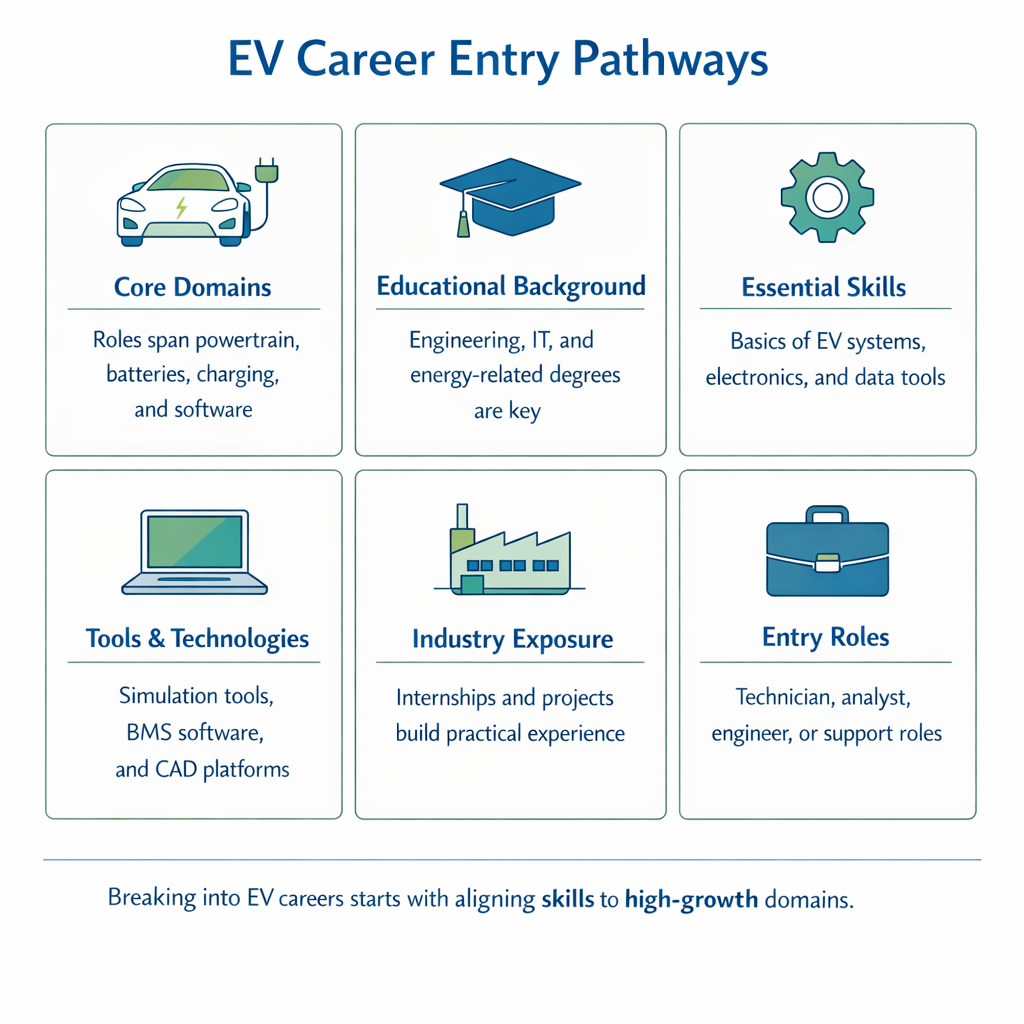
8. EV certifications: Consider pursuing relevant EV certification courses, such as those related to electric vehicle technology and design. These certifications, and the training provided, can enhance your job-readiness, and fulfill all the prerequisites for job applications with EV manufacturers and suppliers.
9. Specialize: Gain additional qualifications, such as PG Certification / Diploma or even Masters Degree, specializing in EV. Choose your course wisely to align with your current background as well as wide knowledge and skills helping you transition into newer roles in the EV industry. You could focus on EV battery technology, testing and validation jobs, charging infrastructure, vehicle design through virtual modeling, vehicle integration roles, autonomous vehicles, or even EV policy and advocacy.
10. Don’t wait: If you are reading this, then it is because you want to learn more about how to get started with an electric vehicle career before you wade in. Our simple advice to you, coming from EV industry experts with over 20 years of experience is this - Don’t wait. The time is now, because the automotive industry is transitioning from ICE to EV, and they need a lot of skilled EV talent at this time. The urgency in filling millions of jobs globally means higher salaries (45-50% more than ICE) and more career opportunities for growth and showing your talent. Right time is NOW!