
The world is shifting gradually towards renewable and clean energy. Thus, managing an uninterrupted power supply that is reliable at the same time becomes a concern. The major renewable sources, like sunlight or wind, are sustainable, but they have their own sets of limitations as well. These limitations create inconsistency, which in turn makes it complicated to provide a persistent power supply.
Here, energy storage plays a crucial role by storing a vast amount of renewable energy and supplying it whenever and wherever needed. These systems serve as the foundation for contemporary renewable energy systems, assisting in the equilibrium of energy production and consumption.
This article is all about finding the missing link between large-scale renewable energy integration and energy storage.
Before we find the missing link, understanding the challenges will help us realize the current scenario of energy storage. The core challenge starts with the fact that renewable energy doesn’t have a predictable schedule. Solar energy drops the moment clouds roll in. The same goes for wind energy when the weather patterns shift.
Now, if the demand for energy spikes up after sunset, it becomes difficult to supply a large amount of energy to the required power supplies. Clean electricity frequently arrives at the wrong time due to this natural fluctuation, which forces grid operators to reduce renewable output and rely on gas-based peaker facilities to stabilize supply.
As renewable energy becomes more widely adopted, the issue becomes more complex. Instead of relying on erratic solar and wind power, modern grids were built around reliable, dispatchable power from coal and gas. The system as a whole finds it difficult to maintain frequency, voltage, and real-time balance when a huge amount of the supply becomes intermittent. The result is a more environmentally friendly grid, but without the proper supporting infrastructure, it is also more brittle.
This is why large-scale integration becomes difficult, and without a proper stabilising mechanism, shaping the use of renewable energy becomes more complicated. Energy storage emerges as the missing link that can synchronise supply and demand, extend the value of retired batteries, and reduce dependence on fossil backup systems.
Energy storage has become the true game-changer in renewable energy integration because it solves the biggest challenge, intermittency. Battery-based systems can store excess power generated during sunny or windy hours and release it when demand rises or renewable output drops. Without storage, valuable clean energy gets wasted, fossil-fuel peaker plants step in, and grid operators face difficulties maintaining stable frequency.
With storage, renewable energy becomes fully dispatchable, grid congestion decreases, and even remote or rural areas gain access to reliable, round-the-clock power. In short, storage transforms renewables from unpredictable resources into dependable energy assets.
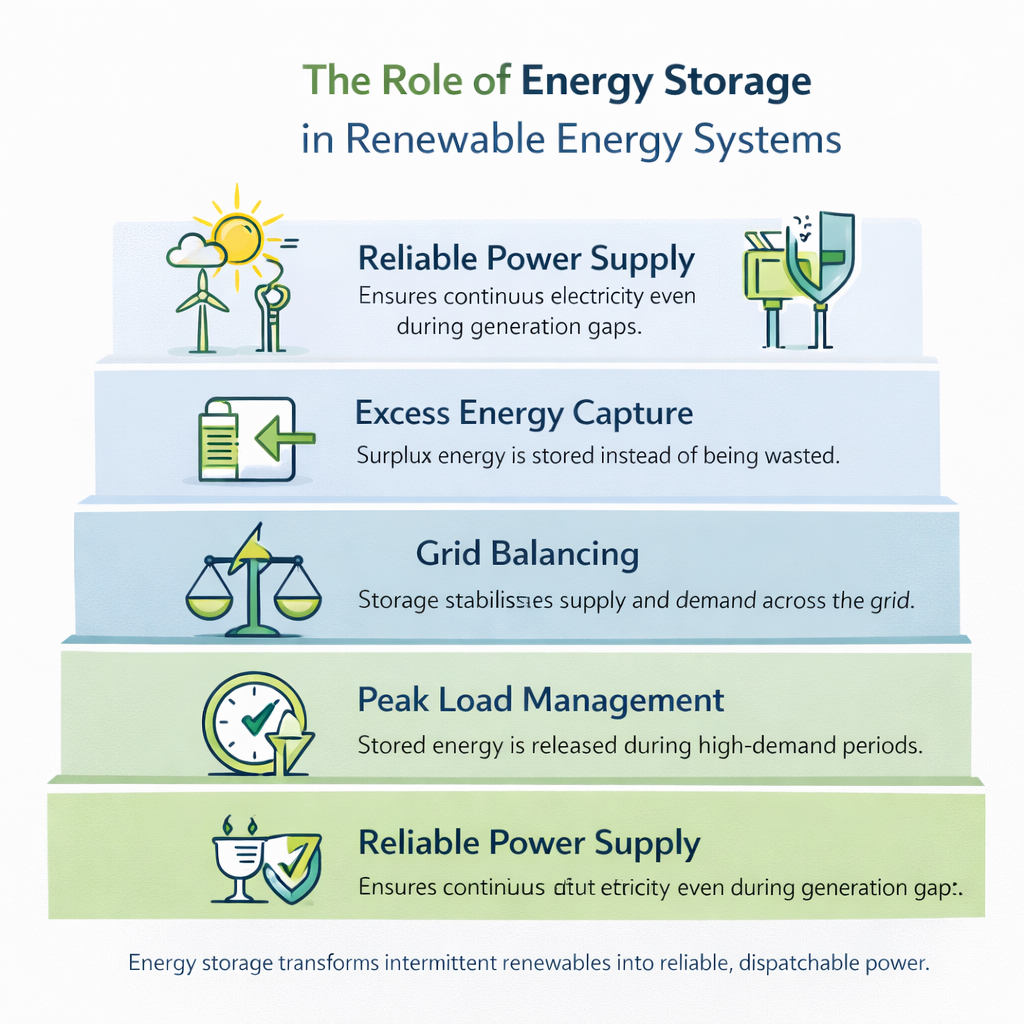
Renewable energy sources like solar and wind are clean and abundant, but they share one major limitation: they do not produce power consistently throughout the day. Solar panels generate electricity only when the sun shines, and wind turbines depend on wind speeds. This mismatch between when energy is generated and when energy is needed makes energy storage essential for reliable large-scale renewable integration.
India’s energy demand is expected to double by 2040, driven by the rapid growth of electric vehicles, smart grids, industrial expansion, and rural electrification. As the country transitions toward cleaner power systems, the need for stable, dispatchable energy becomes increasingly critical. Storage technologies bridge these gaps by performing several vital functions.
One key benefit is peak shaving, where stored energy is used to meet high-demand periods and reduce the strain on power grids. Storage also supports frequency regulation, helping maintain a stable balance between supply and demand in real time, something renewables alone cannot guarantee. Through energy arbitrage, utilities can store power when prices are low and release it during peak pricing to reduce overall system costs.
Finally, in microgrids and rural areas, storage ensures uninterrupted power, improving reliability in regions with weak or limited grid connectivity.
Achieving net zero requires eliminating or offsetting as many greenhouse gas emissions as we produce. Since renewable sources like solar and wind generate electricity without emitting greenhouse gases, they are essential to this transition. However, their biggest limitation is variability. Solar power drops at night, and wind output fluctuates throughout the day. This inconsistency often forces grids to rely on fossil fuels, such as coal, natural gas, or oil, to fill the gaps.
Energy storage changes that equation completely.
By storing excess renewable electricity when generation is high and releasing it when demand spikes or production falls, storage systems create a stable, round-the-clock supply of clean power. This reduces dependence on carbon-intensive backup sources and ensures that renewable energy can meet a larger share of national energy demand. In other words, storage allows clean energy to behave like a reliable baseload power source, something previously dominated by fossil fuels.
Additionally, storage improves grid efficiency by reducing curtailment (wasted renewable energy), supporting peak shaving, and stabilizing voltage and frequency. When renewables become more dependable and economically efficient, their adoption accelerates, driving deeper decarbonization across industries.
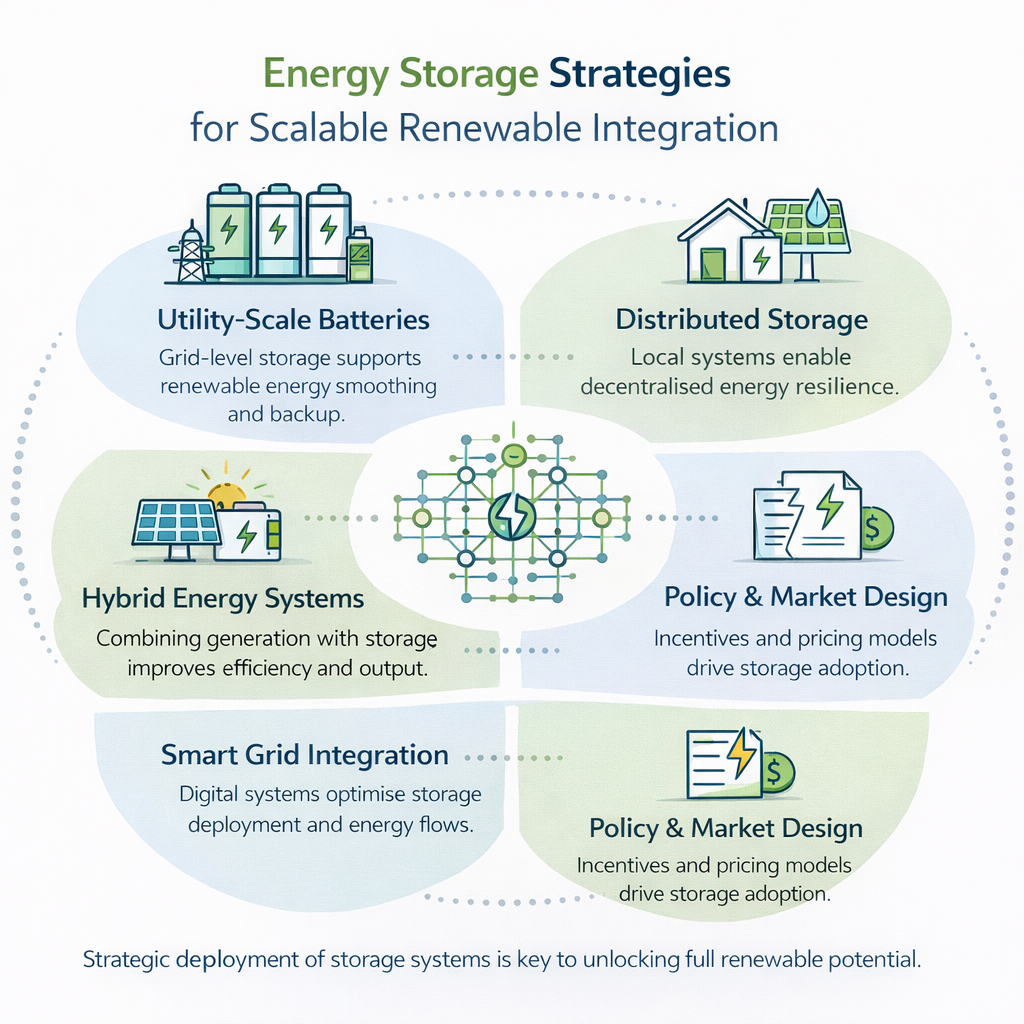
Battery energy storage systems (BESS), especially those that leverage second-life batteries, are a cornerstone of a sustainable energy future. They solve the critical problem of inconsistency in renewable energy, reduce our dependence on polluting fossil fuels, and build a powerful circular economy. Solving today’s challenges with innovation and teamwork will help BESS reach its potential and support a sustainable future.
If you want to build leadership skills for the clean energy transition, explore evACAD’s advanced sustainability leadership courses designed for India’s next generation of sustainability professionals. Strengthen your expertise, accelerate your career, and be part of the transformation shaping tomorrow’s energy landscape.


.webp)
.jpg)
.jpg)