
As sustainability becomes central to corporate strategy and investor preference, ashadowy counterpart has emerged—greenwashing. It’s the corporate sleight of hand: promoting environmental or social responsibility while lacking the substance to back it up. With Environmental, Social, and Governance (ESG)credentials now shaping brand reputation, consumer choices, and capital flows,the incentive to appear “green” has never been greater. But behind many glossy sustainability reports lies a dangerous illusion.
Green washing is no longer confined to vague slogans or token CSR projects. It has evolved.Companies today may employ deceptive imagery, selectively report ESG metrics,boast irrelevant certifications, or cherry-pick achievements while hiding negative impacts. This makes detection difficult—and urgent. As ESG investing scales, the risk of capital misallocation due to misinformation also grows. To combat this, a new generation of forensic tools has emerged to separate genuine sustainability efforts from clever marketing.
Artificial Intelligence (AI), especially when integrated with Natural Language Processing (NLP), is playing a pivotal role in greenwashing detection. NLPtools can scan vast volumes of unstructured data—from sustainability reports and press releases to media articles and social media posts—looking for language inconsistencies. Terms like “eco-friendly,” “sustainable,” or “green”often appear without quantifiable backing. These are flagged for further scrutiny.
AI also enables sentiment analysis. If a company’s external messaging is disproportionately positive relative to its actual performance indicators—such as emissions, waste, or labor practices—it raises a red flag. Further, AI systems are now being trained to conduct cross-source validation, comparing self-reported data with third-party disclosures, regulatory filings, and NGO reports to detect mismatches and manipulations.
Advanced machine learning models are now being used to detect anomalies in ESG disclosures.These systems identify patterns of authentic sustainability behavior—such as the expected relationship between green investments and reduced emissions.Sudden spikes in ESG scores, unexplained improvements in KPIs, or misaligned spending often suggest manipulation. These insights offer a data-driven method to detect “too good to be true” sustainability narratives.
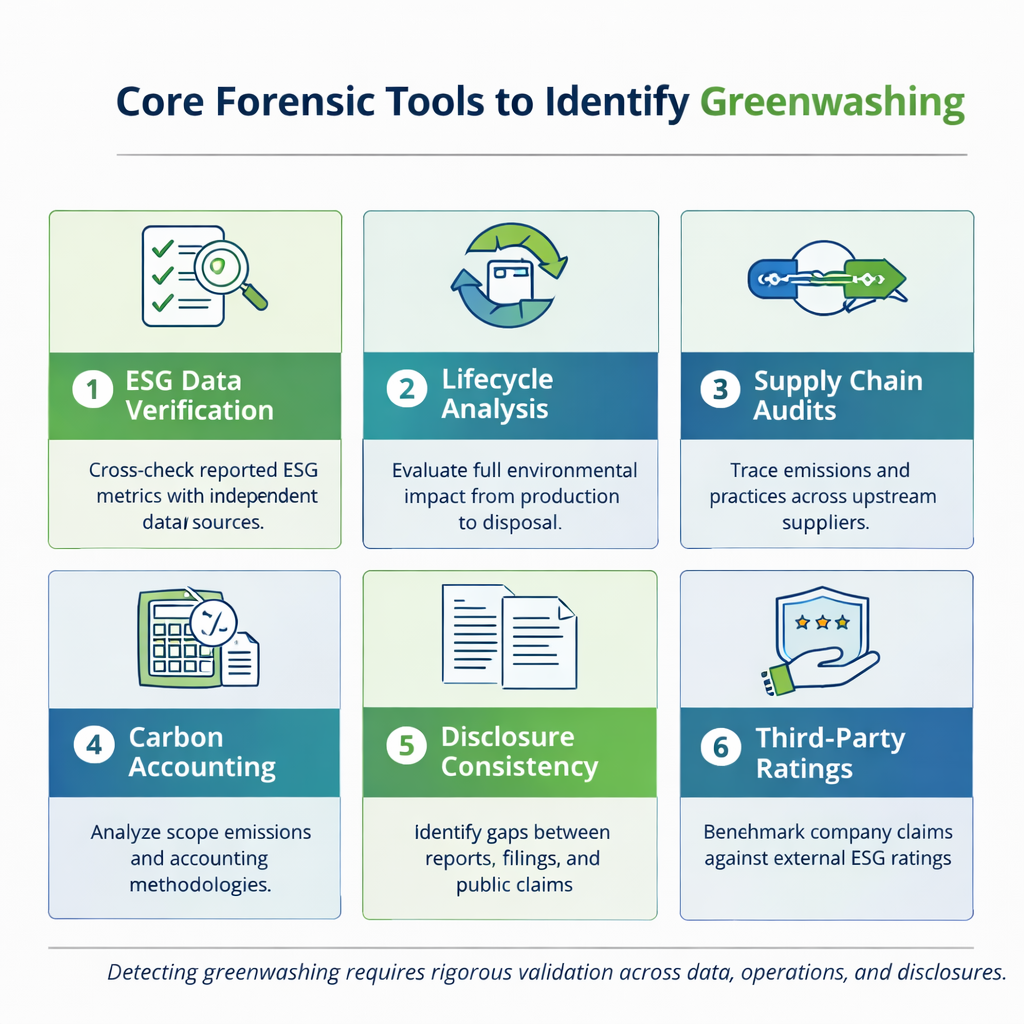
Greenwashing frequently hides within complex, global supply chains. A brand may promote ethical practices while outsourcing operations to suppliers with poor labor or environmental standards. Traceability platforms now track materials and processes from origin to end-product, enabling verification of claims like fairsourcing or reduced environmental harm.
Blockchain technology enhances this by providing immutable, transparent records of transactions,certifications, and emissions data. When implemented, it becomes nearly impossible for a company to retroactively alter its ESG records. This is especially effective in sectors like agriculture, mining, or fashion, where upstream practices often escape scrutiny.
Sustainability narratives must align with a company’s financial commitments. That’s where forensic accounting steps in. By auditing ESG-linked financial flows, analysts can determine whether sustainability projects are genuinely funded or merely promotional. If a company claims major investment in clean energy but allocates minimal budget toward it, or diverts green bond proceeds to general operations,it suggests greenwashing.
Additionally, carbon accounting—especially for Scope 3 emissions—remains a high-risk area. Forensic methods validate reported carbon footprints against established standards like the GHG Protocol, examining whether companies fully disclose indirect emissions from supply chains, product use, and waste.
Sometimes, the clearest evidence comes from above. Satellite imagery and geo spatialanalysis allow researchers and auditors to verify environmental claims visually. Reforestation initiatives, pollution reduction efforts, and land-use changes can be assessed in near real-time. If a company pledges deforestation-free sourcing but satellite data shows forest degradation, the narrative falls apart. This form of “aerial due diligence” is particularly impactful for sectors like agriculture, mining, and infrastructure.
Even the most sophisticated tools can’t replace human vigilance. Whistle blower protections allow insiders to confidentially report discrepancies in ESG reporting or internal misconduct. Secure platforms are increasingly used to protect identities and foster trust.
Meanwhile, shareholder activism is growing sharper and louder. Investors are demanding ESG-linked performance targets, third-party assurance of sustainability data, and more transparent board-level accountability. And the consumer—empowered by digital media—plays a critical watchdog role. Informed, vocal, and quick to act, public backlash can now undo a decade of brand-building within hours.
Ina complex, data-driven ESG landscape, skills and awareness are critical.This is where evACAD steps in—with industry-aligned programs that train professionals to lead with integrity:
Offered by IIM Kashipur and evACAD, this program empowers leaders with deep knowledge of ESG reporting, sustainable finance, and renewable energy policies. It covers real-world applications of green hydrogen,circular economy models, and climate action strategy—enabling executives to recognize and avoid greenwashing and build authentic transformation for their organizations or portfolio.
By equipping professionals with both technical knowledge and strategic ESG insight, evACAD ensures India’s green transition is led by credible, future-ready talent.
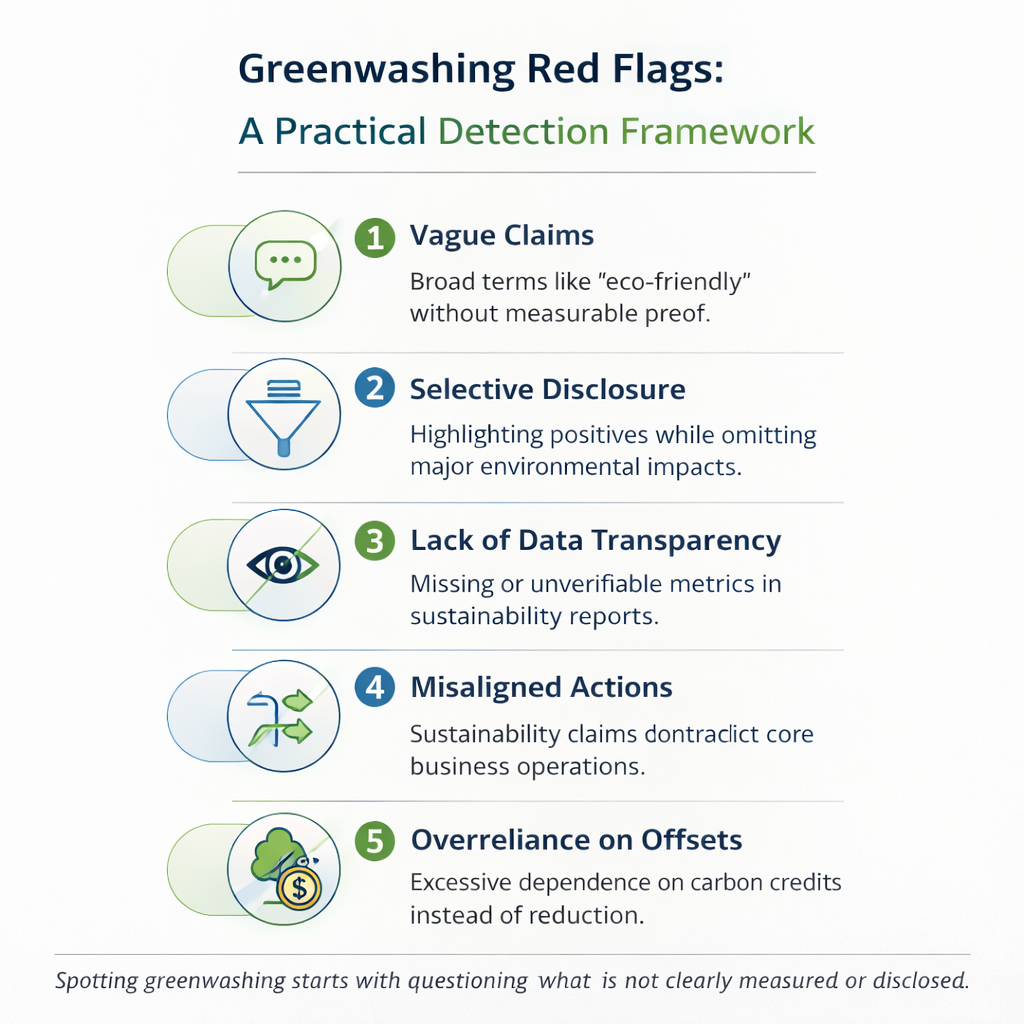
Greenwashing is no longer just a reputational issue—it’s a systemic risk. In a world where ESG drives valuation, credibility must be earned, not assumed. As companies become more adept at crafting the illusion of sustainability, the counter forces must become smarter, faster, and more resolute.
FromAI-powered audits and blockchain ledgers to forensic finance and satellite verification, the fight against greenwashing is becoming a multi disciplinary endeavor. But this effort is not just about policing—it’s about restoring trust in ESG. Because ultimately, sustainability is not a marketing department’s job. It’s a boardroom priority, an operational imperative, and a societal obligation.
The companies that welcome transparency, invest in verifiable change, and submit themselves to scrutiny will thrive in the era of conscious capitalism. The rest will be unmasked—by data, by technology, and by a public that no longer accepts the illusion.


.webp)
.jpg)
.jpg)