
The Roar of the Crowd: How Consumer Activism is Shaping Corporate ESG

last updated
April 3, 2026

There was a time when ethical consumerism felt like a niche—spoken about quietly by environmentalists or eco club members. Today, it's a megaphone echoing across boardrooms and headlines. Empowered by information and driven by climate urgency, consumers are demanding that brands take responsibility for their environmental pollution, sourcing, and governance practices. And in doing so, they’re transforming the landscape of sustainability and sustainable development.

From solar panels for home use to eco-friendly products, consumer choices are accelerating the shift to renewable energy, sustainable agriculture,and nature-based solutions. ESG (Environmental, Social, and Governance)is no longer a corporate afterthought—it’s the core of business value, shaped by the voices of sustainability-conscious buyers.

This transformation is driven by several intersecting trends. First, information has become radically more accessible.With just a few clicks, anyone can find out how a company treats its workers,the carbon footprint of its products, or whether its supply chains are ethically managed. The days of opaque operations and unchecked practices are over. In parallel, social media platforms like Instagram, TikTok, and X(formerly Twitter) have given consumers a global megaphone. A single viral postcan trigger a full-blown boycott or crisis response within hours, pushing companies into the spotlight and holding them accountable in real time.

The generational shift is equally significant. Millennials and Gen Z are sustainability natives.They care deeply about climate action, social justice, and ethical consumption—and they back up their values with their spending. The segenerations are increasingly bypassing brands that don’t reflect their principles and are rewarding those that do with loyalty and advocacy. With their purchasing power on the rise, this cohort is now influencing not just marketing strategies but boardroom decisions.

Wider awareness of global challenges like climate change, biodiversity loss, income inequality, and human rights violations has also helped consumer activism gain traction. These issues are no longer abstract. People are feeling their impacts directly—through floods, heatwaves, inflation, or social unrest—and expect the companies they support to take meaningful action, not just make promises.

From Compliance to Conscious Capitalism

This consumer-led pressure is ushering in deep structural changes across sectors:
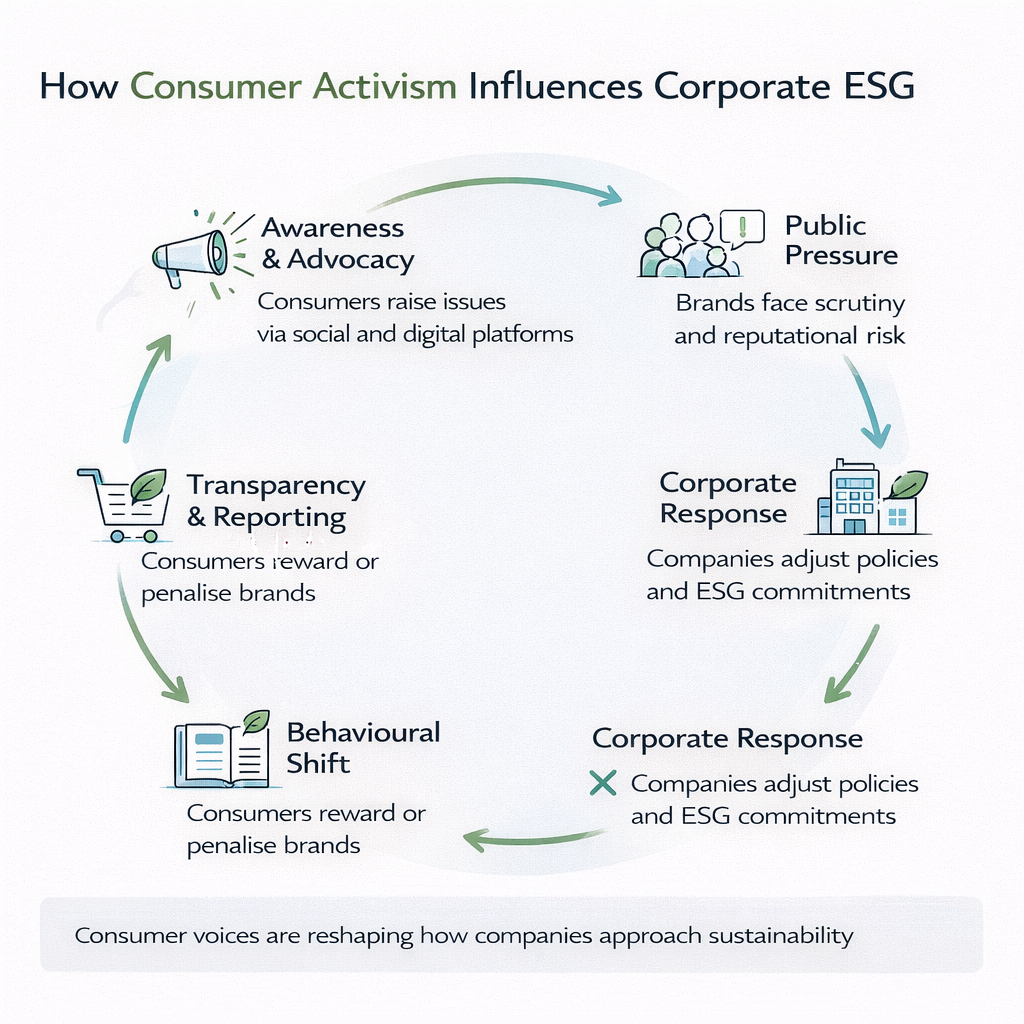
  • Supply Chain Transparency: People want to know where their products are made, under what labor conditions, and with what environmental impact. Whether it's solar inverters, biomass energy, or sustainable fabrics, companies are being challenged to reduce environmental degradation and publish verifiable ESG data.
  • Green Product Innovation: From electric vehicles and fuel cells to solar-powered fans and on-grid solar systems, the consumer appetite for renewable power sources is pushing companies to innovate. Circular economy principles are replacing linear models, and even traditional industries like thermal power plants are exploring alternatives.
  • Ethical Sourcing and Biodiversity: Consumer concerns over animal welfare, deforestation, and ecological degradation are driving brands to adopt biodiversity-positive practices.Eco-friendly packaging, carbon-neutral shipping, and sustainably sourced materials are becoming the norm, not the exception.
  • Inclusive Leadership and DEI: Modern consumers want brands to reflect their values—not just externally but internally. That means diversity in hiring,equity in leadership, and meaningful inclusion practices, backed by realmetrics—not performative posts.

Avoiding the Green washing Trap

With so many companies marketing themselves as “green energy leaders” or “eco-conscious,”consumers are growing skeptical of greenwashing. They now expect:

  • Measurable ESG targets
  • Third-party verification
  • Alignment with 17 Sustainable Development Goals
  • Reporting against frameworks like GRI, CSRD,or ISSB

Companies that mislead risk more than bad press—they face regulatory penalties, investor backlash, and customer abandonment.

The Smart Business Case for ESG

Responding to this new consumer power isn’t just the right thing to do—it’s profitable:

  • Brands leading in ESG outperform on customer loyalty and financial resilience
  • Sustainable innovations in sectors like solar power for house use or hydrogen fuels open new revenue streams
  • Strong ESG credentials attract top talent, especially in purpose-driven generations
  • Access to green bonds, ESG-linked finance, and global sustainability grants becomes easier

Building the ESG-Ready Workforce: evACAD’s Role

The green transition isn’t just about better products—it’s about upskilled professionals who can implement ESG strategies with real impact. This is where evACAD, India’s leading e-Mobility and clean energy education platform, plays a pivotal role.

PG Executive Program in Net Zero Strategy & Sustainable Leadership (IIM Kashipur)

For CXOs, policy makers, and sustainability leads, this program equips professionals to lead decarbonization and renewable transitions. It covers green hydrogen,carbon markets, circular economy models, and climate disclosure frameworks aligned with the United Nations Sustainable Development Goals.[AM1] 

Whether you're building solar PV inverters, managing wind turbine farms, orcrafting your brand’s next ESG report, evACAD programs empower professionals to lead in a world where renewable energy systems and sustainability are foundational to growth.
Conclusion: Listening to the Crowd, Leading with Impact

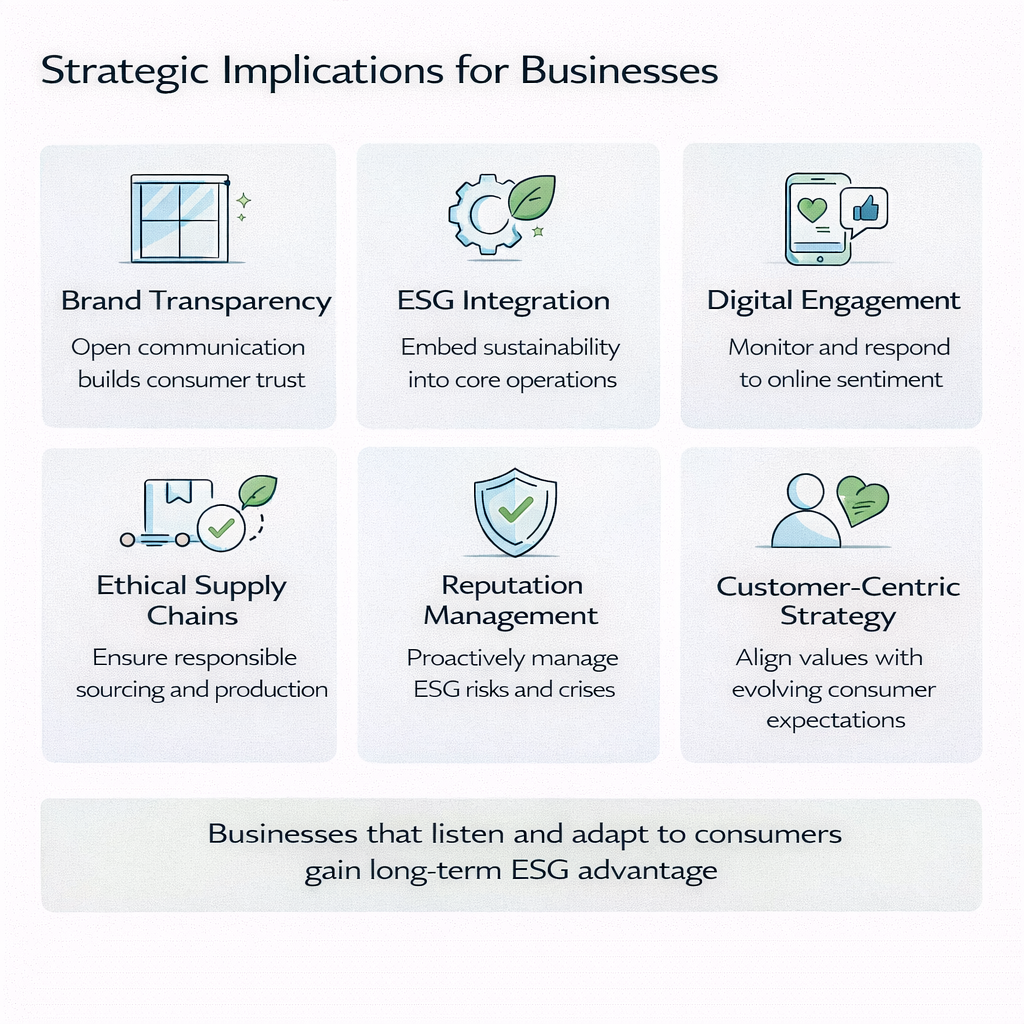
Consumers are not just buying—they’re shaping the future. Their demand for ethical products, cleanenergy, biodiversity protection, and transparency is turning ESG from checkbox to business backbone.

Companies that embrace this shift—through real actions, skilled teams, and eco-conscious leadership—are setting themselves up not just for consumer trust, but for long-term substantial development, resilience, and relevance.

In an era defined by climate urgency, renewable energy, and environmental stability, the roar of the crowd isn’t background noise. It’s the newcompass guiding business strategy.

In short, the consumer has moved from the sidelines to center stage. They are no longer spectators but active participants in shaping corporate responsibility. Their collective voice has turned ESG from a checkbox into a blueprint for sustainable growth. Companies that listen, adapt, and embed sustainability into their operations are positioning themselves for long-term success—not just in profit, but inpurpose.

evACAD logo with stylized orange checkmark integrated between letters.
Shape the businesses, policies, and technologies driving Net Zero & Sustainability. Get Started!
Know More
Talk to our advisor today and know more about our Sustainability and Net Zero Program
Four customer service agents wearing headsets working on laptops at a desk in a dimly lit office.
+918031404841
Graphic showing four diverse male portraits connected by orbiting colored dots around a central figure.
Take the Next Step with evACAD
Get Started!

FAQ

How is consumer activism reshaping corporate ESG strategy across industries?

Empowered by social media and real-time information access, consumer activism is forcing companies to embed genuine corporate ESG strategy into operations. A single viral campaign can trigger boycotts, compelling brands to publish verifiable ESG reporting and align practices with sustainable development goals to retain customer trust.

What role do Millennials and Gen Z play in accelerating ethical consumerism?

Millennials and Gen Z prioritise climate action and social justice in purchasing decisions, rewarding brands that reflect their values with loyalty. Their rising spending power is driving ethical consumerism from a niche preference into a mainstream market force that directly influences corporate ESG strategy and product innovation.

How can companies avoid greenwashing while meeting ethical consumerism expectations?

Avoiding greenwashing requires measurable ESG targets, third-party verification, and alignment with recognised ESG reporting frameworks like GRI, CSRD, and ISSB. Companies that make vague corporate ESG strategy claims without evidence risk regulatory penalties, investor backlash, and significant reputational damage from increasingly sceptical consumers.

Why is supply chain transparency now central to credible corporate ESG strategy?

Consumers demand visibility into labour conditions, environmental impact, and sourcing practices throughout supply chains. Supply chain transparency backed by verified ESG reporting has become a core corporate ESG strategy requirement, particularly in sectors like apparel, food, and manufacturing, where ethical consumerism scrutiny is highest.

What is the business case for aligning corporate ESG strategy with sustainable development goals?

Brands with credible corporate ESG strategy aligned to sustainable development goals outperform on customer loyalty, attract purpose-driven talent, and gain easier access to green bonds and ESG reporting-linked finance. Genuine ethical consumerism alignment drives long-term financial resilience, not just reputational benefit.

Talk to Advisor over call
Blue upward arrow inside a white circle with a blue border.