
For India to reach its net-zero target, changes to the transport sector stand to have the most transformative potential. Low-carbon vehicles, cleaner supply chains, and new clean energy & sustainability-focussed skills will determine if India fulfils its climate commitments. Net-zero and carbon courses are vital for facilitating this change among students and professionals.
India has a considerable amount of transport-related greenhouse gas emissions. For vehicles, 65-80% of emissions over the vehicle's entire life cycle occur during driving. The most straightforward option for mitigating this is shifting to electric mobility, with hybrids serving as a temporary bridge. The change is not just about the vehicles that are driven, but also how the cars are manufactured, fueled, and serviced.
India's automobile industry is already a heavyweight: contributing around 7.1% of GDP and employing over 19 million people. For Original Equipment Manufacturers (OEMs), this means not only adapting to demand for low-carbon vehicles but also decarbonising energy use, materials sourcing, and supply chain emissions. Achieving net zero by 2050 in auto manufacturing will require long-term strategic decisions on energy, materials (such as steel and rubber), and sourcing.
In the shift toward low-carbon transportation, emissions are grouped into three categories:
Scope 1: Direct emissions from production facilities and operations, which a vehicle manufacturer directly controls.
Scope 2: Indirect emissions from electricity purchased and used in manufacturing.
Scope 3: Indirect emissions beyond own operations, which include emissions embedded in materials like steel or rubber, supply chain components, upstream and downstream movement, and product lifecycle.
According to projections, India's automobile manufacturing emissions, including those of OEMs and their suppliers, could more than double from 2020 levels by 2050 under business-as-usual (BAU) conditions. The material manufacturing, especially steel, is mainly responsible for that increase. Emissions intensity is expected to decline even if vehicle production almost quadruples by 2050, although absolute emissions under BAU rise sharply.
Several pathways are under analysis:
Implementing and scaling a particular pathway for net zero is not easy as understanding the evolving needs of various stakeholders across value chains and scaling a single pathway is not easy. So, what can be done?
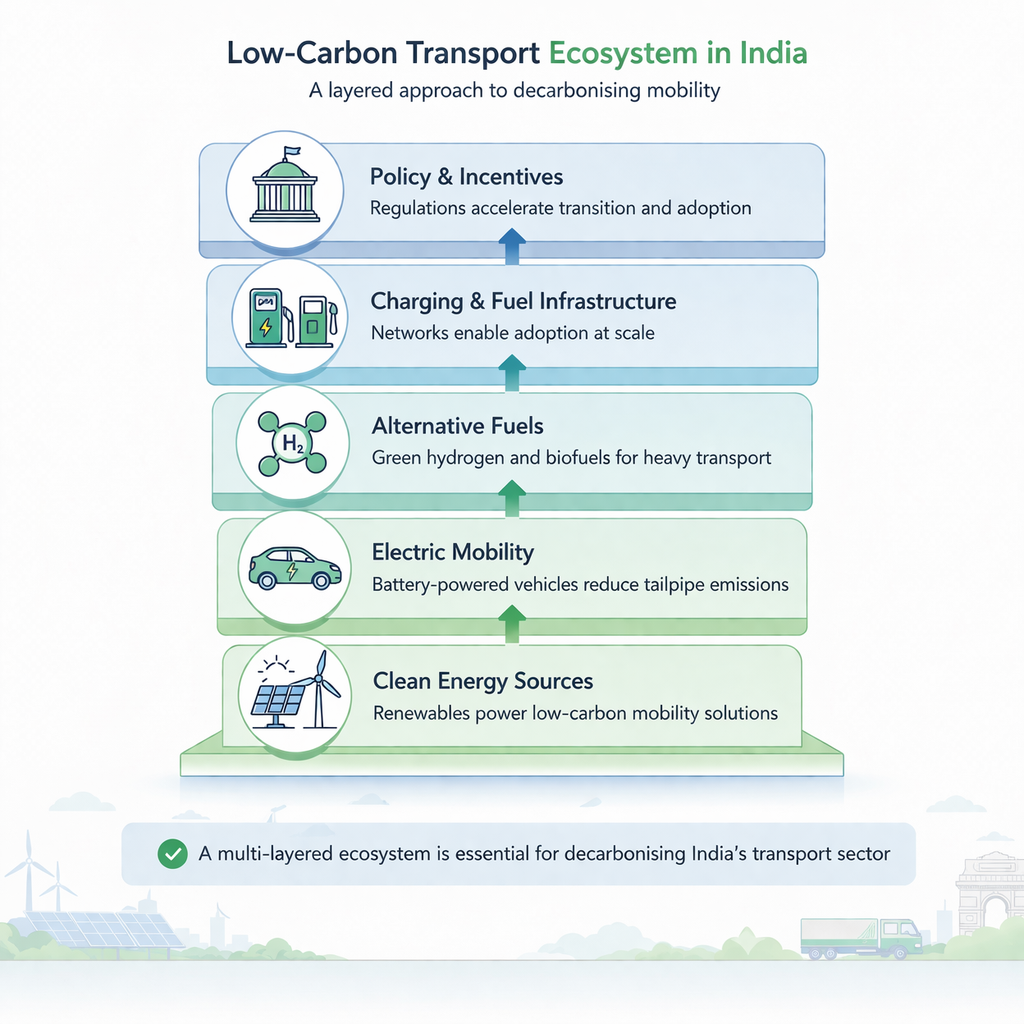
Achieving Net Zero goals for India's mobility sector requires the simultaneous, coordinated execution of multiple levers:
1. Integration of Renewable Energy and Green Steel
India's auto industry can cut its manufacturing emissions by 87% by 2050 through the use of green electricity and shifting to low-carbon steel, one of the more impactful insights from recent studies.
2. Sourcing Materials Strategically
To do this, OEMs will need to use more recycled steel ("scrap steel") and switch from coal to hydrogen in steel production. This is a collaboration with suppliers on science-based targets for Scope 3 emissions and the Steel Climate Innovation Challenge.
3. Electric Vehicles and Their Use Phase
Building and deploying more electric vehicles (EVs) is a fundamental requirement of the proposed growth. It's insufficient just to create EVs. There must be supporting charging infrastructure as well, aligned and coordinated battery supply chains, and lifecycle practices, so that downstream and upstream emissions are minimised.
4. Developing the Workforce and Needed Specialisations
With the evolution of tools, the required skills will need to evolve as well. Energy-efficient manufacturing, life-cycle assessment, supply chain decarbonisation, and renewable energy strategies will need to be taught to engineers, designers, technicians, and sustainable and ESG analysts. Net-zero courses and net-zero carbon courses will be necessary for current industry professionals and learners preparing to enter the industry.
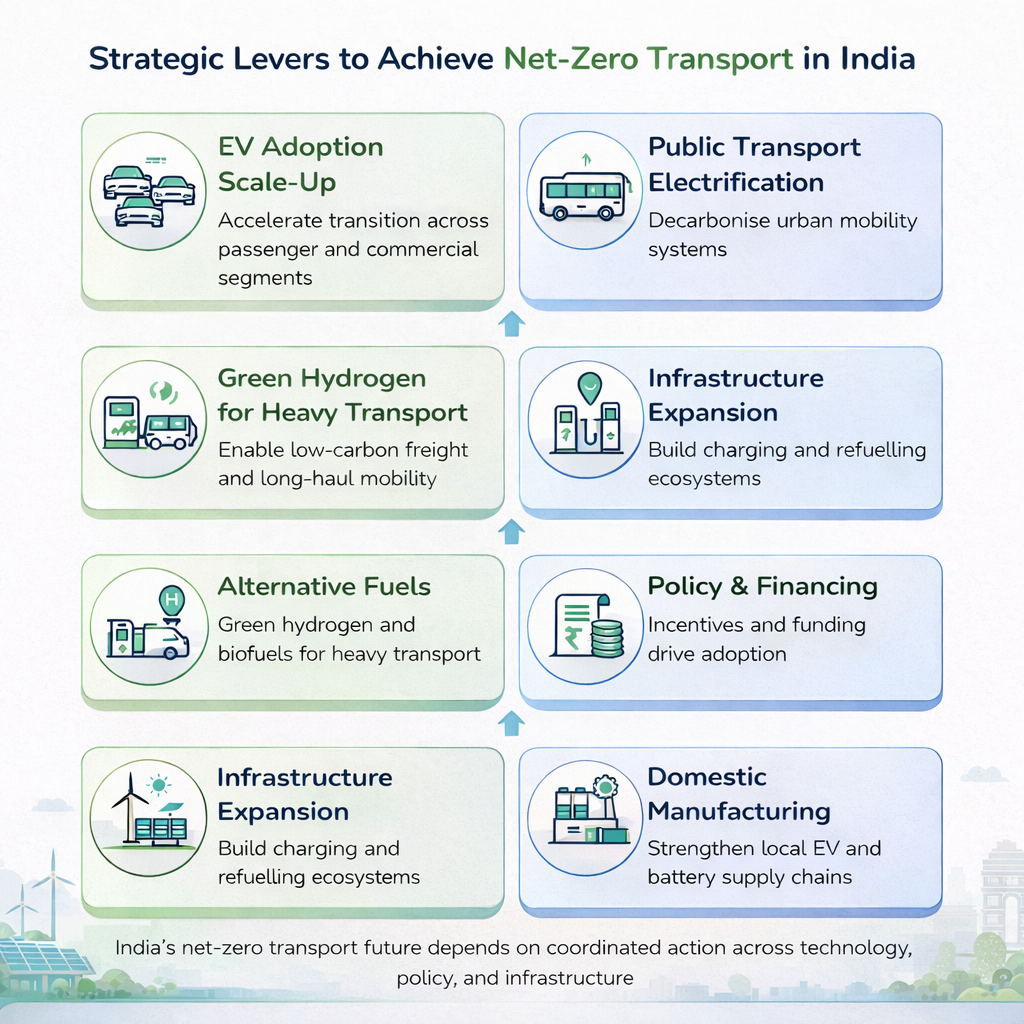
Achieving low-carbon transportation is more than just facilitating the proliferation of electric vehicles—it entails a progressive reconfiguration of how vehicles, including their designs, construction, powering, and materials, are sourced. For India to hit net zero (aimed for 2070 nationally, but many sectors are aiming for earlier decarbonisation and zero emissions), it is necessary to tackle Scope 1 and 2 emissions, and, eventually, Scope 3 emissions.
For those desiring to spearhead this transition, now is the time to act. Start with educating yourself and your team —Enrol in our PG Executive Program in Net Zero Strategy & Sustainability Leadership Courses, which addresses the technical and strategic components of low-carbon transportation through an applied-learning based coursework.
Are you prepared to be a part of India's mobility revolution?
Check out evACAD's curriculum on Net Zero Strategy, EV & Battery Systems, and Sustainability Leadership. Build the skills that will make a difference to your industry and community.


.webp)
.jpg)
.jpg)