
From Data to Decisions: Navigating the ESG Reporting Maze

last updated
April 9, 2026

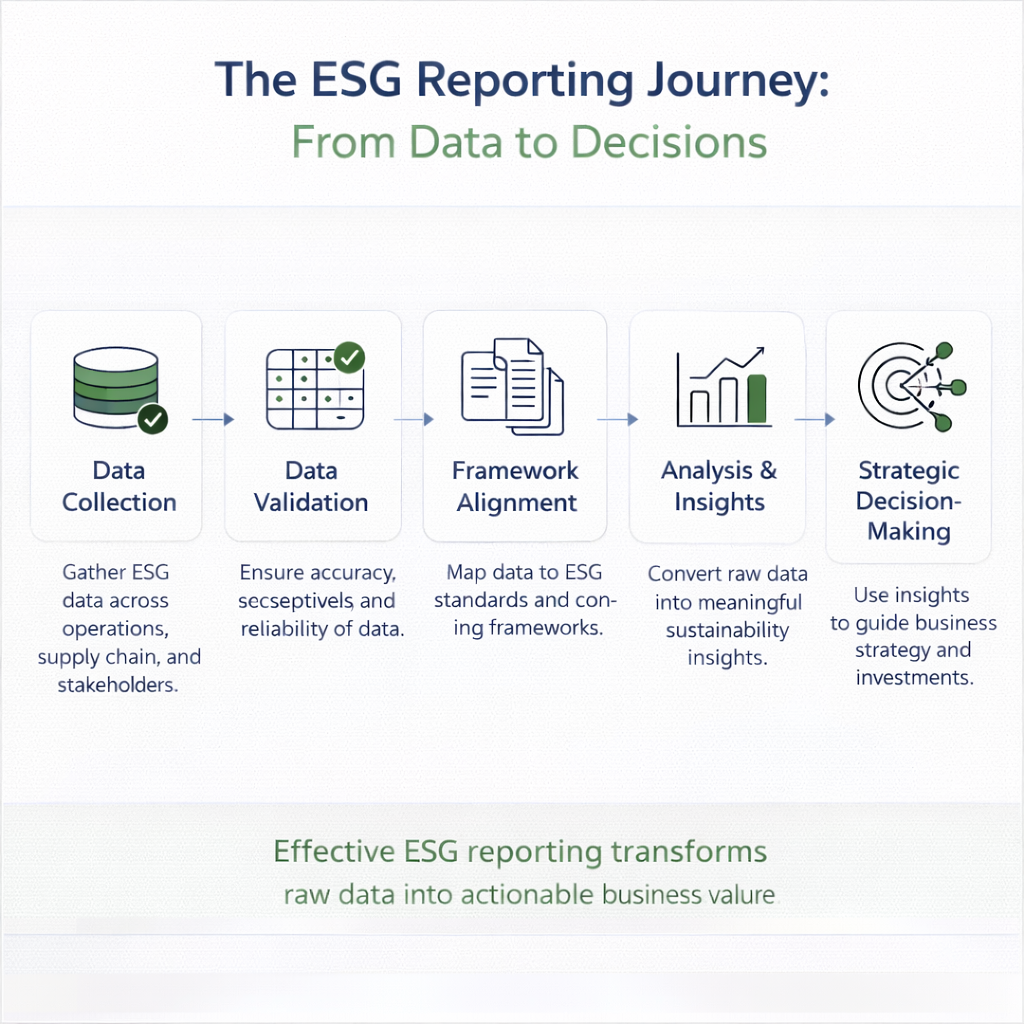
In today's corporate landscape,Environmental, Social, and Governance (ESG) factors are no longer justbuzzwords. They have evolved into fundamental pillars of business strategy,risk management, and long-term value creation. Investors, regulators,consumers, and employees alike are demanding greater transparency andaccountability around a company's environmental and social impact. As a result,ESG reporting has become a critical business imperative.

Yet, turning raw ESG data into meaningful, strategic insights remains a daunting challenge for many companies. As they navigate a fragmented regulatory landscape and increasing stakeholder expectations, organizations must rethink how they collect, manage, and communicate ESG data.

Why ESG Data Matters More Than Ever

ESG data provides a framework for measuring a company’s sustainability performance across key domains—from carbon emissions and water usage to labor rights, board diversity,and ethical governance. For investors, it's akin to a "sustainability credit score," helping identify long-term value creators and flagging risks. For regulators, such as those behind the EU’s Corporate Sustainability Reporting Directive (CSRD), ESG data is now a compliance necessity. Beyond mandates, high-quality ESG data unlocks benefits like access to ESG-linked financing, improved brand perception, and talent attraction.

The Challenges of ESG Reporting

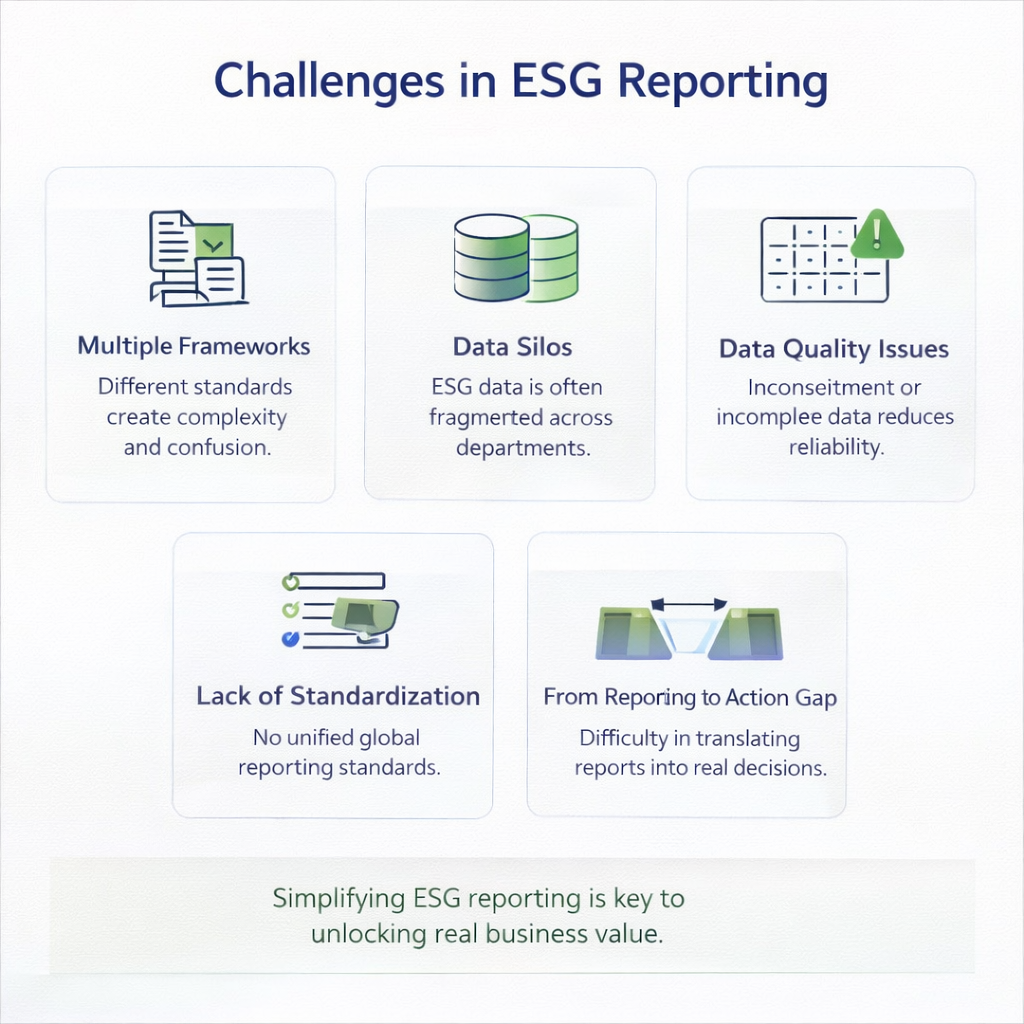
Despite its growing importance, ESG reporting is fraught with obstacles that can compromise its accuracy,consistency, and usefulness:
  • With frameworks like GRI, SASB, TCFD, ISSB, and CSRD operating simultaneously,companies face a confusing mix of requirements. This evolving regulatory landscape is especially challenging for global firms, as they must keep pace with multiple jurisdictions.
  • ESG data is vast and varied.Ensuring accuracy and consistency across metrics like emissions, waste, and social policies is critical but difficult. Many organizations still rely on manual spreadsheets or disjointed systems, which increases the risk of errors and limits audit readiness.
  • For firms with global supply chains, particularly in nature-dependent industries,data at the necessary level of detail is often missing or difficult to obtain.For example, understanding biodiversity impact across various geographies and suppliers remains a complex and underdeveloped area.
  • With a flood of ESG-related requests from stakeholders, many companies struggle to prioritize their efforts. The lack of a clear roadmap can lead to inconsistent disclosures and unfocused reporting strategies.

Charting a Clear Course: Practical Solutions

To overcome these challenges, businesses must approach ESG reporting strategically and proactively:

1. Align Strategy through Materiality Assessments

Start with a comprehensive materiality assessment to identify the ESG issues that are most relevant to your business and stakeholders. This allows companies to focus their data efforts on what truly matters, rather than trying to report everything at once. For those just beginning, focusing on climate-related disclosures using frameworks like ISSB can provide a manageable entry point.

2. Invest in Data Quality and Governance

Treat ESG data with the same rigor as financial data. This means moving from ad hoc tracking to structured data management systems with clear protocols and internal governance. Developing a data quality assurance process ensures reliability, while embedding ESG metrics into operational KPIs integrates sustainability into day-to-day business functions.

3. Leverage Technology for Automation and Insight

Digital tools can streamline data collection, analysis, and reporting. ESG platforms consolidate inputs from multiple sources and support automated, audit-ready workflows.Advanced analytics convert raw data into actionable insights, helping businesses uncover risks and opportunities. For complex areas like biodiversity, technologies like AI, remote sensing, drones, and eDNA offer scalable solutions for tracking ecological impact.

4. Collaborate and Tap External Expertise

You don’t need to master every ESG metric in-house. Third-party ESG providers, NGOs, and consultants can help with assessments, validation, and compliance. Initiatives like AXA IM’s Nature Action 100 illustrate how investors are encouraging companies to integrate biodiversity into ESG strategy.

5. Structure Reports for Clarity and Impact

Effective ESG reports are clear, concise, and backed by evidence. They should include a CEO statement, executive summary, detailed ESG sections, and clearly presented data. Cite specific frameworks used, datasources, and methodologies. Benchmarking progress against previous years and industry averages enhances credibility.

ESG: More Than Compliance—A Strategic Advantage

Robust ESG reporting offers far more than regulatory cover. When done right, it becomes a lever for strategic advantage:

  • Addressing ESG risks helps companies avoid disruptions, fines, and reputational damage.
  • Transparent reporting builds stakeholder confidence and strengthensbrand equity.
  • Strong ESG credentials attract sustainable finance and improve investment terms.
  • ESG performance uncovers opportunities in new markets, especially innature-positive business models that could generate trillions in value.
  • Embedding ESG insights into business models makes companies more adaptable to climate and ecological disruptions.

Climate and Nature: Interlinked Imperatives

The adage "there is no net-zero without nature" highlights the deep connection between climate and biodiversity. Frameworks like the Science Based Targets for Nature (SBTN)emphasize not only reducing harm but regenerating ecosystems and transforming business practices. Companies that integrate biodiversity with their climate strategies will not only meet compliance but build resilient, future-ready enterprises.
evACAD: Building ESG-Ready Leaders for a Renewable Future

At the forefront of sustainability education, evACAD equips professionals to lead in the ESG and energy transition space through programs like:

Executive Program in Net Zero Strategy & Sustainable Leadership

Delivered with IIM Kashipur, this 11-month program helps decision-makers integrate ESG frameworks with circular economy, new energy technologies, and sustainable development goals—making them future-ready for compliance and climate leadership.

Conclusion: ESG Reporting as a Catalyst for Value

While ESG reporting presents challenges, it is also a gateway to transformation. With the right strategy, tools, and partnerships, businesses can elevate ESG from a compliance task to a core business driver. The transition from data to decisions isn't easy—but it is essential. The future of competitive,sustainable business lies in mastering the ESG maze with clarity, integrity,and purpose.

evACAD logo with stylized orange checkmark integrated between letters.
Shape the businesses, policies, and technologies driving Net Zero & Sustainability. Get Started!
Know More
Talk to our advisor today and know more about our Sustainability and Net Zero Program
Four customer service agents wearing headsets working on laptops at a desk in a dimly lit office.
+918031404841
Graphic showing four diverse male portraits connected by orbiting colored dots around a central figure.
Take the Next Step with evACAD
Get Started!

FAQ

Why has ESG reporting become a business imperative rather than just a compliance exercise?

ESG reporting now influences investor decisions, credit access, brand reputation, and talent acquisition. Regulators like those behind the CSRD have made ESG data disclosure mandatory in key markets. Beyond compliance, companies with robust ESG reporting unlock sustainable finance opportunities and build resilience against climate and governance-related risks.

What makes ESG data collection so difficult for companies with global operations?

Companies managing global supply chains struggle to gather consistent ESG data across geographies, suppliers, and asset types. Relying on manual spreadsheets or disconnected systems increases errors and limits audit readiness. Gaps are especially pronounced in areas like biodiversity impact, where granular ESG metrics remain underdeveloped and hard to standardise.

How does a materiality assessment help companies prioritise their ESG reporting efforts?

A materiality assessment identifies which ESG metrics are most relevant to a company's specific industry, stakeholders, and risk profile. Rather than attempting to report on every possible indicator, it focuses ESG data collection where it creates the most value, reducing reporting fatigue while improving the credibility and strategic usefulness of disclosures.

How do multiple overlapping regulatory frameworks like GRI, ISSB, TCFD, and CSRD create challenges for ESG teams?

Each of these regulatory frameworks has a distinct scope, methodology, and disclosure requirements. Global firms must simultaneously satisfy several mandates, often with overlapping but non-identical ESG metrics. Without a structured alignment strategy, organisations risk duplicating effort, producing inconsistent disclosures, and missing jurisdiction-specific compliance deadlines tied to ESG reporting obligations.

What skills do professionals need to turn ESG data into an actionable strategy and secure sustainable finance?

Professionals need expertise in interpreting ESG metrics, applying regulatory frameworks like CSRD and ISSB, conducting materiality assessments, and communicating findings to investors. Programs like IIM Kashipur's PG Executive Program train leaders to bridge technical ESG reporting requirements with broader Net Zero and sustainable finance strategy competencies.

Talk to Advisor over call
Blue upward arrow inside a white circle with a blue border.