
In today’s dynamic sustainability landscape, Environmental, Social, and Governance(ESG) investing has emerged as a cornerstone of responsible finance. With global capital rapidly shifting toward renewable energy, greenhydrogen, solar power, and sustainable development goals (SDGs),investors are leaning on AI-powered systems to analyze massive ESG datasets. These algorithms promise unmatched speed and scale—but they also raise pressing questions about bias, transparency, and accountability.
As ESG investing becomes mainstream, it intersects deeply with technologies like machinelearning, automated ESG scoring, and big data analytics—all of which can unintentionally magnify inequality or mislead sustainability claims. In a world increasingly shaped by climate change, environmental pollution, and ecological degradation, it is imperative that we uphold ethical integrity within these systems.
AI-enabled ESG analysis allows investment firms to scan and process thousands of reports, indicators, and data points to make informed decisions faster than any human could. Algorithms can uncover hidden patterns in environmental impact, social practices, or governance structures, offering a new level of insight and efficiency.
However, this efficiency is a v double-edged sword. When left unchecked, algorithms can embed and scale human biases, obscure decision-making logic, and lead to misplaced trust in flawed systems. If ESG investing is to remain a genuine force for good, it must address these risks head-on.
Algorithms don't emerge in a vacuum. They are trained on historical data, designed by humans,and shaped by what gets measured and prioritized.
Data Bias
If the dataset used to train an ESG algorithm disproportionately represents certain industries or geographies—often due to data availability—it can produce skewed results. For instance, companies in the Global South may be underrepresented despite potentially strong ESG performance.
Design Bias
Developer choices on which variables mattermost can significantly shape outcomes. An algorithm may weigh direct energy useheavily while ignoring complex supply chain emissions, misrepresenting acompany’s real environmental impact.
Measurement Bias
ESG is a moving target, with evolving definitions and standards. Some socialand governance metrics—like equity or community engagement—are inherentlyqualitative and difficult to quantify. Algorithms tend to rely on what iseasiest to measure, sometimes missing what matters most.
These biases don’t just lead to technical inaccuracies; they can reinforce systemic inequalities,misallocate capital, and undermine the broader goals of ESG investing.
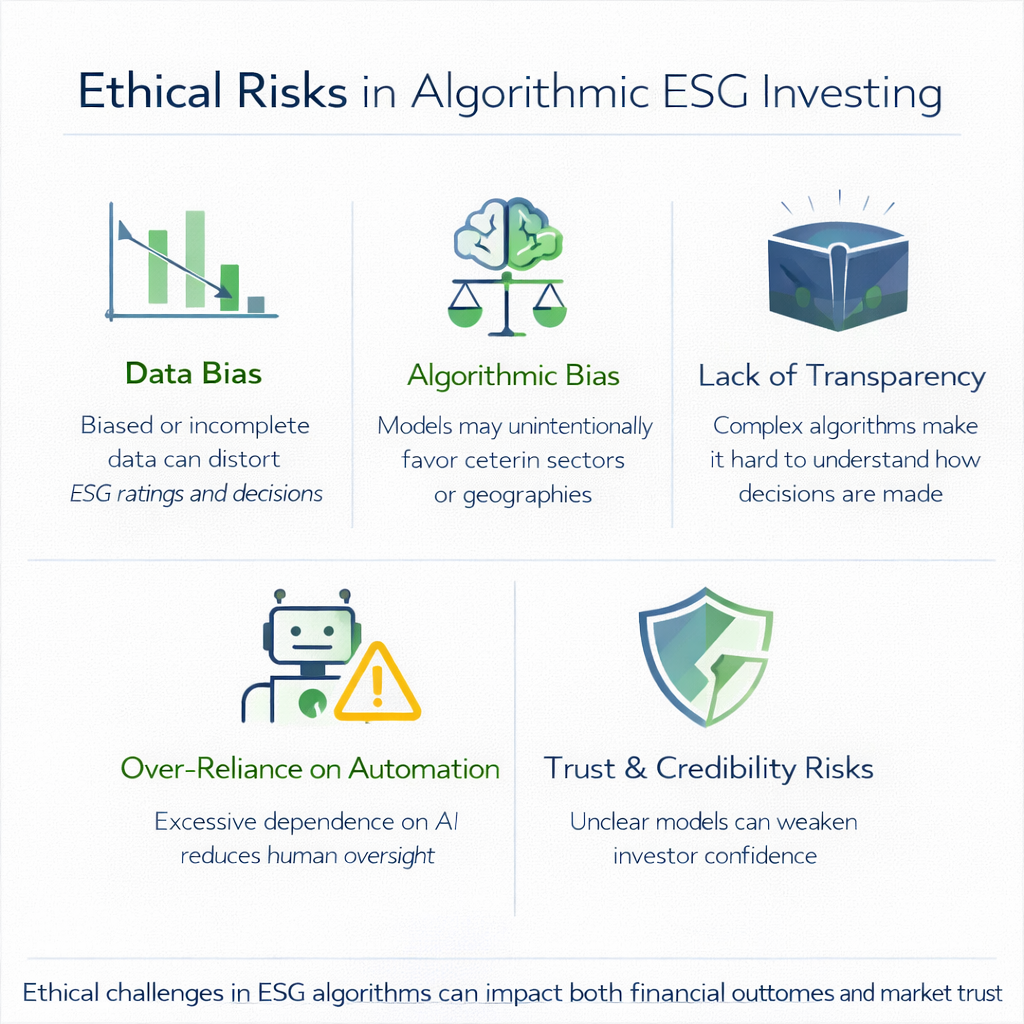
Another ethical concern is the"black box" nature of many algorithmic systems. Advanced models,especially deep learning, make decisions through internal logic too complex for humans to interpret. This opacity is particularly troubling when ESG ratings influence billions of dollars in investment.
Lack of Clarity
Stakeholders—investors, companies,regulators—need to understand how ESG scores are calculated. Without transparency, it's impossible to audit or challenge the outcomes, eroding accountability.
Greenwashing Risk
Opaque scoring systems can inadvertently support companies with weak sustainability credentials but strong marketing.Without understanding the methodology, it's hard to differentiate genuine ESG leaders from pretenders.
Audit Difficulties
The complexity of AI models makes third-party audits difficult. If no one can explain how an ESG score was derived, how can we ensure fairness or correctness?
Transparency isn’t just a technical feature—it’s a safeguard for fairness, credibility, andtrust.
Towards Ethical ESG Algorithms: Building Trust by Design
To ensure thatalgorithms support, rather than undermine, sustainable investing, a proactive,ethical approach is essential. Here's what that looks like:
1.Improve Data Quality and Representation
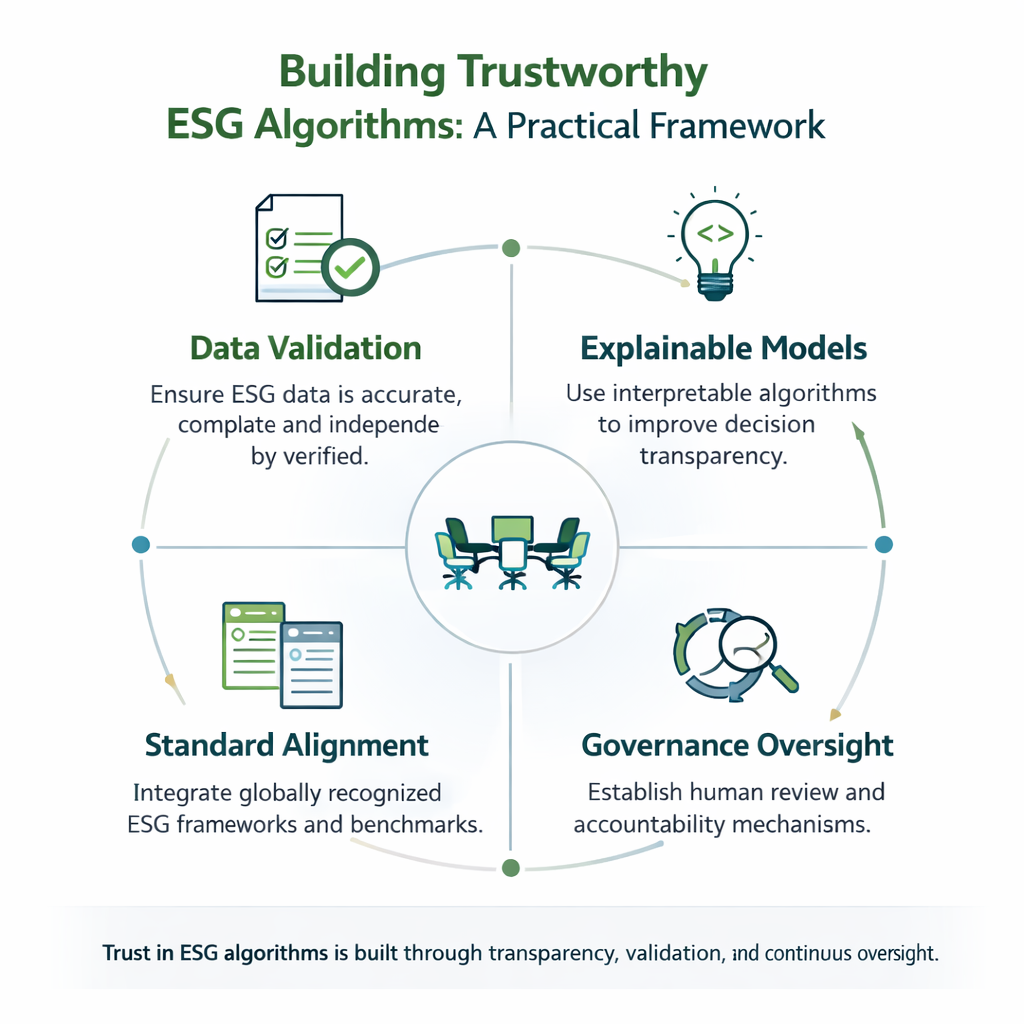
Algorithms need high-quality, inclusive,and representative datasets. This means actively collecting data fromunderrepresented regions and sectors and cleansing historical biases.
2. Embrace Explainable AI (XAI)
We must move from "black box"to "glass box." Explainable AI models allow users to see howdecisions are made, why certain factors were weighted, and what led to specificESG scores.
3.Mandate Human Oversight
AI should support, not replace, humanjudgment—especially in areas with moral and social implications.Cross-functional teams, including ethicists, data scientists, ESG analysts, andaffected stakeholders, must be involved in governance.
4. Standardization and IndustryCollaboration
ESG metrics today suffer fromfragmentation. Developing common standards across providers and encouragingopen-source methodologies can reduce opacity and improve comparability.
5. Regulatory Safeguards
Policymakers have a role to play. Justas financial disclosures are regulated, ESG algorithms must be subject tooversight. This includes rules for bias detection, impact assessment, andmandatory disclosures on algorithm design and data sources.
In this evolving energy and ESG ecosystem, industry needs leaders who can bridge sustainability,technology, and ethics. This is where evACAD is enabling transformation.
A cutting-edge program designed for senior professionals to lead transitions in renewable energy systems, carbon markets, and climate governance.Covers advanced modules on green cities, solar power, circular economy, and climate-aligned investments—ideal for ESG strategists.
evACADis India’s leading skilling platform for professionals shaping the future of renewables,EV systems, and net-zero leadership—offering deep technical and strategic knowledge that aligns with global sustainability benchmarks and green economy transitions.
Ultimately, ESG investing relies on one thing: trust. Investors trust that their capital supports positive impact. Consumers trust that ESG-labeled companies meet ethical standards. Employees trust their organizations are walking the talk. And increasingly, this trust hinges on whether the tools guiding these decisions—especially AI systems—are fair, transparent, and accountable.
When done right, algorithmic ESG investing can democratize sustainability, channeling capital efficiently towards companies that truly lead on environmental and social fronts. But if we ignore the ethical red flags, we risk eroding credibility and progress.
The crossroads is clear: either design AIsystems that reflect our highest ethical standards—or allow algorithms to unintentionally undermine the ESG movement itself.


.webp)
.jpg)
.jpg)