
In today’s investment landscape, ESG (Environmental, Social, and Governance) ratings have emerged as powerful gatekeepers of reputation and capital. With trillions in sustainable finance flowing globally, these ratings shape how companies are perceived—not just by investors, but by customers, regulators, and even their own employees. But have you ever stopped to wonder what lies behind those tidy letter grades like AAA or CCC? What really goes into assigning these scores,and how much can we trust them?
A handful of dominant players have carved out their space in the ESG ratings universe—MSCI, Sustainalytics (Morningstar),S&P Global, ISS ESG, and Refinitiv (LSEG). Each has developed its own proprietary rating models, assessing thousands of companies across industrie sand geographies. While they differ in philosophy and execution, their shared goal is clear: to quantify how well a company is managing ESG-related risks and opportunities.
MSCI, for instance, takes a relative approach—benchmarking firms against peers in their sector. Sustainalytics, on the other hand, focuses more directly on exposure to and management of material ESG risks. S&P blends financial and sustainability data, while ISS ESG places greater emphasis on governance. The seagencies don’t merely analyze sustainability—they interpret it, through different lenses.
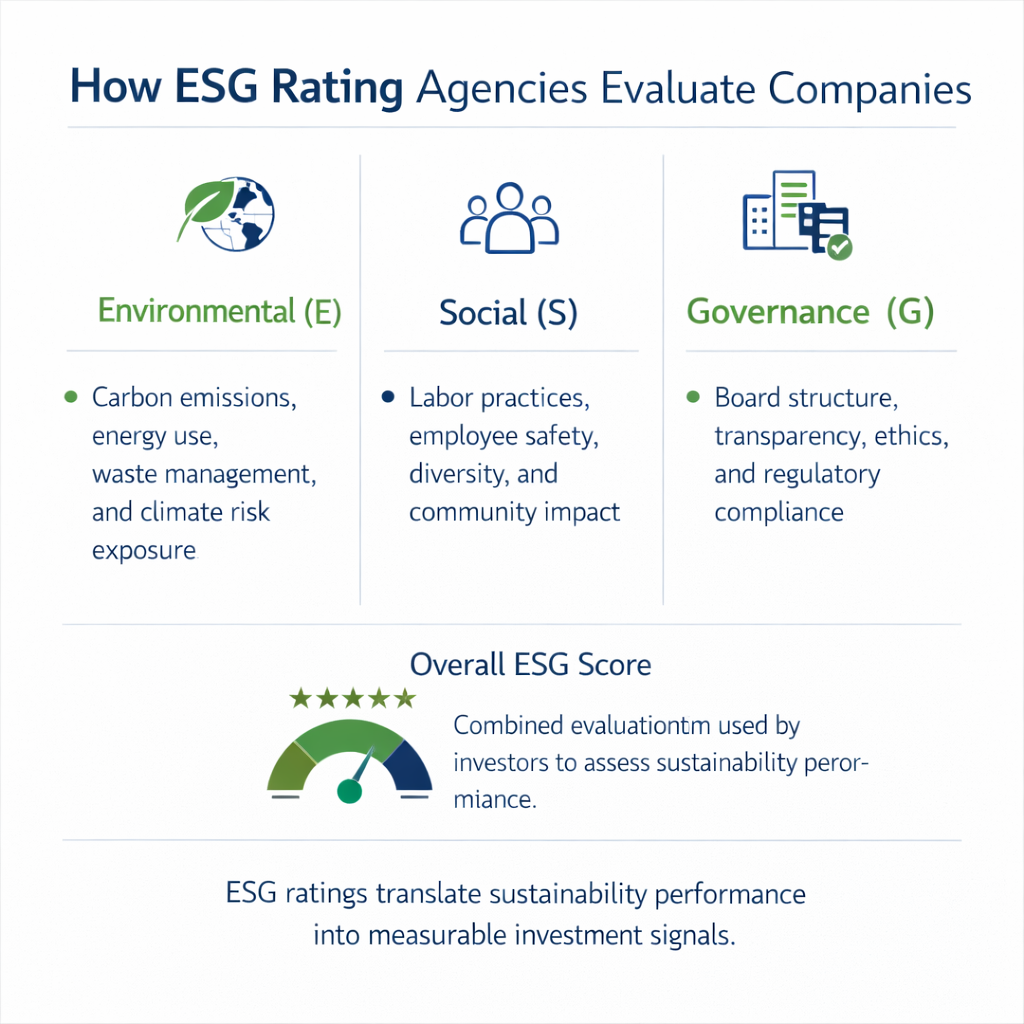
Creating an ESG rating isn’t a simple box-ticking exercise. It begins with massive data collection. Companies’ sustainability reports, regulatory filings, press releases, policy documents, and public databases are mined for clues. AI and natural language processing are increasingly deployed to extract meaning from unstructured sources—media reports, NGO findings, or whistleblower disclosures.
Once the data is gathered, it’s evaluated against materiality frameworks. This means determining what ESG issues actually matter for a specific industry. Carbon emissions are critical for manufacturing and energy companies; data privacy and human capital might matter more for tech firms. The goal is to score companies not just on generic sustainability metrics, but on those that impact their business models most.
These scores are then weighted and aggregated using algorithms. Some models are more transparent than others, but the end result is a distilled number or grade that signals ESG performance. This can be expressed as a percentile, a numeric score (e.g.,0–100), or letter ratings (from AAA to D). Crucially, these scores are updated regularly—but not always in real time—so reputational events or controversies may take weeks to be reflected.
For investors,ESG ratings are a shortcut to assessing long-term risk and opportunity. Astrong rating suggests that a company is proactively managing sustainability issues that could impact financial performance—like climate risk, labordisputes, or regulatory compliance. It also helps in constructing ESG-compliantportfolios, performing due diligence, or aligning with impact investing mandates.
For companies, these ratings have become a reputational currency. A higher ESG score can attract ESG-aligned investors,reduce borrowing costs, and enhance credibility in public markets. Many firms are now actively engaging with rating agencies to improve their scores—sometimes even aligning internal KPIs and disclosures with rating criteria.
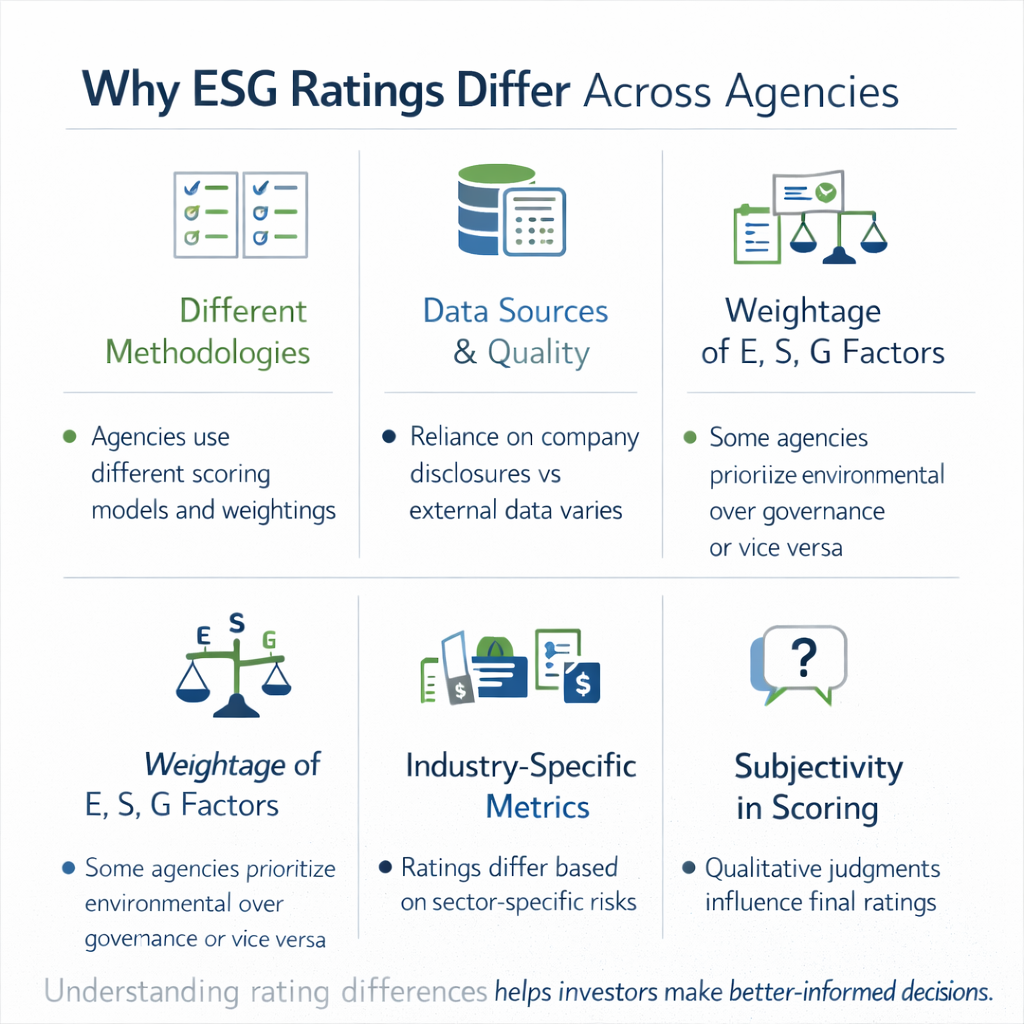
Despite their influence, ESG ratings are far from uniform. In fact, two agencies can rate the same company very differently. A study by MIT Sloan found that ESG ratings from different providers often have correlation scores below 0.5—far lower than, say, credit ratings from Moody’s and S&P, which usually correlate above 0.9.
This divergence stems from fundamental differences in methodology. Agencies may weigh environmental issues more heavily than governance, or rely on different data sources. One might penalize a company for a labor rights controversy; another might give it credit for robust human rights policies. For investors, this inconsistency can be frustrating—especially if they’re relying on ESG ratings to make strategic or ethical choices.
Another challenge is data quality. ESG ratings often rely on self-reported disclosures, which vary widely in detail and reliability. Large, well-resourced companies with polished sustainability reports may appear more ESG-aligned—not because they perform better, but because they report better. Smaller firms, particularly in emerging markets, are frequently penalized for lacking disclosure capacity, not sustainability commitment.
This raises the uncomfortable reality that current ESG ratings may reflect not just performance—but also communication strategy and PR capacity. It also makes greenwashing a real concern. A company might receive a strong ESG rating simply by checking disclosure boxes, without translating those commitments into meaningful action.
ESG ratingsaren’t inherently flawed, but they are evolving tools that require context.Investors and stakeholders must understand that these scores are interpretive,not absolute. They represent a blend of data, judgment, and methodology—andshould be treated as a starting point, not the final verdict.
To address theseconcerns, initiatives like the International Sustainability Standards Board(ISSB) and the European Sustainability Reporting Standards (ESRS) are pushingfor global harmonization of ESG disclosures. Standardized reporting would makelife easier for both companies and raters, and ultimately enhance the comparabilityand reliability of ESG ratings.
Understanding ESG ratings—and how to navigate them—is becoming a core leadership skill in climate-aligned sectors. That's where evACAD is playing a pioneering role in sustainability education.
Offered by IIM Kashipur in partnership with evACAD, this program empowers professionals to lead the energy transition, adopt sustainable energy practices,and navigate ESG reporting with confidence. Learn to decode ESG ratings,mitigate reputational risk, and integrate green hydrogen, solar energy, and renewable power sources into business models.
With practical,industry-aligned courses, evACAD is building a generation of ESG-literate professionals who can shape ethical sustainability from boardrooms to battery labs.
As sustainable finance matures, so too will the scrutiny of ESG ratings. The demand for transparency, auditability,and real-world impact will only grow. Agencies may need to open their black boxes—sharing more about how data is weighted, what metrics are prioritized,and how subjective judgment is applied.
Until then, users of ESG ratings—whether investors, regulators, or companies—must approach them with curiosity,skepticism, and a commitment to deeper due diligence. ESG scores can be powerful tools for change, but only if we understand the engine behind the number.


.webp)
.jpg)
.jpg)