
Carbon Capture Economics: From Lab to Commercial Deployment

last updated
April 9, 2026

Carbon capturetechnology has emerged as acornerstone in the global transition toward sustainable development. Asthe pressure mounts to achieve net-zero emissions, industries areexploring carbon capture not just as an environmental strategy but as acritical lever in the economics of energy transition.

While the sciencebehind carbon capture and storage (CCS) is well-established, scaling from labtrials to commercial deployment presents a range of technical,financial, and regulatory challenges. This blog explores the economics behindCCS, identifies key roadblocks, and outlines how governments, investors, andindustries can unlock its full potential—especially in a world increasinglydriven by renewable energy and sustainability goals.

Why Carbon Capture Matters in Today’s Economy

Carbon capture technology aims to trapCO₂ emissions before they enter the atmosphere, either storing them underground or repurposing them for industrial use. This has profound economic implications for industries reliant on fossil fuels, including:

  • Power plants burning coal and natural gas can reduce emissions without halting operations.
  • Cement, steel, and chemical manufacturers—sectors responsible for high carbon output—can integrate capture solutions.
  • Enhanced oil recovery (EOR) uses captured CO₂to extract more oil from existing fields, improving efficiency.

Given that globalCO₂ emissions exceeded 37 billion metric tons in 2022, deploying carbon capture at scale could prevent billions of tons from reaching the atmosphere while maintaining industrial productivity. But does it make economic sense?
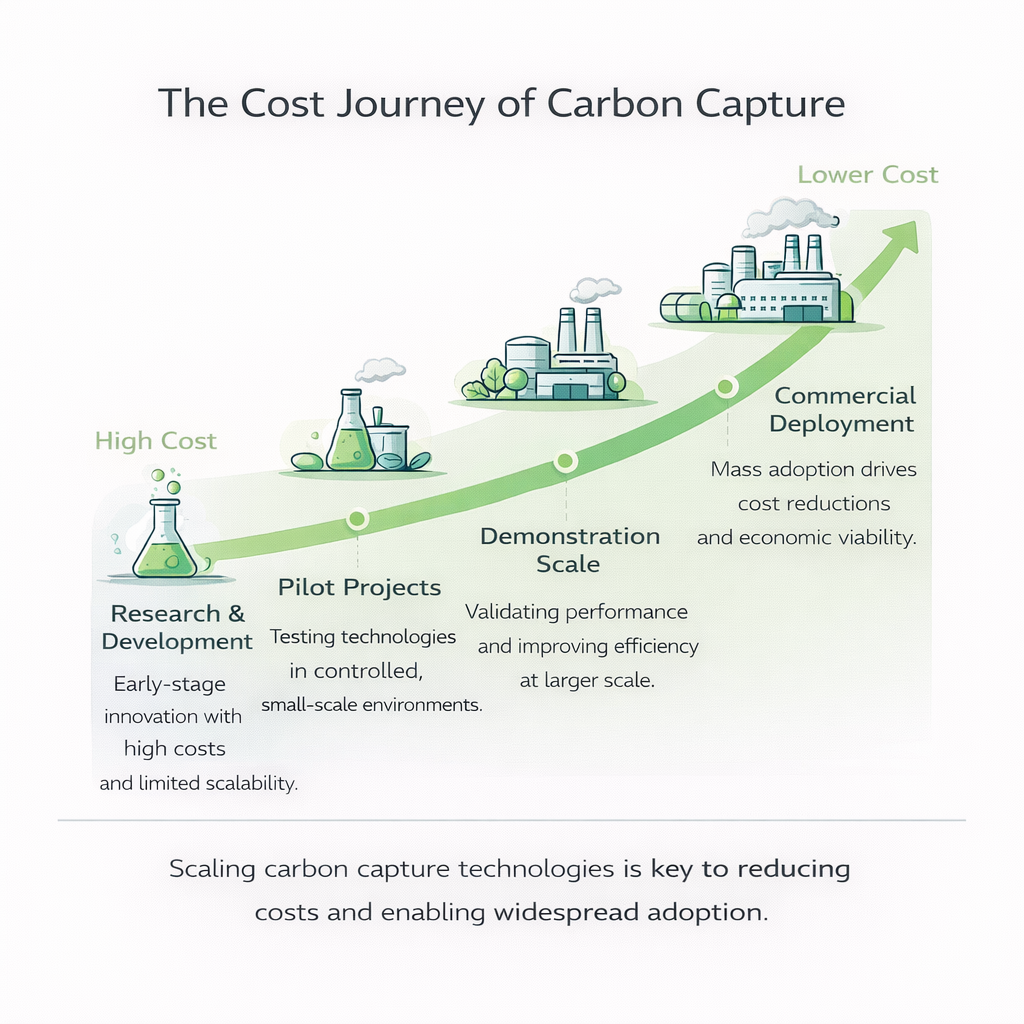
The Financial Challenges of Scaling Carbon Capture

1. High Cost of Initial Deployment

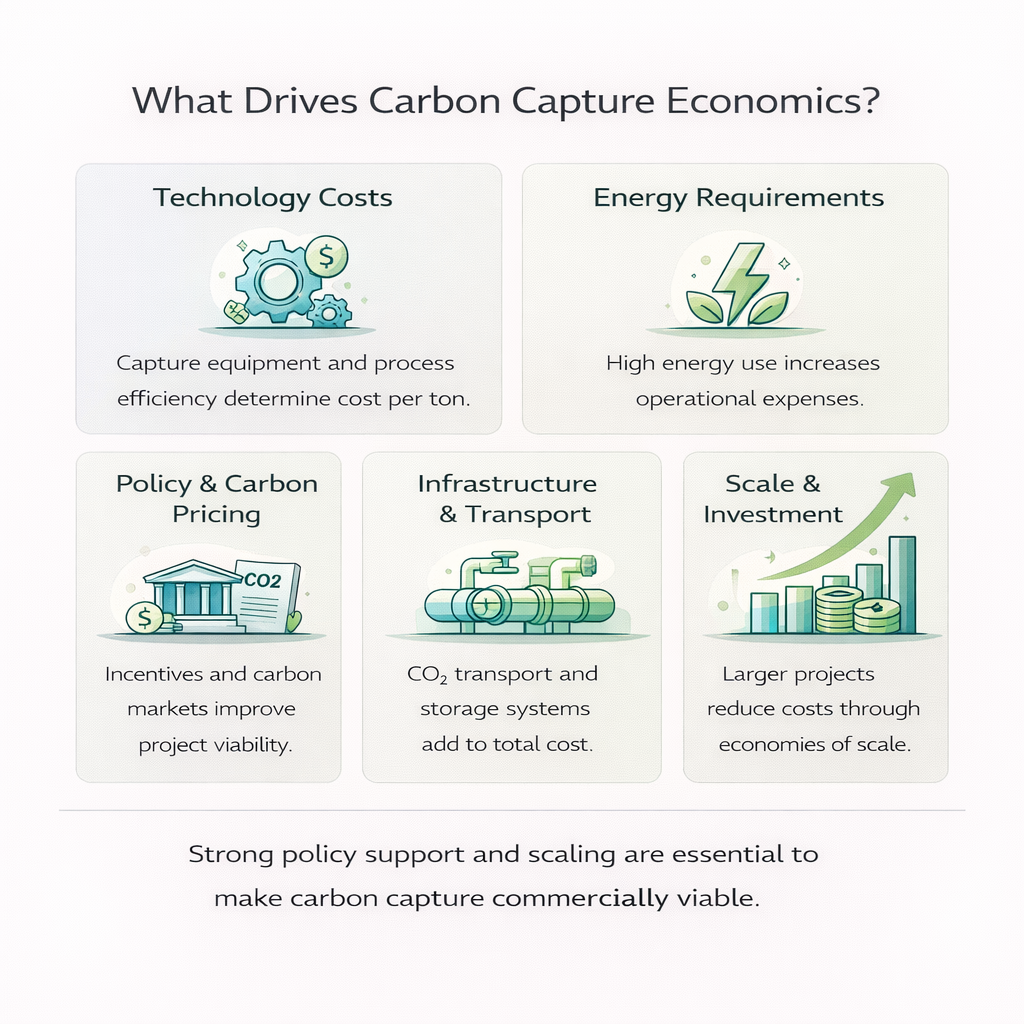
Despite advances in technology, carbon capture remains expensive. The cost of capturingCO₂ ranges from $40 to $120 per metric ton, depending on the capture method and energy source. This variability stems from factors such as:

  • The complexity of capturing CO₂from dilute emissions versus concentrated sources.
  • The price of equipment required for compression, transportation, and storage.
  • The energy costs associated with running capture systems—sometimes negating the benefits.

For industries already operating on thin profit margins, these added costs make adoption financially unfeasible without subsidies or government incentives.

2. Infrastructure Bottlenecks

Capturing CO₂ is only the first step;transporting and storing it safely presents its own economic challenges. Key infrastructure issues include:

  • CO₂ must be transported via pipelines to underground storage sites, requiring significant investment.
  • Not all locations have adequate underground reservoirs to store CO₂ safely and permanently.
  • Many countries lack clear frameworks for carbon transport and storage, delaying commercial expansion.

Without nationwide infrastructure investment, scaling carbon capture beyond pilot programs remains a logistical nightmare.

3. Market Uncertainty & Policy Risks

While carbon pricing (such ascap-and-trade systems or carbon taxes) provides incentives for capture technology, inconsistencies in global climate policies create hesitation among investors.

  •  In Europe, carbon pricing is robust, making capture investments more attractive.
  • In the U.S., tax credits like Section 45Q support carbon capture initiatives—but long-term policy stability remains uncertain.
  • In China, carbon markets are evolving but have yet to reach full maturity.

Without clear, long-term government backing, private investors may shy away from funding large-scale captureprojects.

Turning Carbon Capture into an Economic Opportunity

The economics of carbon capture are not just about cutting emissions—they’re about redefining how we measure industrial success in a carbon-constrained world. CCS presents a major opportunity to:

·      Future-proof carbon-heavy industries as carbon taxes and emissions trading systems become mainstream.

·      Align with India’s climate goals through integration with renewable energy sources like solar power, wind turbines, and geothermal energy.

·      Create synergies between CCS and next-gen fuel cells, hydrogen, and battery systems.

Building Talent for a Sustainable Energy Future

As CCS and other advanced energy systems take center stage, a skilled workforce is essential. That’s where programs like:

Executive Program in Net Zero Strategy and Sustainable Leadership: Offered by IIM Kashipur in collaboration with evACAD, this program equips mid- and senior-level professionals with the tools to lead decarbonization efforts, implement the 17 Sustainable Development Goals,and champion circular economy initiatives across sectors.
evACAD: Empowering India’s Clean Energy Workforce

As a leading talent development platform, evACAD bridges the gap between academic insight and industry demands in new energy and sustainability. From climate finance and carbon markets to green hydrogen, circular economy, and renewable energy systems, evACAD programs are designed to prepare professionals for leadership in a low-carbon, sustainable future.

Conclusion: From Climate Cost to Climate Capital

The road to carbon neutrality runs through strategic innovation and bold investments. Carbon capture technology,when backed by strong policy, infrastructure, and talent pipelines, can transform from an economic burden into a competitive advantage.

With climate urgency rising, the question is no longer "Can we afford to deploy carbon capture?" — but rather "Can we afford not to?"

evACAD logo with stylized orange checkmark integrated between letters.
Shape the businesses, policies, and technologies driving Net Zero & Sustainability. Get Started!
Know More
Talk to our advisor today and know more about our Sustainability and Net Zero Program
Four customer service agents wearing headsets working on laptops at a desk in a dimly lit office.
+918031404841
Graphic showing four diverse male portraits connected by orbiting colored dots around a central figure.
Take the Next Step with evACAD
Get Started!

FAQ

Why is carbon capture technology considered essential for achieving net-zero emissions?

Carbon capture technology traps CO? before it enters the atmosphere, making it critical for industries like steel and cement that cannot fully decarbonise through renewable energy alone. It serves as a key enabler of net-zero emissions alongside electrification and clean power generation.

What are the main financial barriers to the commercial deployment of carbon capture?

The cost of capturing CO? ranges from $40 to $120 per metric ton, making commercial deployment difficult for industries with thin margins. Additional expenses around pipeline infrastructure, compression, and underground storage further delay large-scale adoption without strong carbon pricing or government subsidies.

How does carbon pricing influence investment in carbon capture technology?

Carbon pricing mechanisms like cap-and-trade and carbon taxes create a financial incentive to adopt carbon capture technology. Europe's robust emissions trading systems have accelerated CCS investments, while tools like the U.S. Section 45Q tax credit support commercial deployment in markets where policy stability remains inconsistent.

What infrastructure challenges slow the path from lab trials to commercial deployment of CCS?

Scaling carbon capture technology requires pipelines, underground storage reservoirs, and clear regulatory frameworks, all of which are currently underdeveloped in many countries. Without coordinated infrastructure investment, moving CCS projects beyond pilots into full commercial deployment remains a significant logistical challenge for the energy transition.

How does carbon neutrality create new economic opportunities for businesses adopting CCS?

Pursuing carbon neutrality through CCS allows businesses to future-proof operations against rising carbon pricing and emissions trading systems. Carbon utilisation also opens revenue streams by converting captured CO? into sustainable fuels and industrial materials, turning climate compliance into a genuine competitive advantage during the energy transition.

Talk to Advisor over call
Blue upward arrow inside a white circle with a blue border.