

Green hydrogen is rapidly becoming one of the most promising vectors that help the world in its shift towards clean energy. Most countries, industries from various sectors, and even the most publicised start-ups, view the production and utilisation of this value-adding product as an essential component in their decarbonisation toolbox.
However, before venturing into the application of the product in the heavy industries and mobility sectors, it is important to define and explain why green hydrogen is of growing importance.
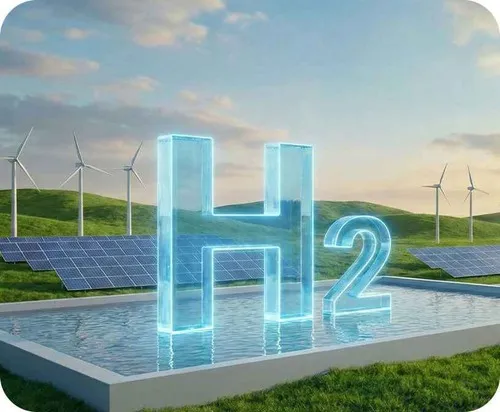
Unlike its grey and blue counterparts, the production of green hydrogen, through electrolysis, is clean as it disassociates water into hydrogen and oxygen and does so through the use of renewable energy sources (wind, solar, and hydro).
Grey hydrogen, on the other hand, is produced through a fossil fuel combustion process that releases significant CO2 into the atmosphere during production, while blue hydrogen still relies on fossil fuel combustion and uses carbon capture and storage (CCS) for emissions management. (Source: IEA, 2023).
Fully renewable-powered electrolysis leads to an emission-free production of hydrogen. This provides various sectors of the economy, particularly those that seek to replace the use of fossil fuels, with clean and flexible energy carriers.
As outlined, these are the key reasons why green hydrogen is gaining attention.
Green hydrogen provides a wide range of environmental, technological, and economic benefits. From an environmental standpoint, green hydrogen allows for the complete elimination of a large scope of emissions by replacing more carbon-intensive fuels and energy sources. This allows green hydrogen to contribute to important climate goals for many countries attempting to attain net-zero pathways.
The economically entrepreneurial nature of green hydrogen allows the formation of more job opportunities and the strengthening of energy autonomy and security, while decreasing dependency on oil and gas imports.
Technologically, green hydrogen serves as an efficient fuel for storing energy because of its high energy density.
Green hydrogen allows for the decoupling of emissions and economic growth, but more importantly, it provides the tools necessary to eliminate emissions in heavy industry.
Some heavy industrial sectors like chemicals, steel, and cement are significant contributors to the world's carbon emissions. The energy requirements and extreme thermal energy demands of these sectors consume a large proportion of fossil fuels and make the introduction of renewables an almost impossible task.
This sector is held back by:
All these factors combinedly prevent the introduction of renewables to these sectors. This is the space where green hydrogen provides a realistic and practical solution.
As green hydrogen technology matures, the first customers across several industries are starting to use green hydrogen.
In steelmaking, Sweden's HYBRIT is replacing coal and dramatically reducing emissions with hydrogen. In the chemical sector, the green ammonia production project at NEOM illustrates how other large industries are shifting to renewable hydrogen and its derivatives.
The high energy density of green hydrogen is also of interest to shipping and aviation - the world's first hydrogen-powered commercial aircraft is being developed by Airbus, an indication that even the hard-to-decarbonise sectors are likely to transform.
As industries continue to pilot and commercialise these hydrogen-based technologies, the role of hydrogen in the economy is likely to increase exponentially, especially in mobility.
Green hydrogen is helping to reduce emissions in transport and, more so, in segments that are hard to electrify. New scientific improvements in the efficiency of electrolysis are promising lower production costs and greater adoption.
There are now hydrogen fuel cell vehicles, long-haul hydrogen-powered trucks, hydrogen fuel cell buses, and hydrogen-powered trains. In maritime transport, which is responsible for almost 8% of global emissions, the use of hydrogen-based fuels will significantly reduce emissions.
Businesses such as Honda and General Motors are perfecting hydrogen fuel cell technology as governments begin to make hydrogen fuel refilling stations more accessible.
Given the renewed global focus on the development of Renewable Energies and the growing number of university programs training students to become professionals in the fields of Sustainability and Environmental Management, the inclusion of the hydrogen economy in transportation systems planning is of great importance and value.
This also creates the need to envision what the future holds for Heavy Industries.
The potential for green hydrogen is generally very positive. Energy sector analysts believe that with proper governance, hydrogen fuels could account for almost a quarter of the world’s energy by the year 2050 (Source: IEA, 2023). This will help to address the much-needed reduction of greenhouse gas emissions in numerous sectors that are often considered the most challenging to decarbonize.
Government and policy initiatives, such as the European Green Deal, provide the focus for these transformations. These initiatives target the promotion of research, investment, and necessary infrastructures that will help to lower the greenhouse gas emissions costs of hydrogen and make it available on a global scale.
As professionals continue to enroll in Renewable Energy and Sustainability programs available, the workforce needed to support the green hydrogen economy will continue to expand, thus the transition to a more sustainable energy system will be expedited.
Professionals will be needed to transition to green hydrogen, clean mobility, and low-carbon industries. If you are looking to develop your knowledge in net-zero pathways, evACAD offers specialized programs to assist you in developing and understanding competencies in this field.
evACAD’s Green Hydrogen Master Program fosters and develops decarbonization, policy, and corporate climate action skills. In addition, our Sustainability and Renewable Energy Courses help build competencies to think through and engage with emerging technologies such as green hydrogen, circular systems, and sustainable mobility.
evACAD helps you achieve your goals regardless of whether you are a working professional, an industry leader, or a climate solutions career aspirant, with skills and resources to achieve a cleaner, active, and adaptable climate.
Take a look at evACAD and explore their programs to be a leader in a net-zero world.


%20(1).webp)
.webp)


