

Hydrogen is being pitched as a key piece of the low-carbon puzzle. The next challenge is making it easy to store and move at scale. Think of ‘Hydrogen Economy 2.0’ as the shift from ‘can we produce hydrogen?’ to ‘can we store and deliver it reliably and affordably? Here’s why that shift matters and what it changes, and how leaders must prepare for it.
At the point of use, hydrogen doesn’t emit CO₂. That’s why it’s discussed for heavy industry, shipping, and long-duration storage. Yet, there remains one critical issue with hydrogen: the impact of actually making, shifting, storing, and using the fuel at scale.
If you’re building policy or investing in projects, the hydrogen value chain matters as much as production. This includes the policymakers, engineers, business leaders, and professionals considering advanced programs such as a sustainability leadership course in India or an executive sustainable course to build real-world skills.
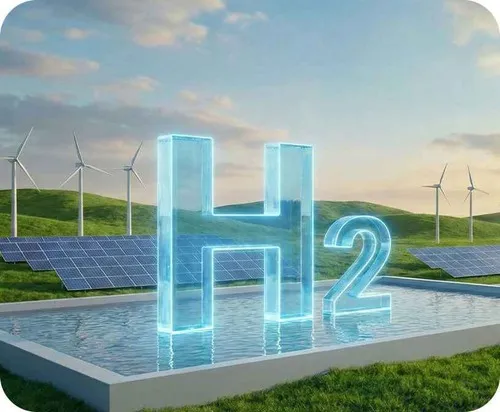
There are several methods of hydrogen production, commonly classified using a “color” code. Grey hydrogen is typically produced from fossil fuels such as natural gas through steam methane reforming (SMR) without carbon capture. Blue hydrogen is produced using the same process but with carbon capture and storage (CCS). Green hydrogen is produced from water via electrolysis using renewable electricity.
Green hydrogen is generally the lowest-emissions option because it uses renewable electricity for electrolysis. It not only requires low carbon emissions for production but also needs plenty of low-cost, clean electric power. Currently, many nations are implementing projects to generate renewable energy, aiming to reduce carbon emissions through the production of hydrogen. For example, the International Renewable Energy Agency classifies that by 2050, hydrogen and its derivatives will meet 14% of the world's final energy needs. (Source)
As production is ramped up, governments are making strategies and policies to promote clean hydrogen. In India, there is the National Hydrogen Mission to make the country, the hub for all hydrogen production and applications globally.
This is where it gets practical: storage and transport. Making clean hydrogen is only half the job. If it’s expensive to store or hard to move, it won’t reach the factories, ports, and power systems that need it.
Hydrogen molecules are tiny, which means they require special storage considerations. They can be stored as a compressed gas, as a liquid under low temperature, or in solid or chemical carriers. Each method has trade-offs. Compressed hydrogen tanks are simpler but require high pressures. Liquid hydrogen requires energy-intensive cooling to very low temperatures. Solid storage materials are still largely in the research phase.
Then comes distribution. Pipelines can carry hydrogen like natural gas, but existing natural gas infrastructure may need upgrades due to hydrogen’s tendency to cause metal embrittlement. Alternatively, hydrogen can be transported as a liquid by trucks or ships, but this adds cost and complexity.
The tradeoff is always between cost, efficiency, and safety. We need secure, efficient networks that connect producers to end users without high cost or emissions. A recent report from the US Department of Energy highlights how investments in hydrogen storage and distribution infrastructure will be critical to unlocking the value of clean hydrogen across sectors. (Source)
You might be wondering why we are devoting so much to hydrogen infrastructure when other clean technologies are possible. The key is that hydrogen serves a number of important roles within the overall energy system.
Renewable energy-based power grids are on the increase; however, they have experienced challenges of variability, just like wind and solar power. Hydrogen energy has a role to play in energy storage for a longer duration. It absorbs excess renewable energy during off-peak times or releases it during times of high demand. Alternatively, hydrogen-based fuel or derivatives in the form of ammonia have been suggested for transportation, air transport, or industries that cannot easily utilize electricity.
For business entities, incorporating hydrogen into the energy strategy can help with decarbonization and improve resilience, too. In business, leaders must have skillsets beyond technical expertise. These skillsets comprise systems thinking, strategic planning, and engagement with different business sectors.
This is the reason many professionals opt for a sustainability leadership course in India or an executive sustainable course to learn more about new energy systems, with innovations taking place because of climate change.
The way forward to a developed hydrogen energy sector faces some challenges. The main issue associated with hydrogen energy is the cost. Currently, the cost of producing green hydrogen is higher compared to hydrogen created from fossil fuels. But the cost of renewable energy keeps dropping, and the efficiency of electrolysis equipment improves, making the cost less of an issue.
To expand scale in the required storage and distribution infrastructure, there too will have to be innovation and investment. Nations and firms that envision hydrogen as part of their energy mix are starting to cooperate on standards and market structures to facilitate international trade and use.
Despite the challenges, there’s growing investment and R&D, especially in storage materials and pipeline compatibility. There is increasing investment in hydrogen technology. There is research work going into advanced storage materials, pipe compatibility, and distributed hydrogen solutions. As countries move towards achieving net zero, hydrogen is being identified as a major source of decarbonization along with other sources like electrification, carbon capture, and energy efficiency.
But a new chapter begins when production gives way to effective storage and distribution. For the next chapter of hydrogen, a staff skilled in hydrogen science and versed in policy and economics will be needed.
If you work in energy, policy, or industry, understanding storage and distribution is becoming a real career advantage. Taking a course on sustainability leadership in India informs you on utilizing hydrogen networks in achieving overall climate objectives. Taking the executive sustainable course educates leaders to align energy transition strategies.
By developing these skills, you will put yourself at the leading edge of energy innovation and will be equipped to lead in Hydrogen Economy 2.0.
The energy landscape is evolving rapidly, and the shift to Hydrogen Economy 2.0 signals a move toward deeper integration of clean energy systems. Understanding how hydrogen is produced, stored, and distributed is now a strategic imperative for professionals and organisations shaping the climate and energy agenda.
If you want to lead in this transformative era, enroll in evACAD’s advanced Green Hydrogen Master Program designed for engineers, energy professionals & organizations building the hydrogen economy.


%20(1).webp)
.webp)


